
This will be the last recipe for the first installment of the Omma’s House series! The series will return at the onset of fall, and I’ll share some of my mom’s soup recipes with you all!
My mom calls this easy kimchi because the process entails chopping the cabbage before mixing in the sauce and before fermentation really kicks in, instead of after.
There are a lot of ingredients and steps, but making this easy kimchi, as the name suggests, is pretty straight forward!
While I began eating the kimchi almost right after it was made, I found that it starts to taste realllyyy good after three weeks.
Below is the ingredient list and directions for two 64 oz. jars.
Ingredients:
- 8 cabbage heads
- 1 large daikon radish
- 13 scallions
- Salt
- 1-2 red chili peppers (depending on spice preference)
- 2 whole heads of garlic
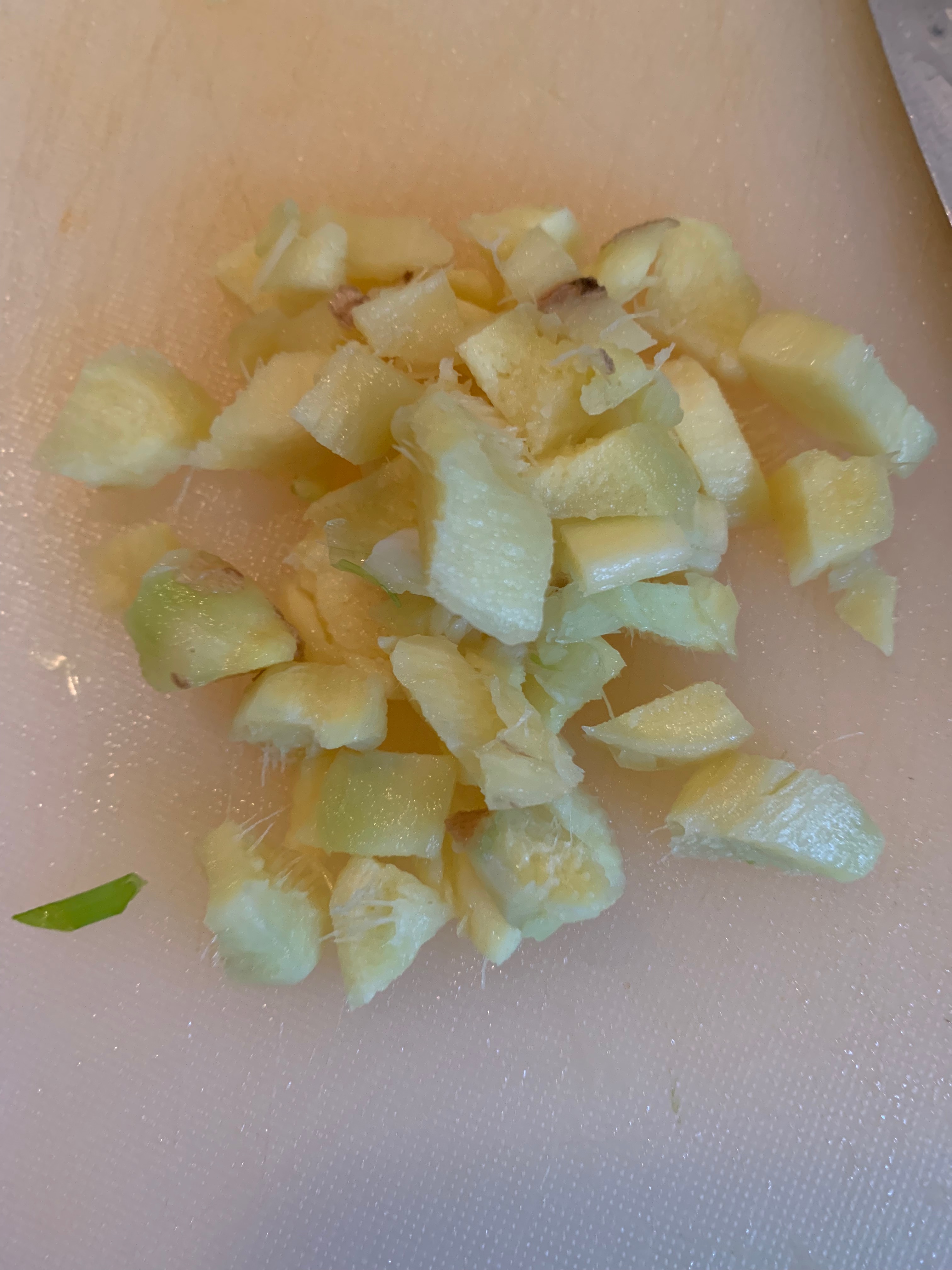
- About 1/4 cup of roughly chopped ginger
- About 4 tablespoons of flour
- 1/2 cup of water
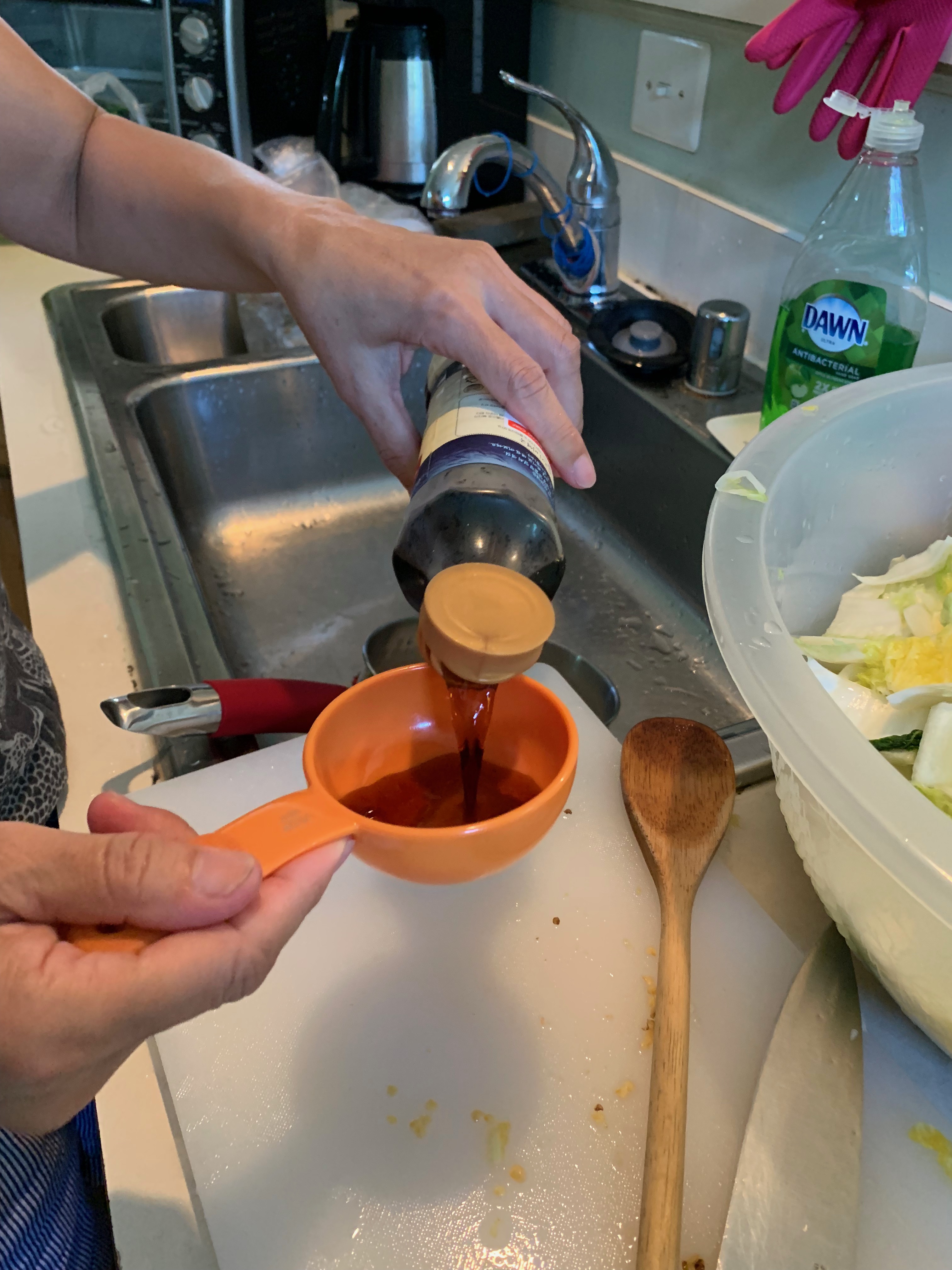
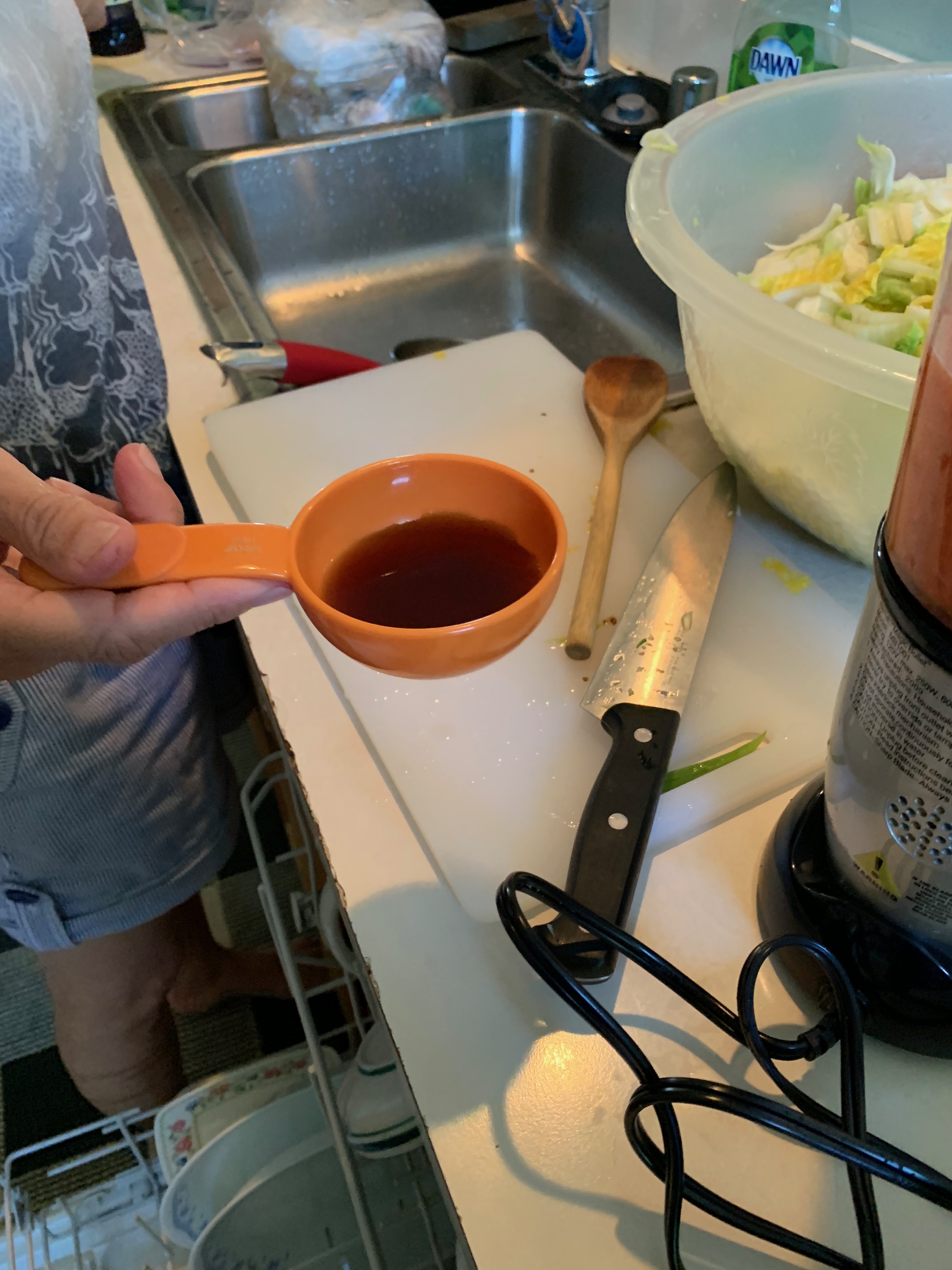
- About 1/4 cup of fish sauce (a little under 1/4 cup)
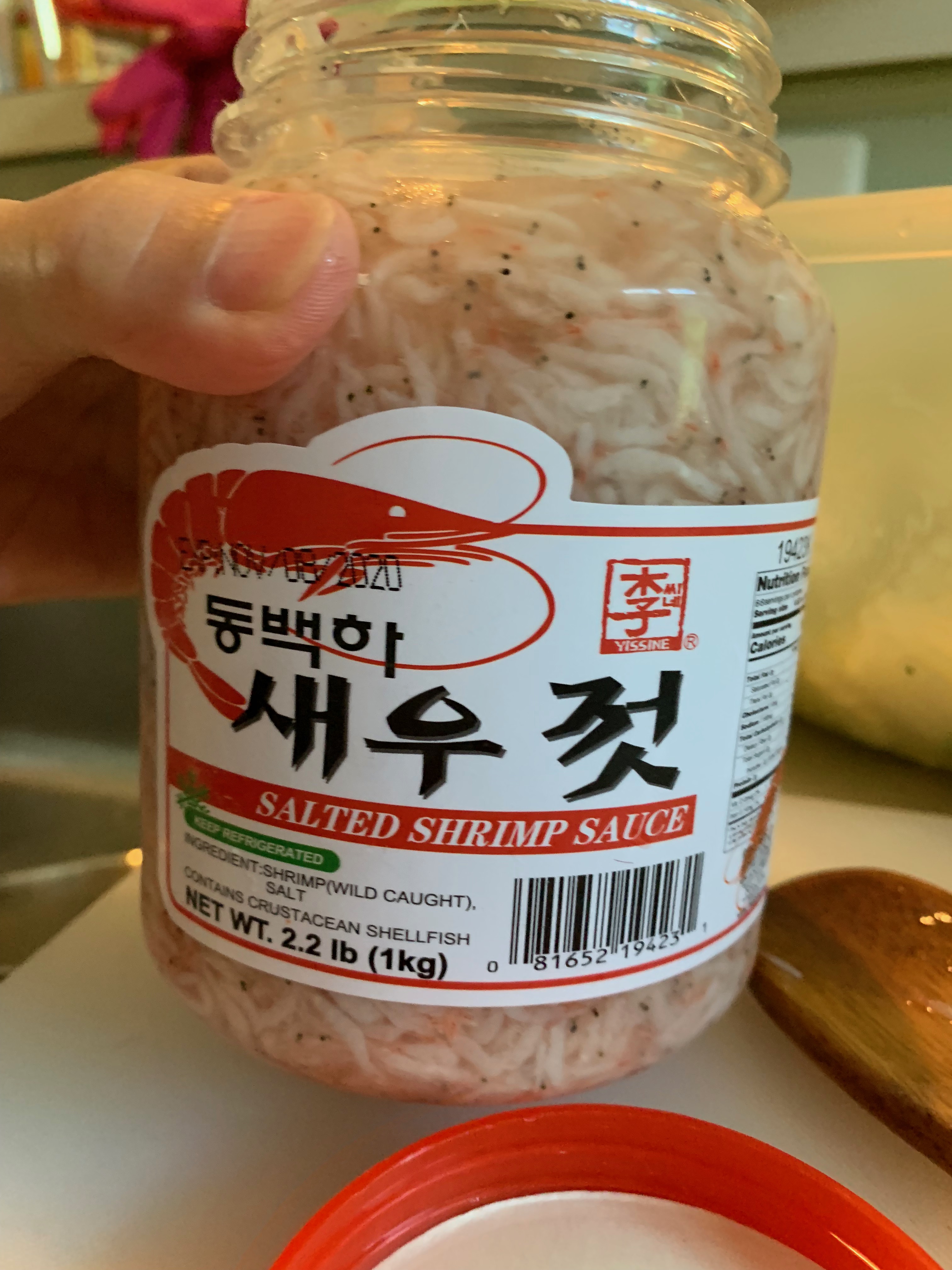
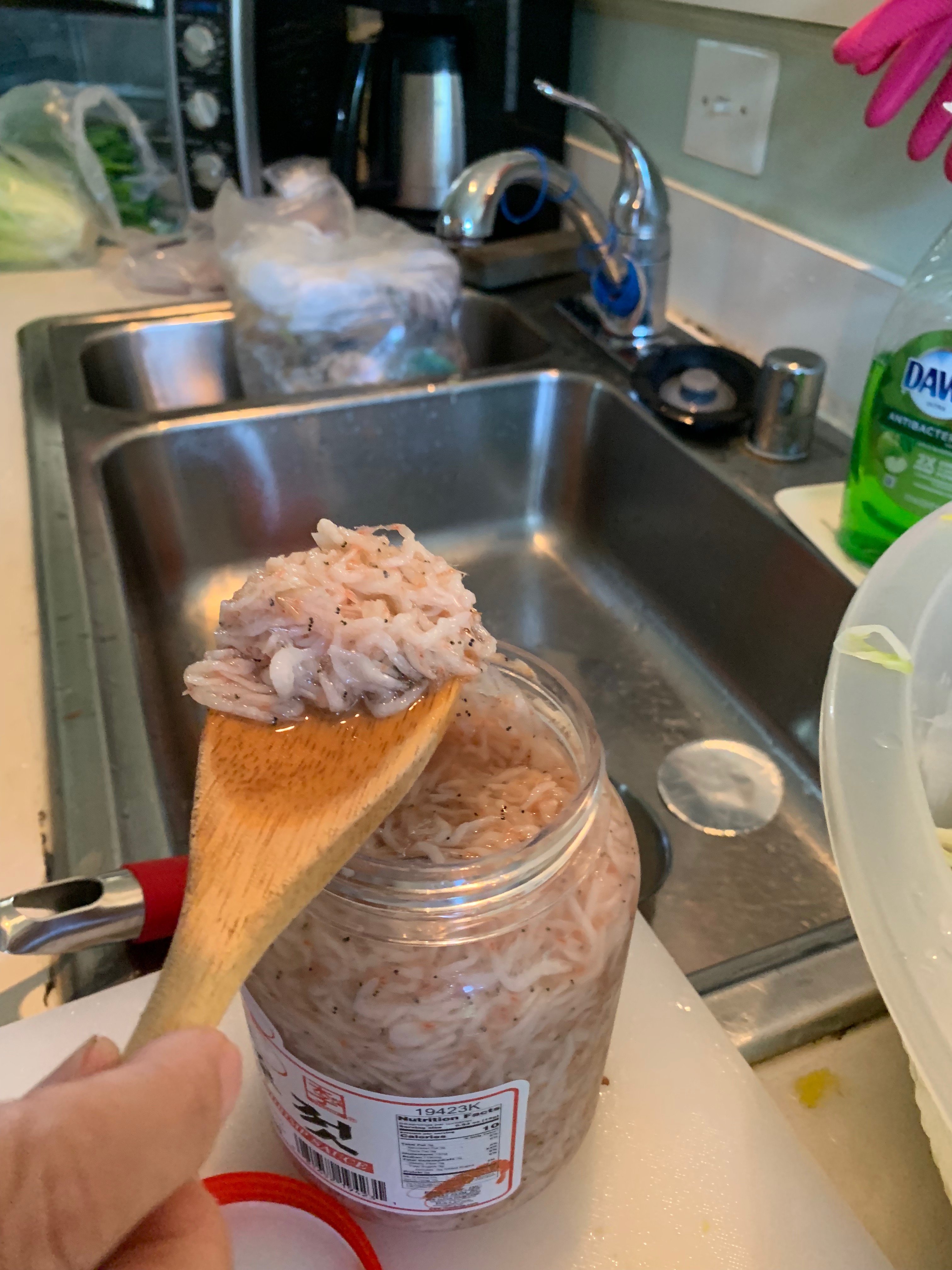
- About 1/4 cup of salted shrimp sauce
- About 1/2 cup of chili pepper powder
Other items:
- Large bowl for mixing (one that’s big enough to fit the chopped cabbage, radish, and scallions AND mix them all together)
- Food processor or blender
- Plastic gloves
- Two 64 oz. wide-mouth glass jars
Directions for preparing the cabbage and radish:
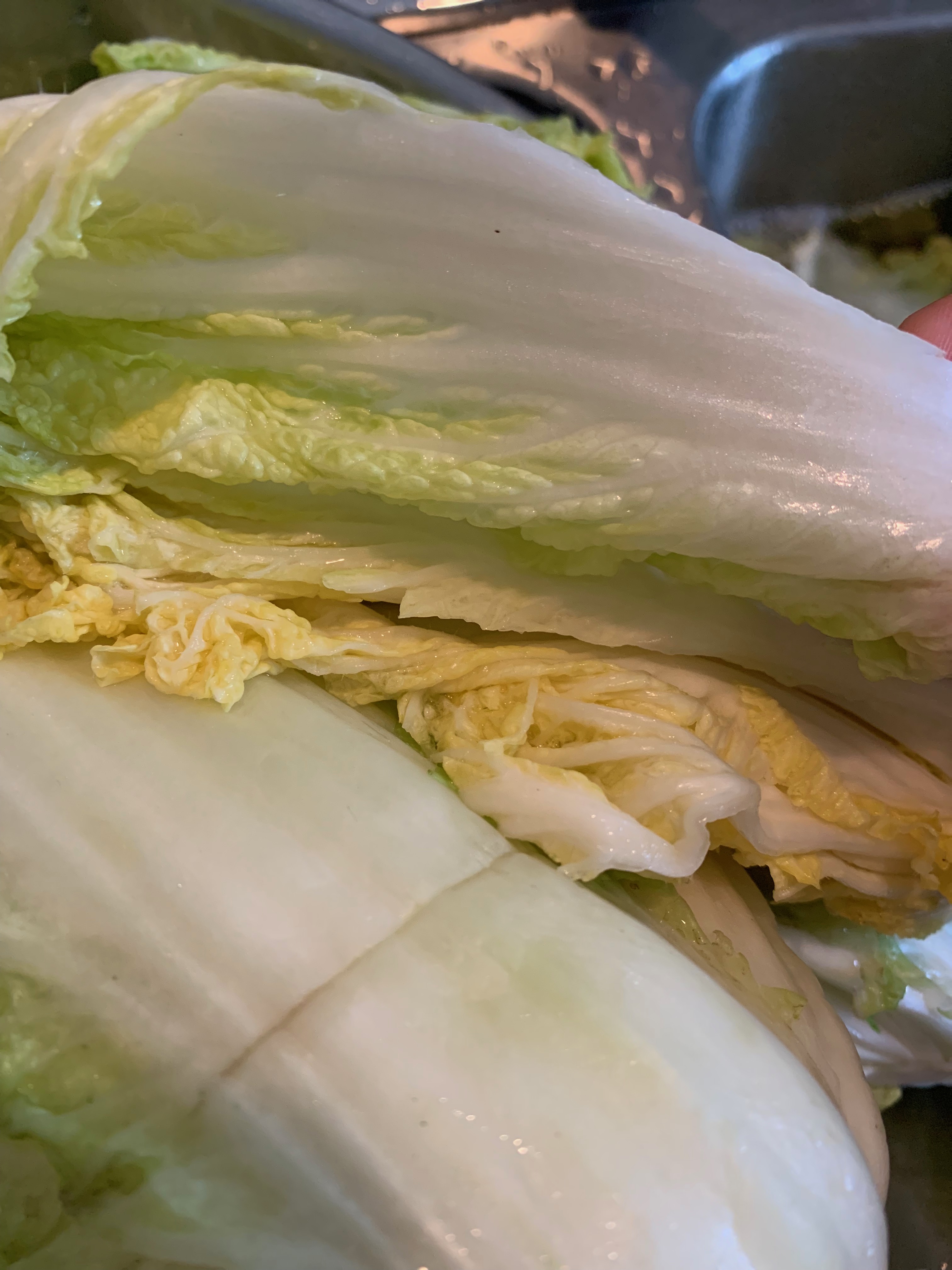
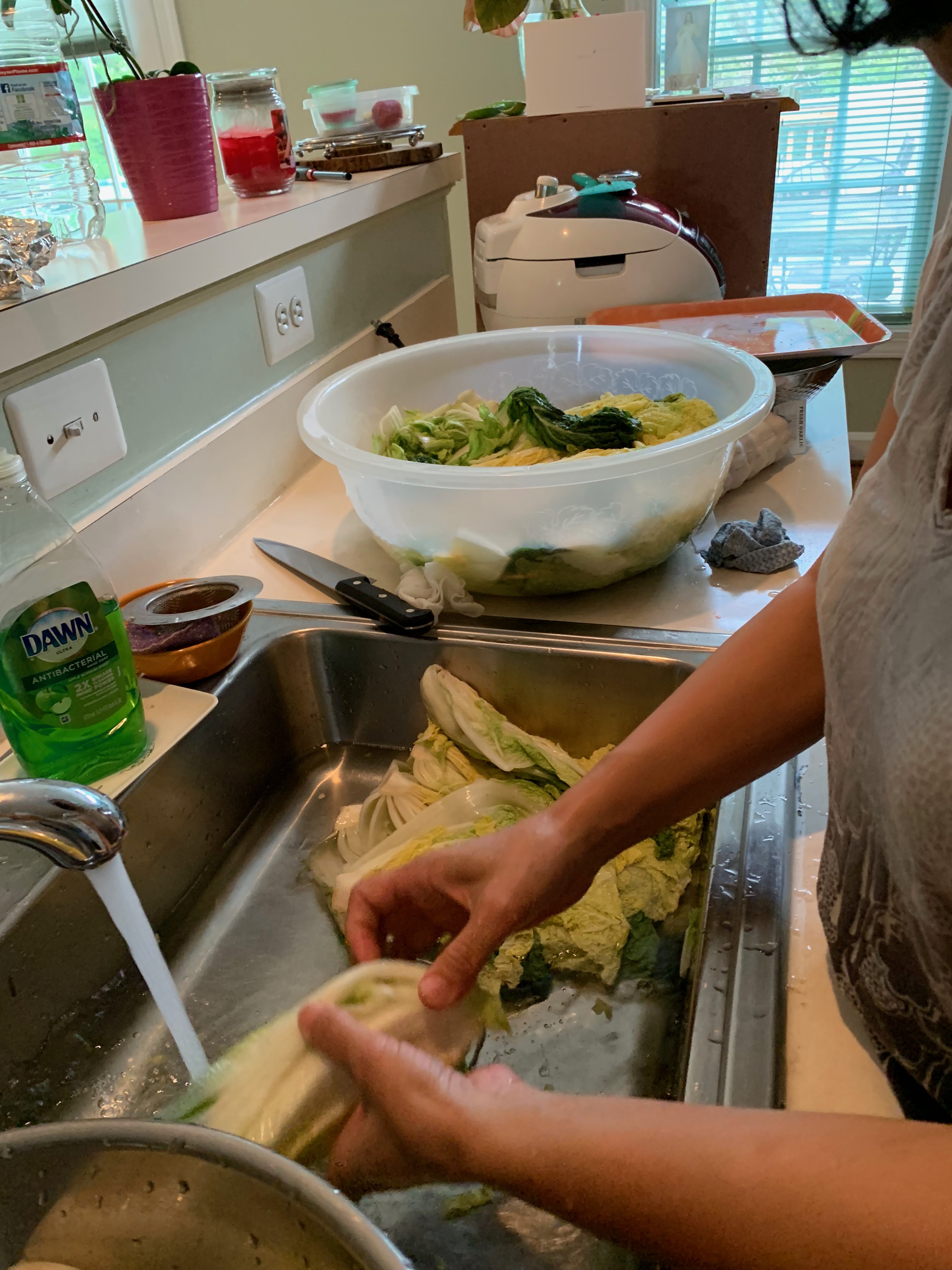
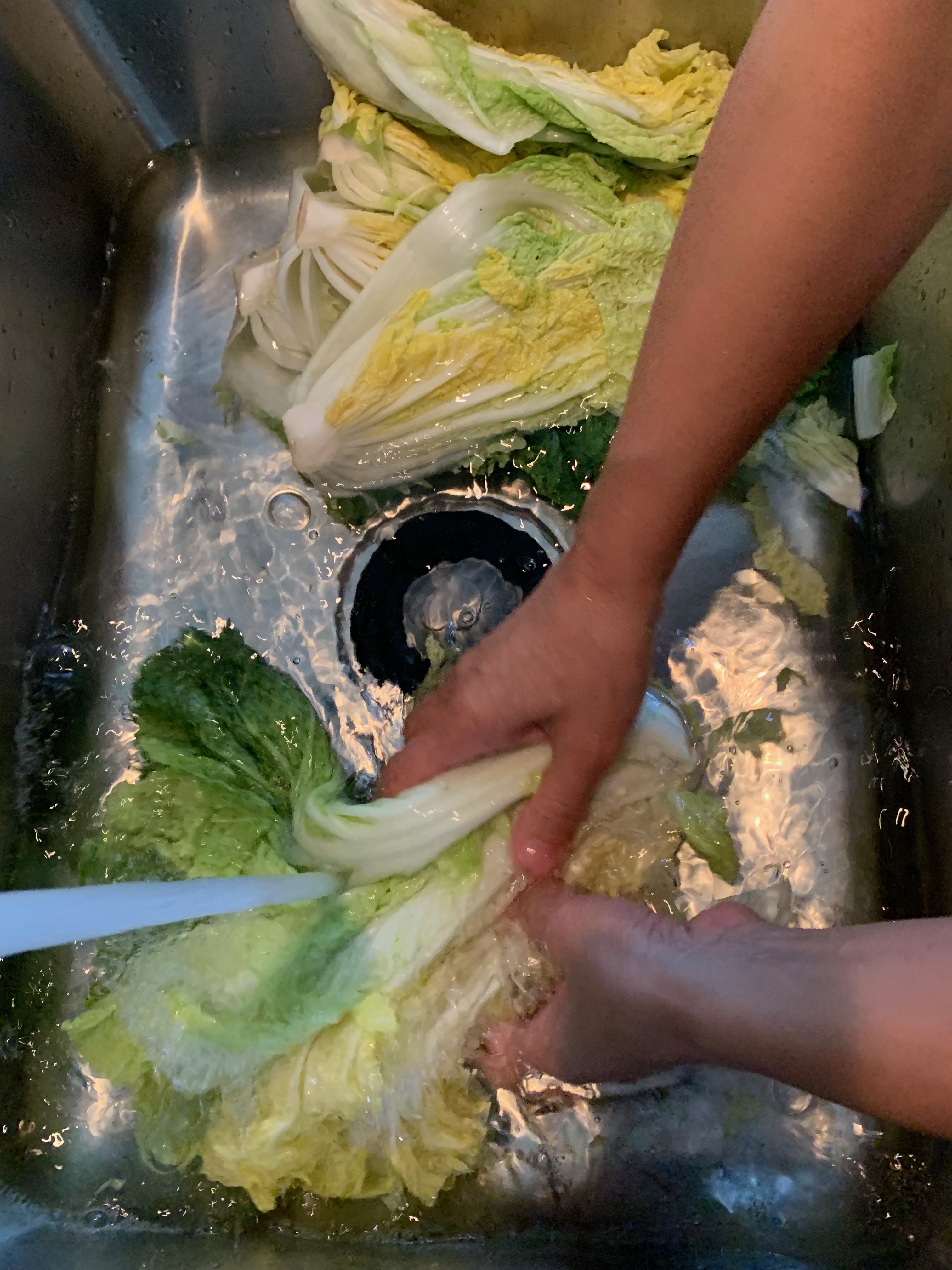
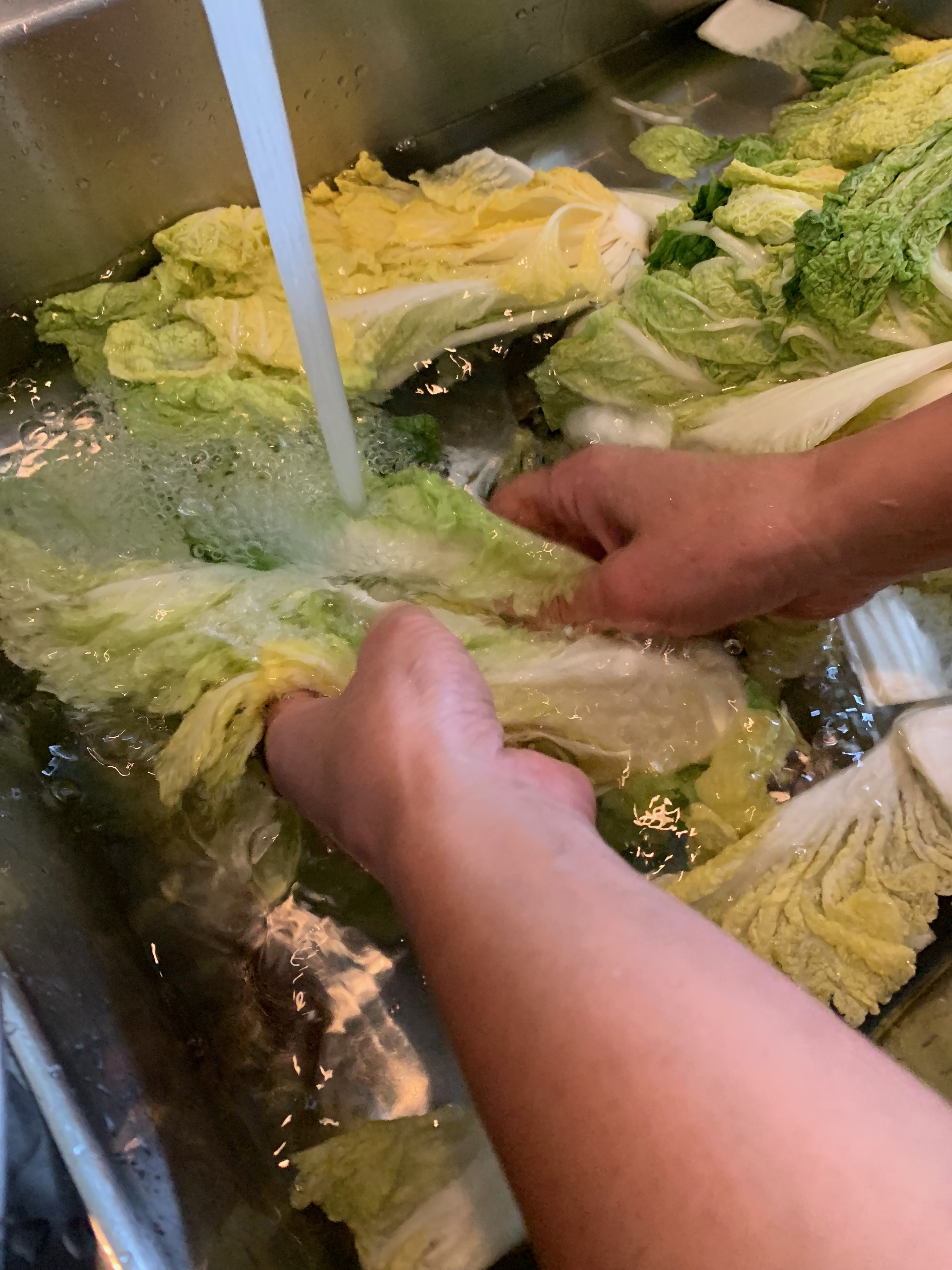
- Wash the cabbage heads by running water over and rubbing each cabbage leaf.
- Place in a large bowl and salt all over. Just pour the salt and mix it through each of the cabbage leaves.
- Set aside for two hours or until cabbage is tender a and a bit translucent.
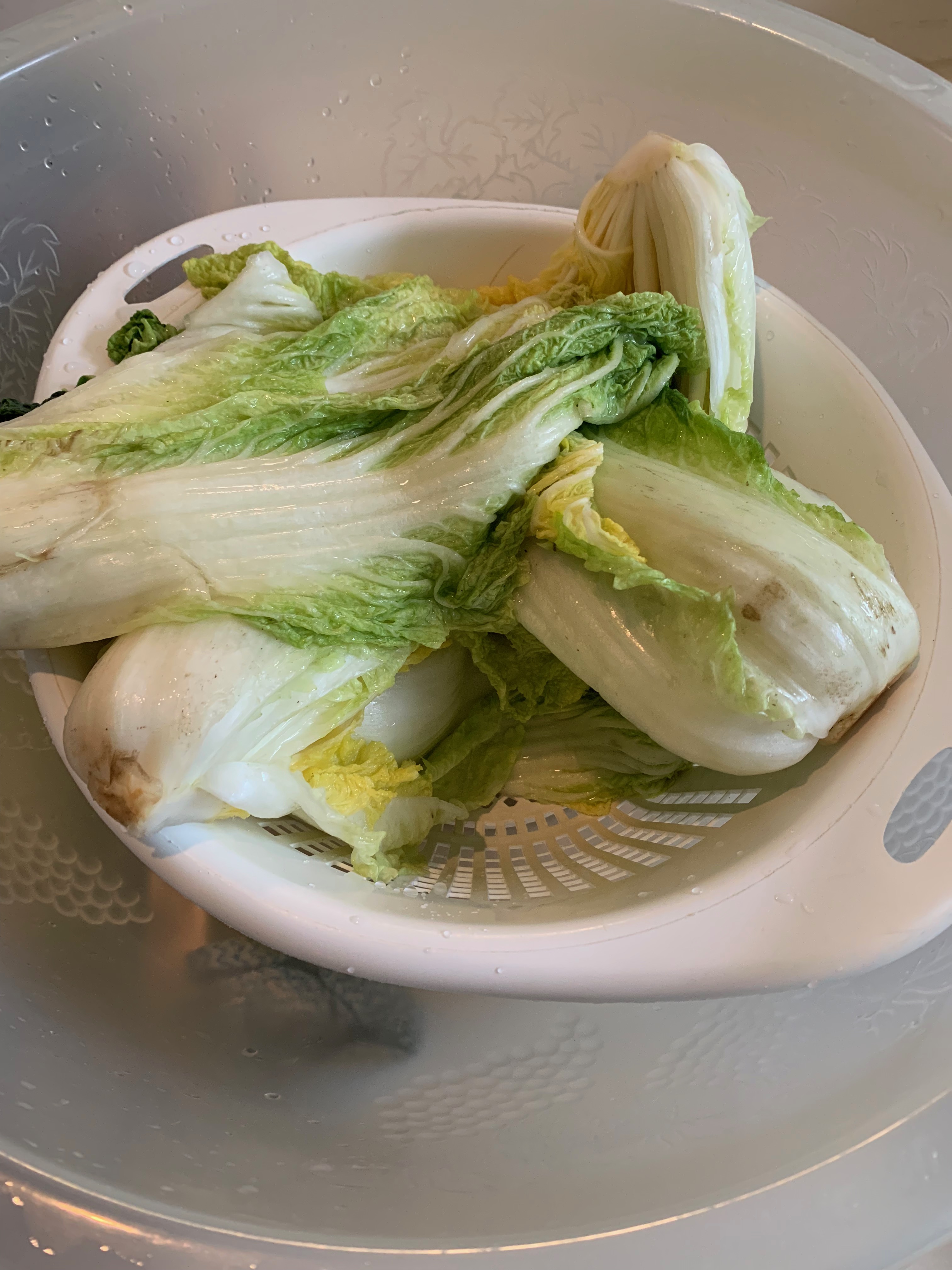
- Wash the cabbage heads again by running water over and rubbing each cabbage leaf.
- Place in strainer.
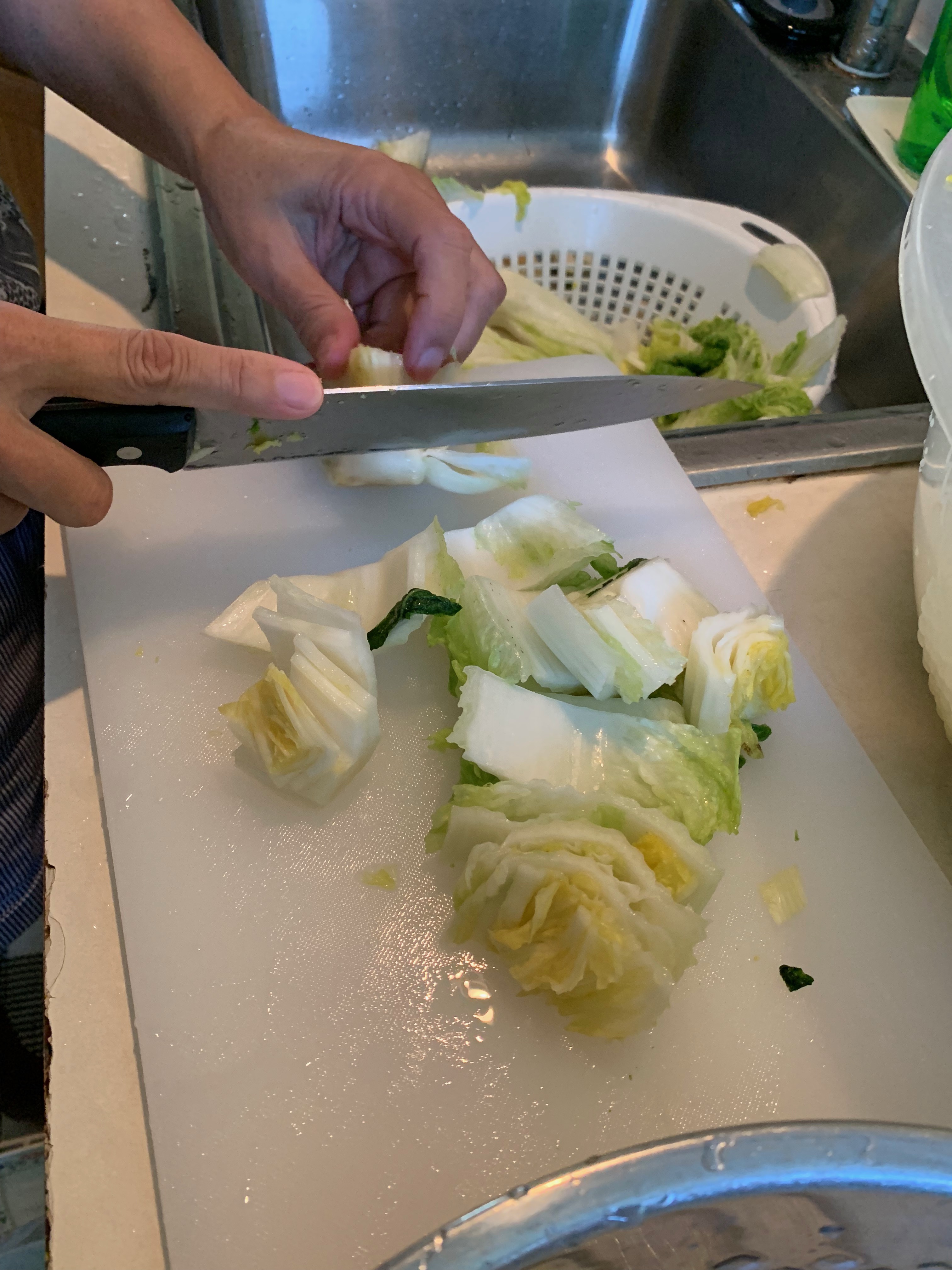
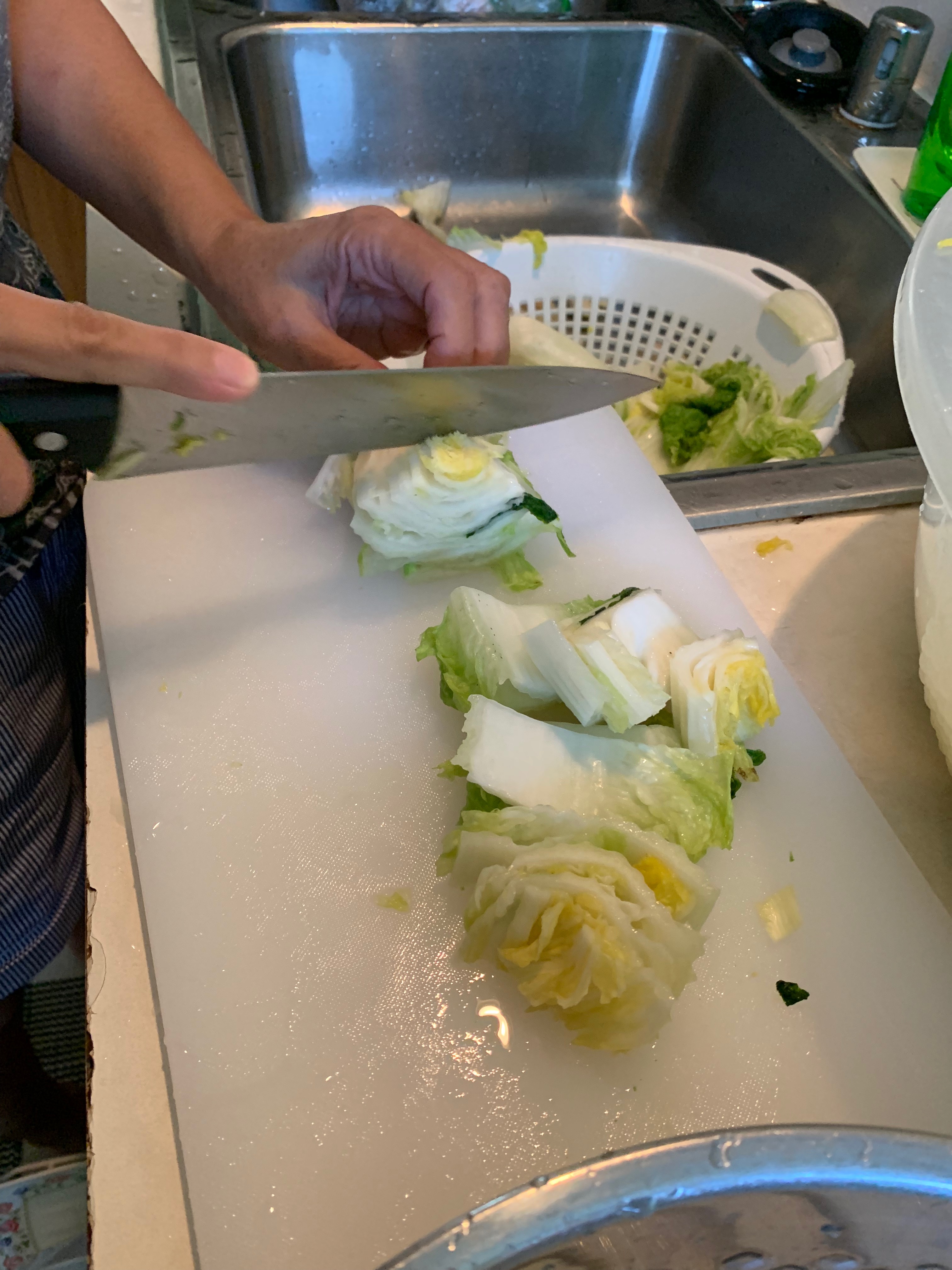
- Cut each cabbage head into small pieces by cutting across. Place the cabbage head horizontally on the cutting board, then cut about six times across and down the cabbage head.
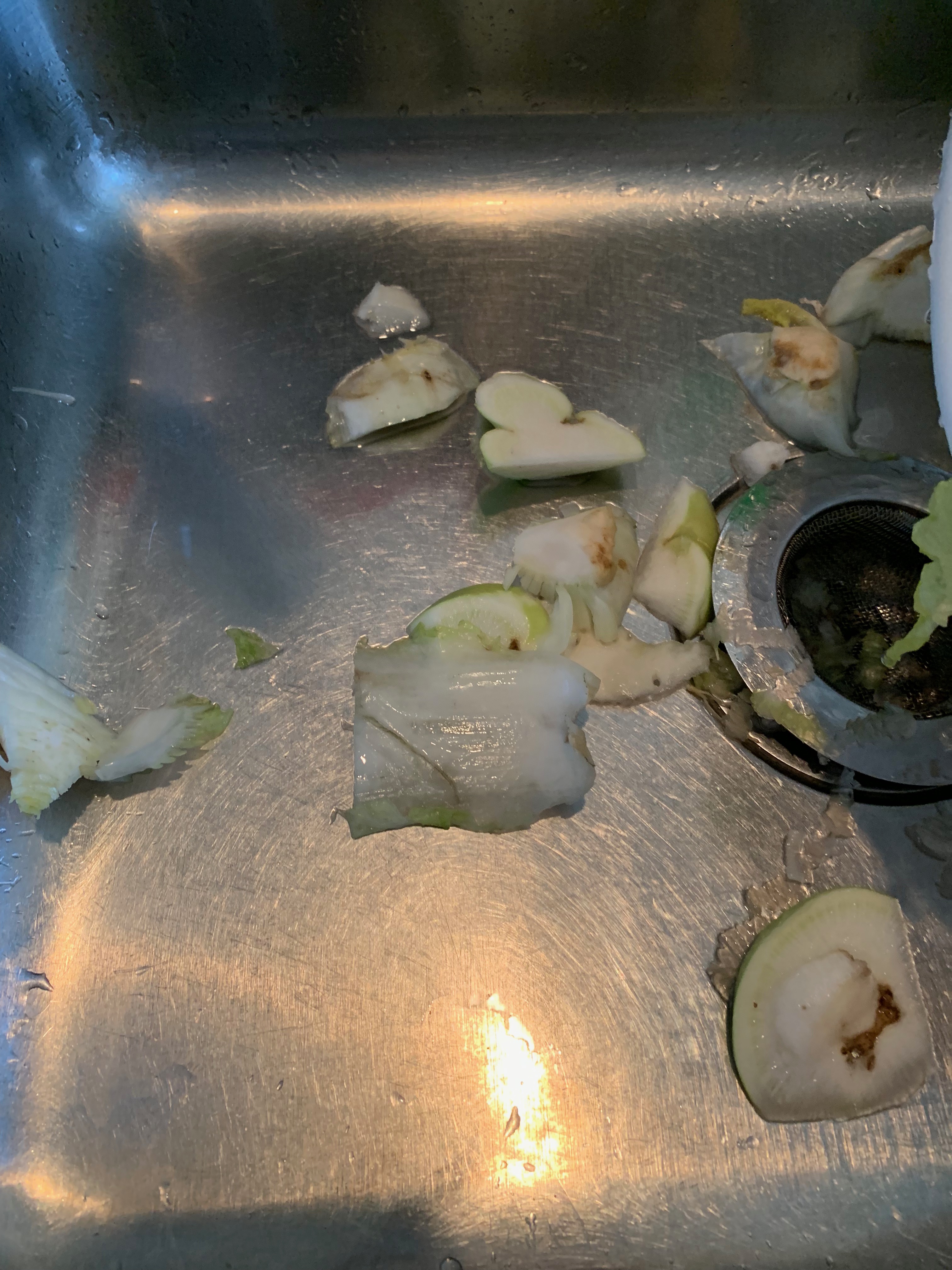
- Discard the stems
- Place the chopped pieces into the mixing bowl. This can also be the bowl you used to salt the cabbage. Just make sure you’ve rinsed it!
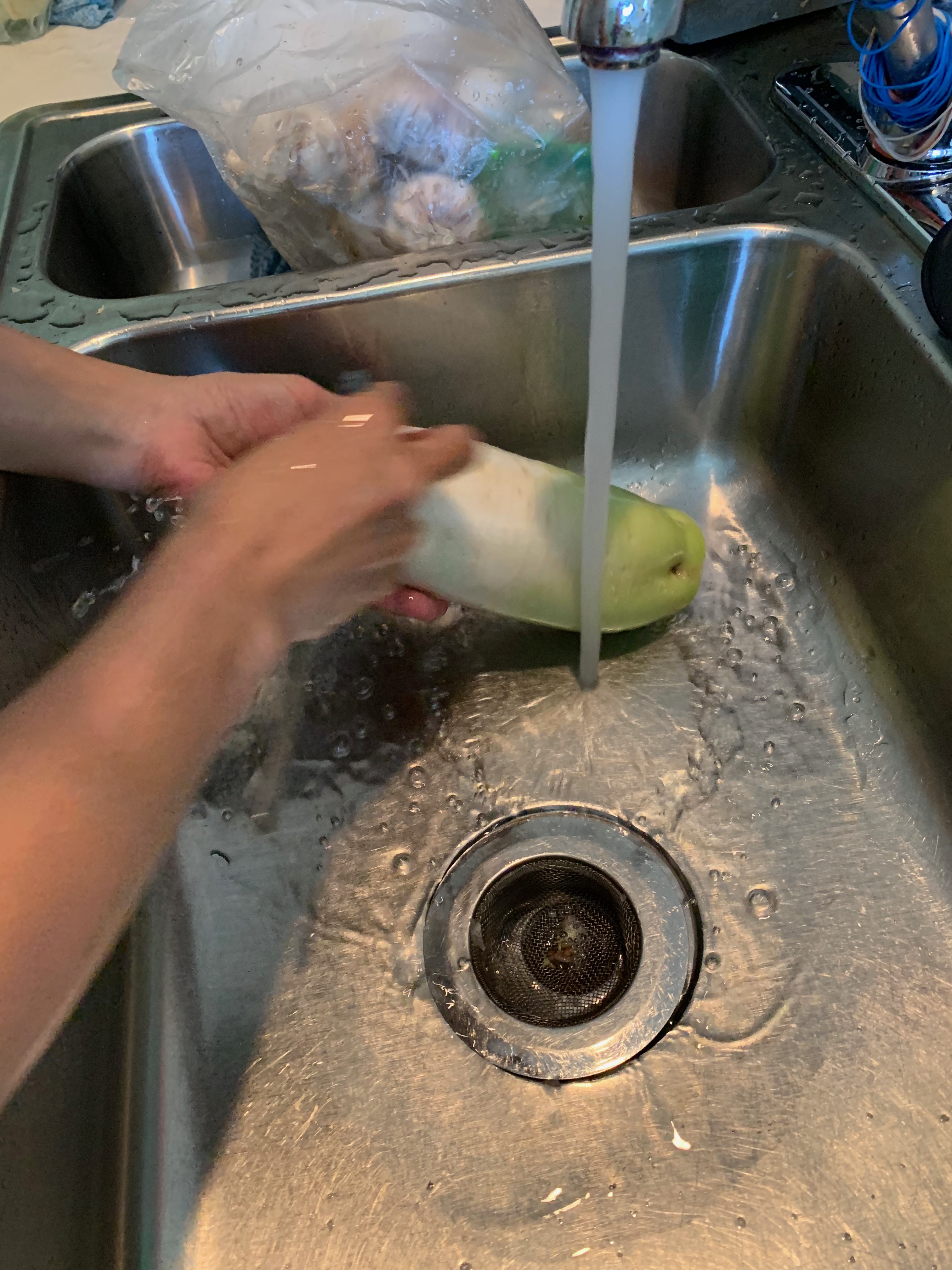
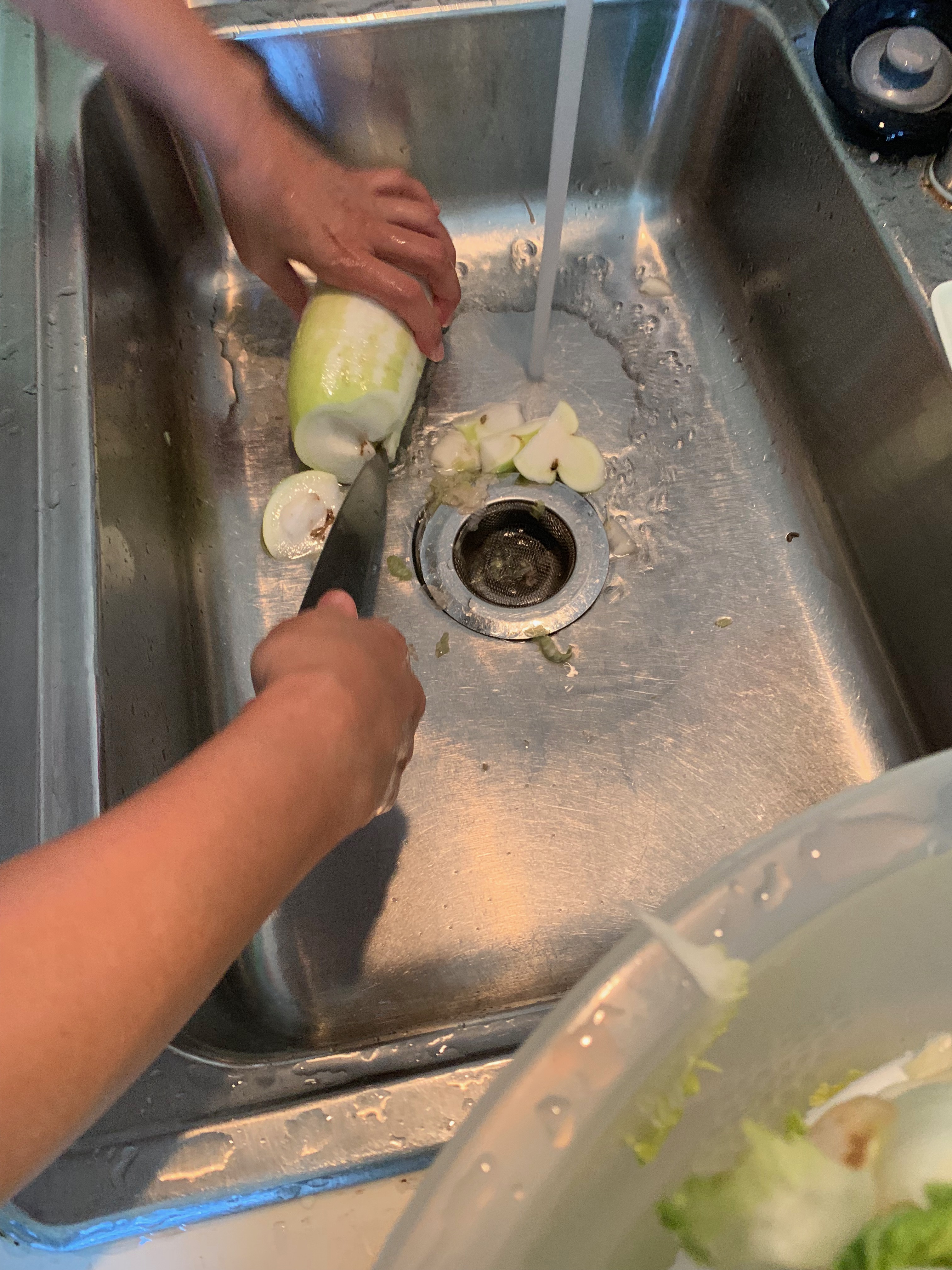
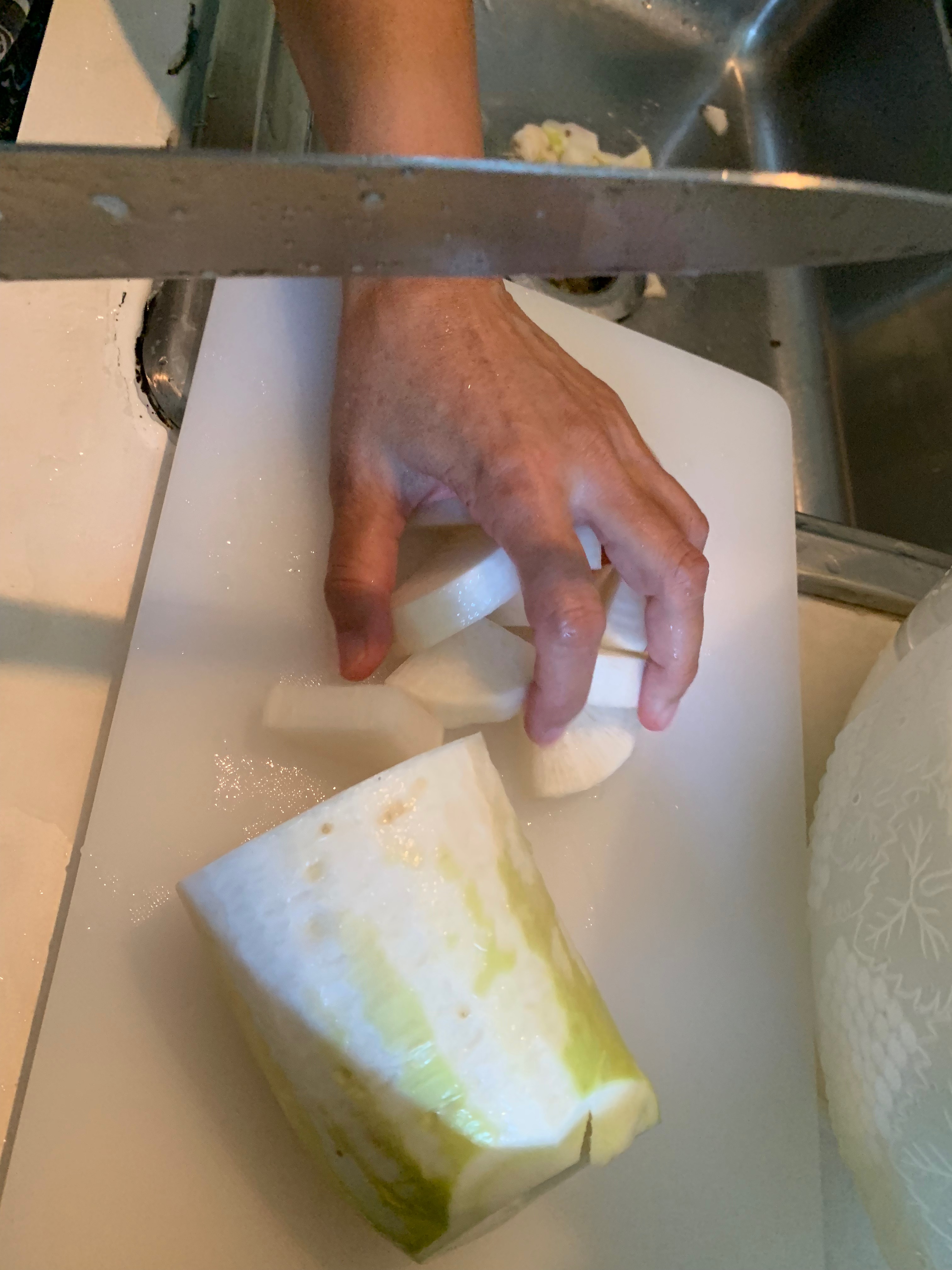
- Run the radish under water and either with a spoon or peeler, gently peel the thin top layer of the radish. My mom uses a spoon for this.
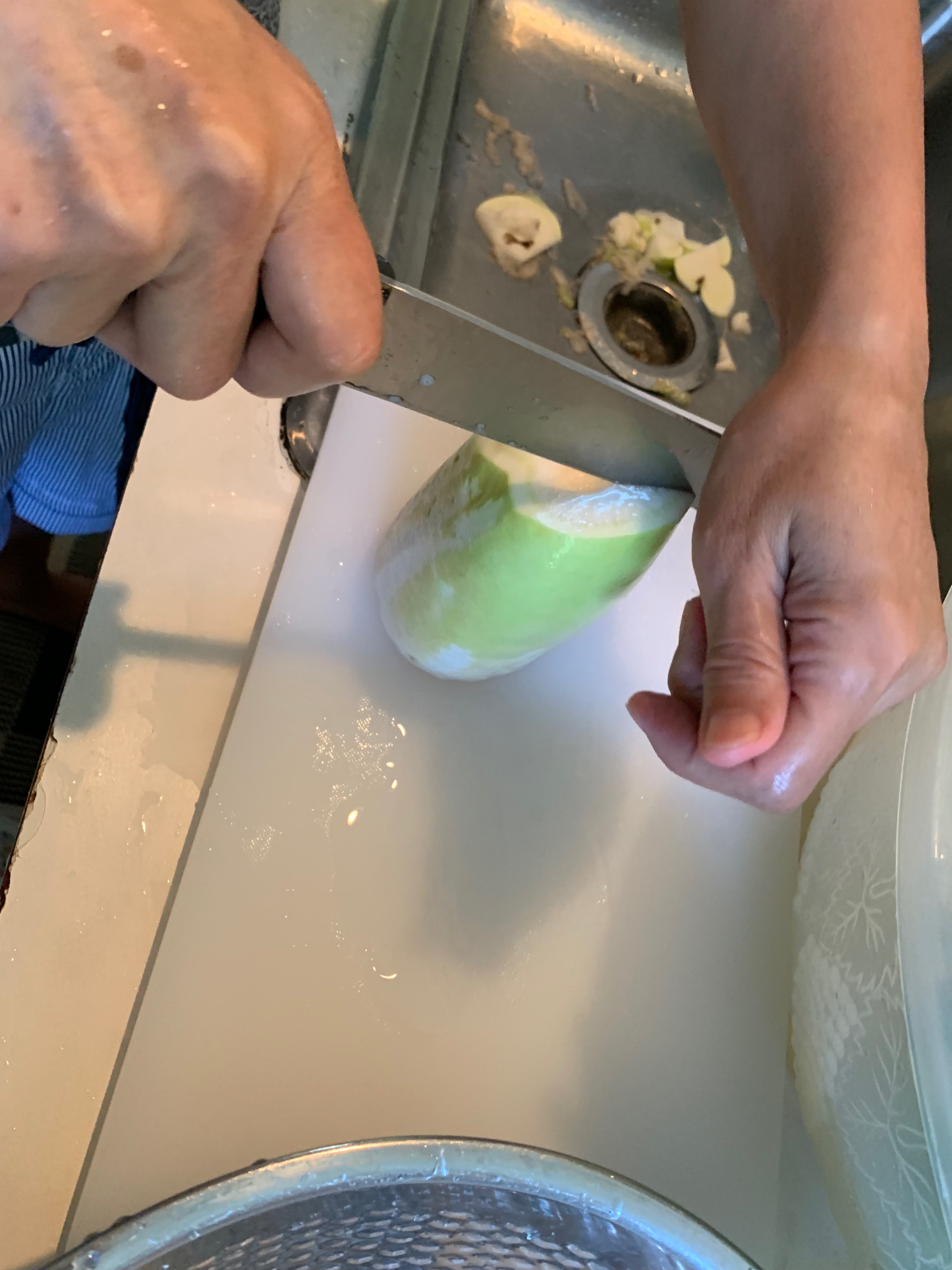
- Cut the root of the daikon radish.
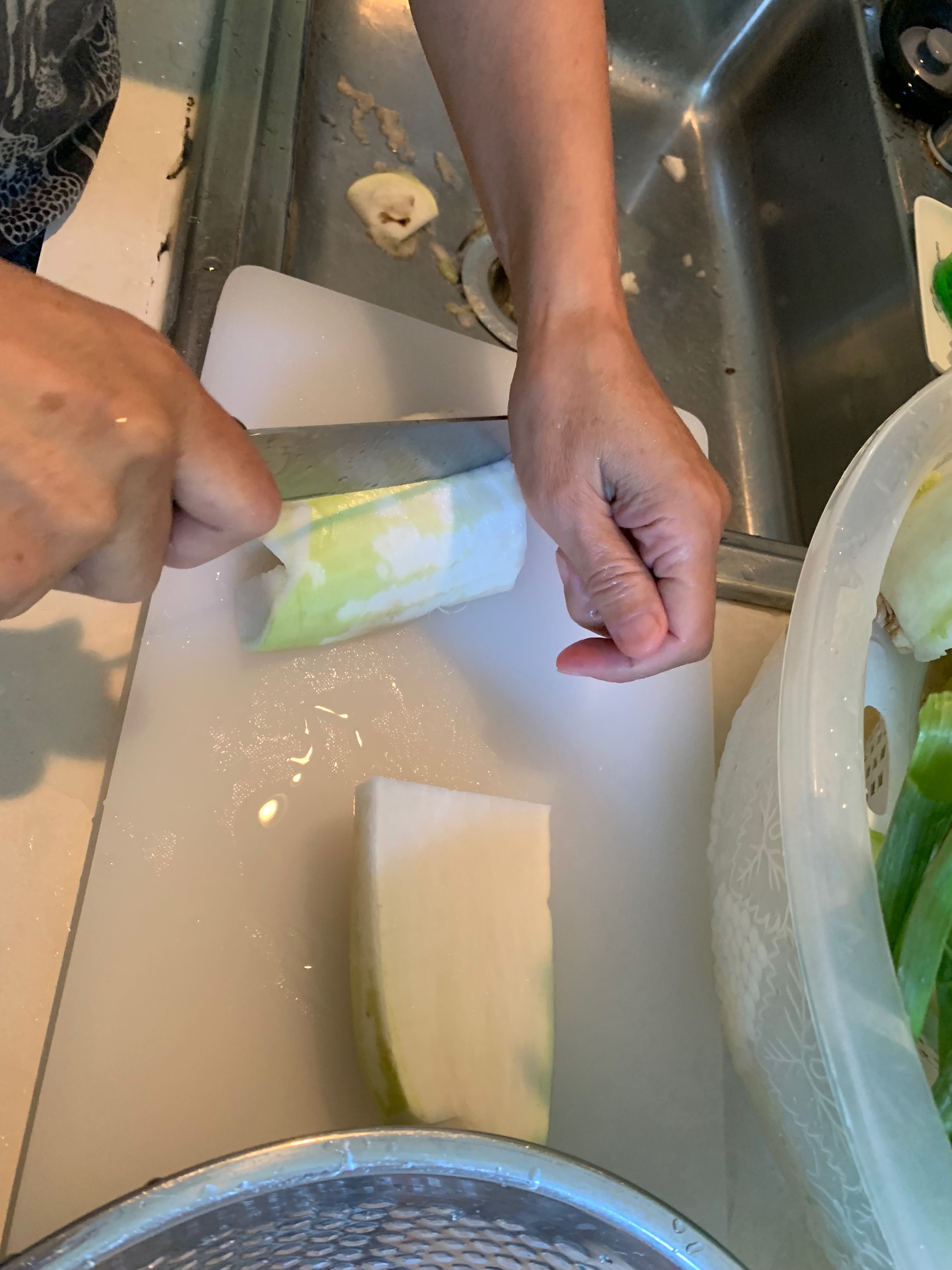
- Cut the radish in half length-wise.
- Then, cut each half length-wise again.
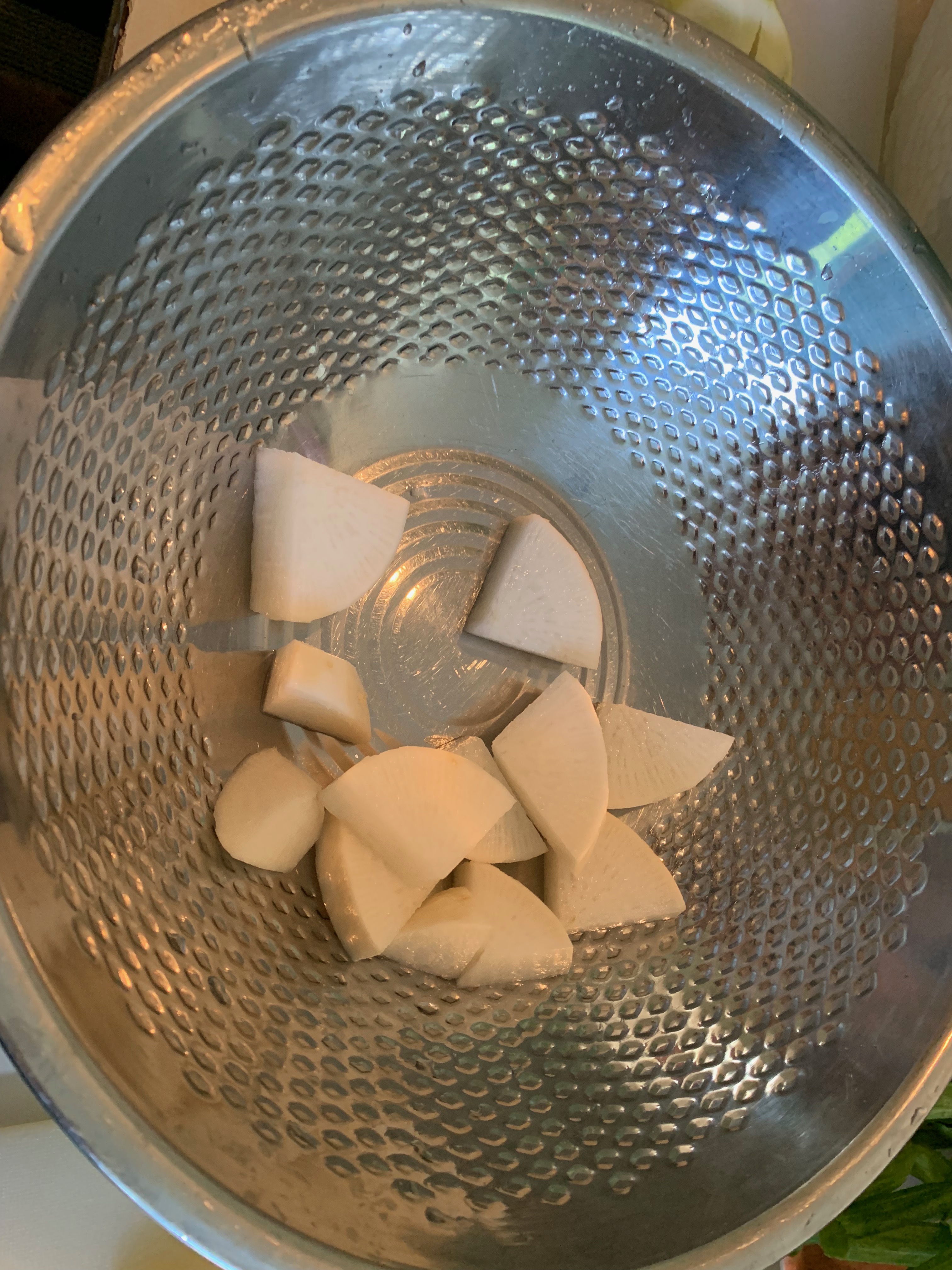
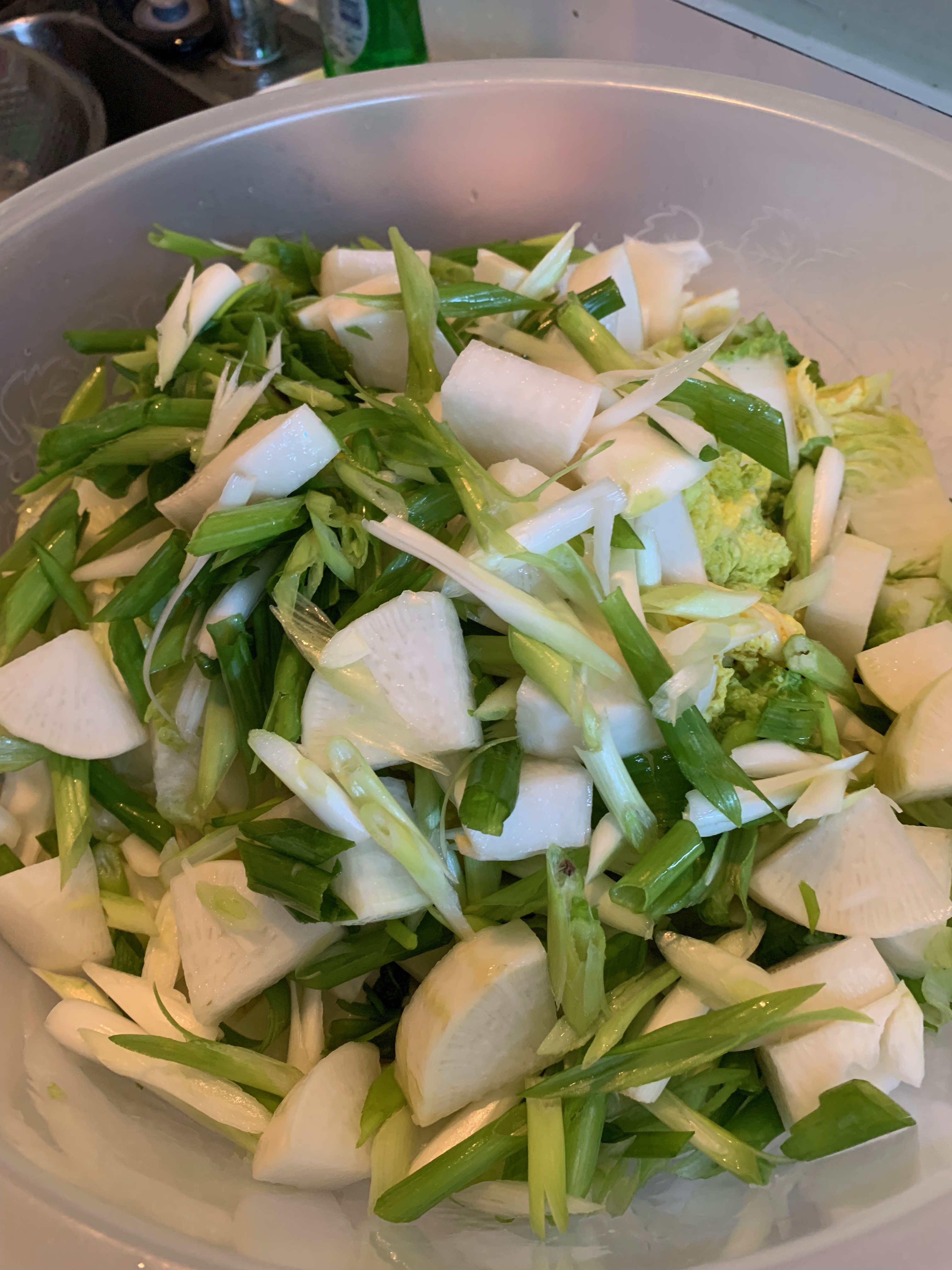
- Then, cut across each piece so that you have round-triangular pieces of radish.
- Place the radish and cabbage in a bowl. No need to salt!
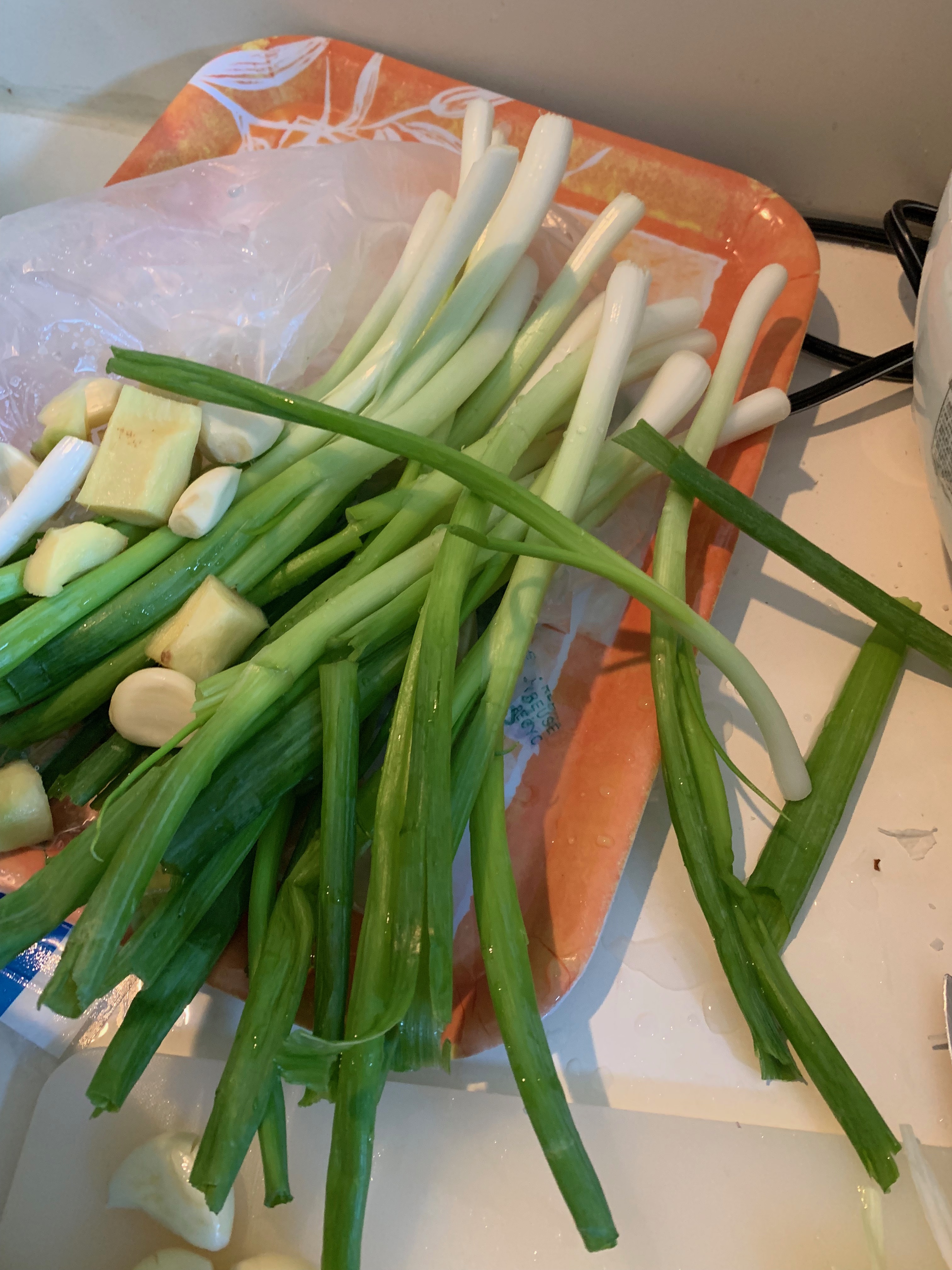
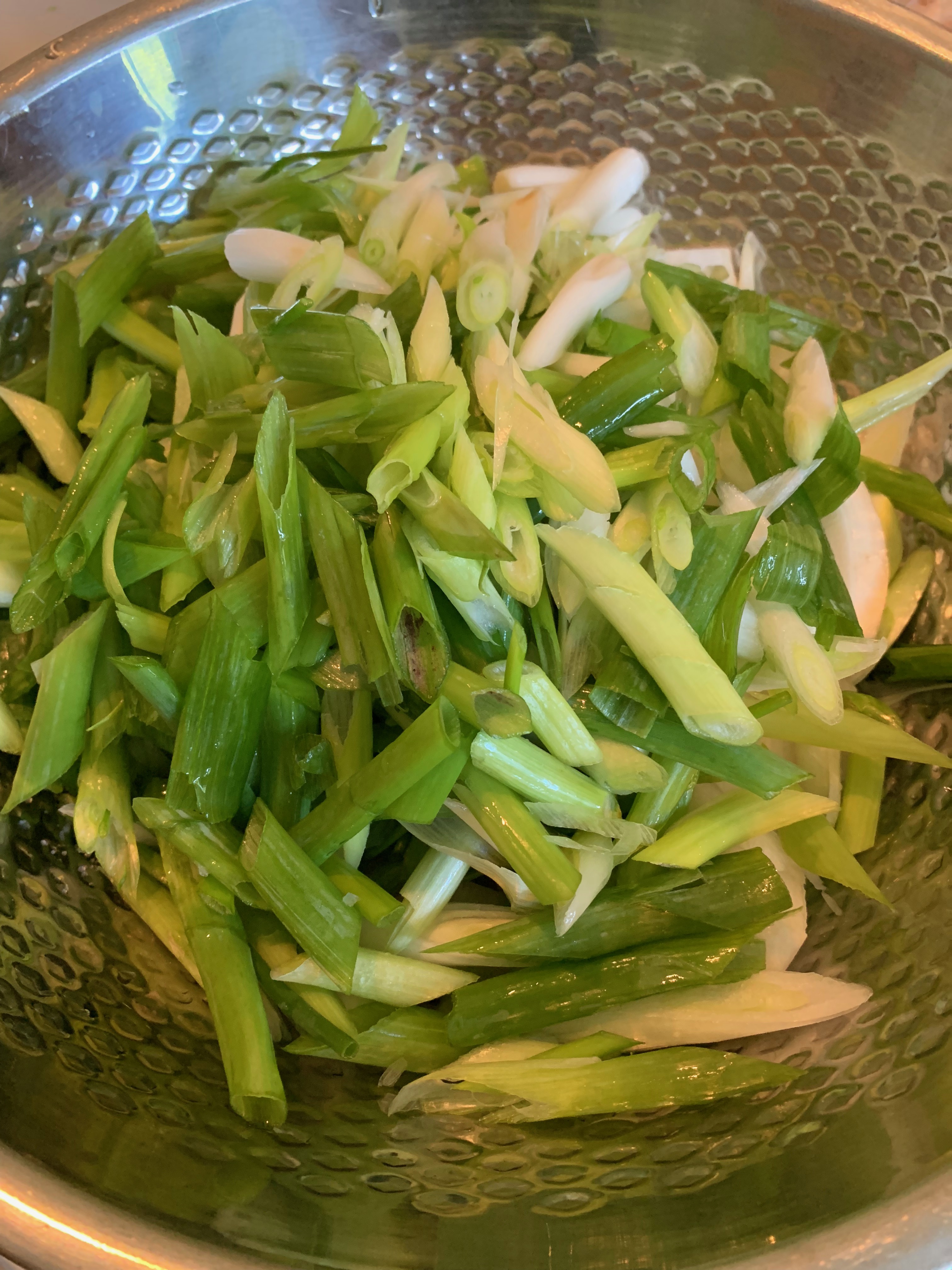
- Wash the scallions and cut off the roots at the end
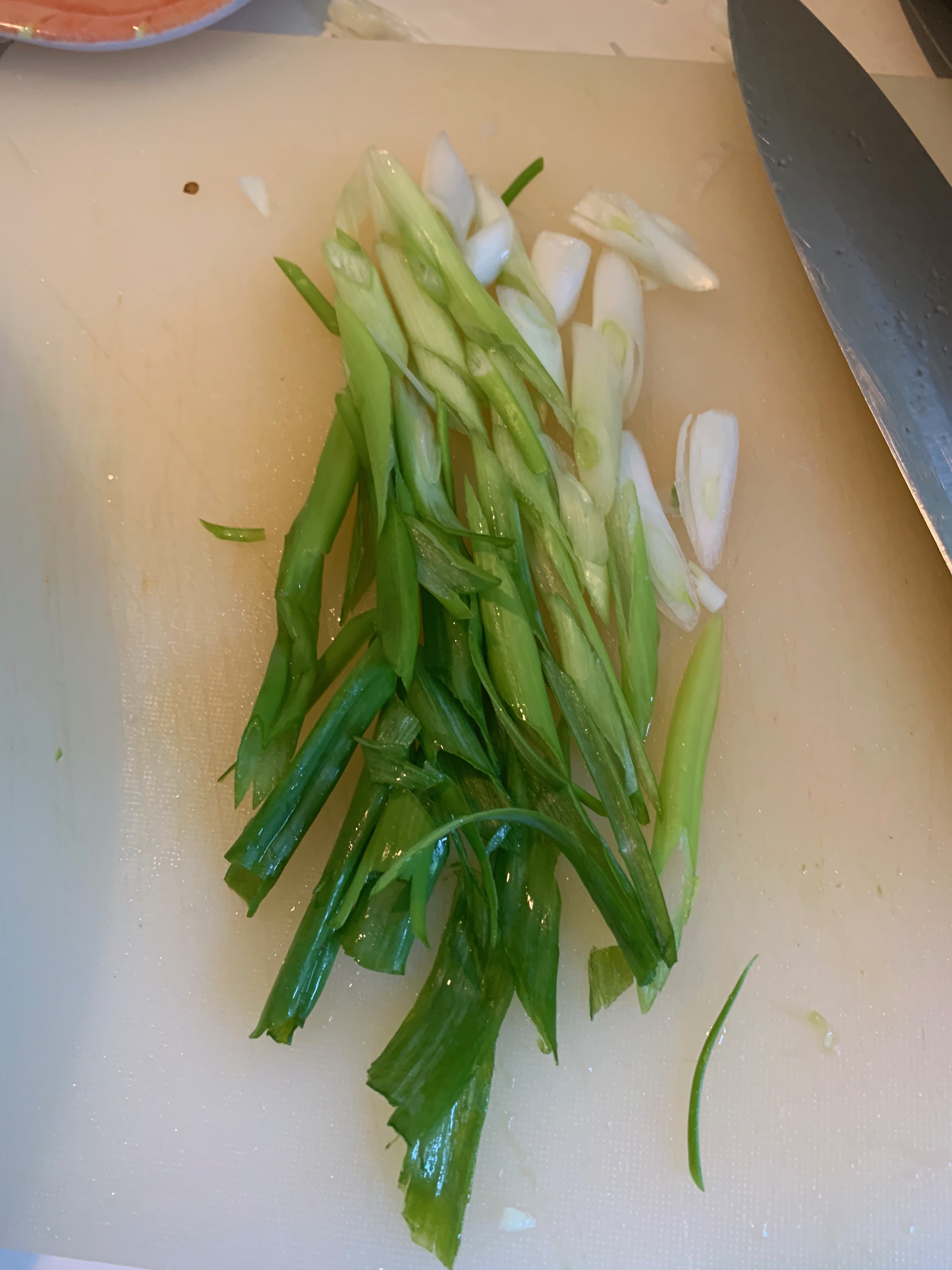
- Cut scallions into small diagonal pieces
- Place in the bowl with the cabbage and radish
Directions for the sauce:
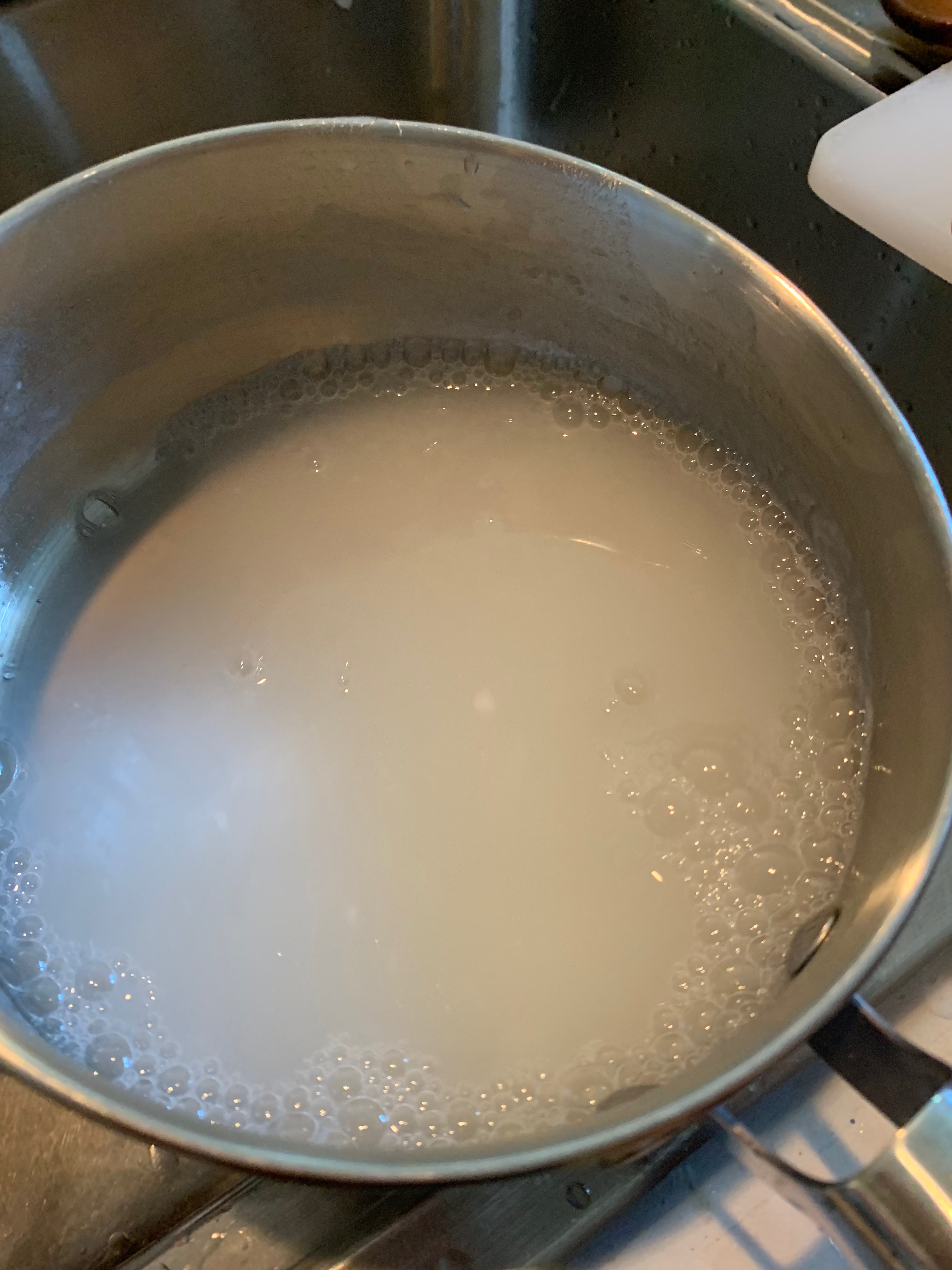
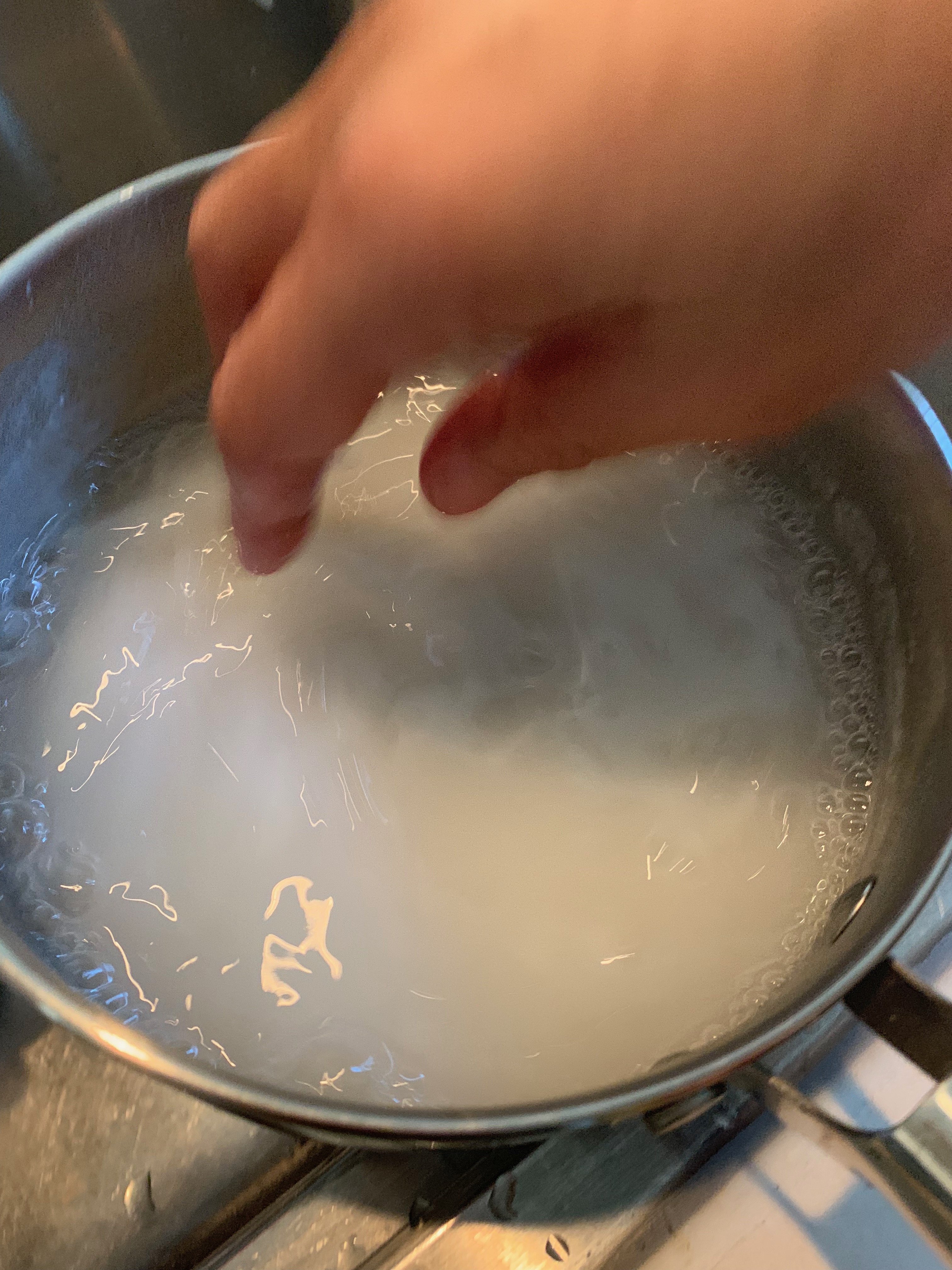
- Stir flour with water in a pan over medium heat
- Bring to a boil for about 1 minute. Take off stove and let cool.
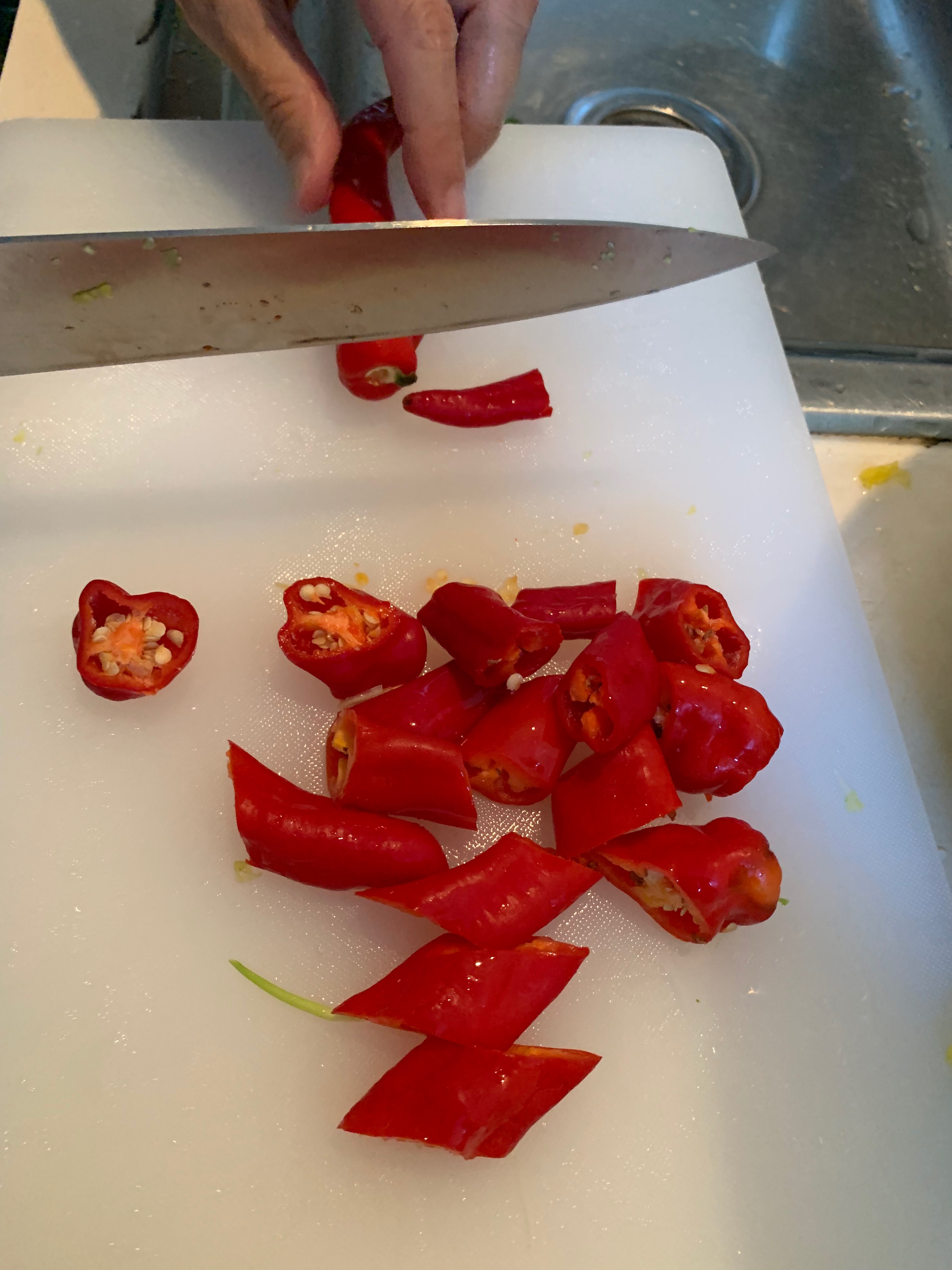
- Cut chili peppers into small pieces
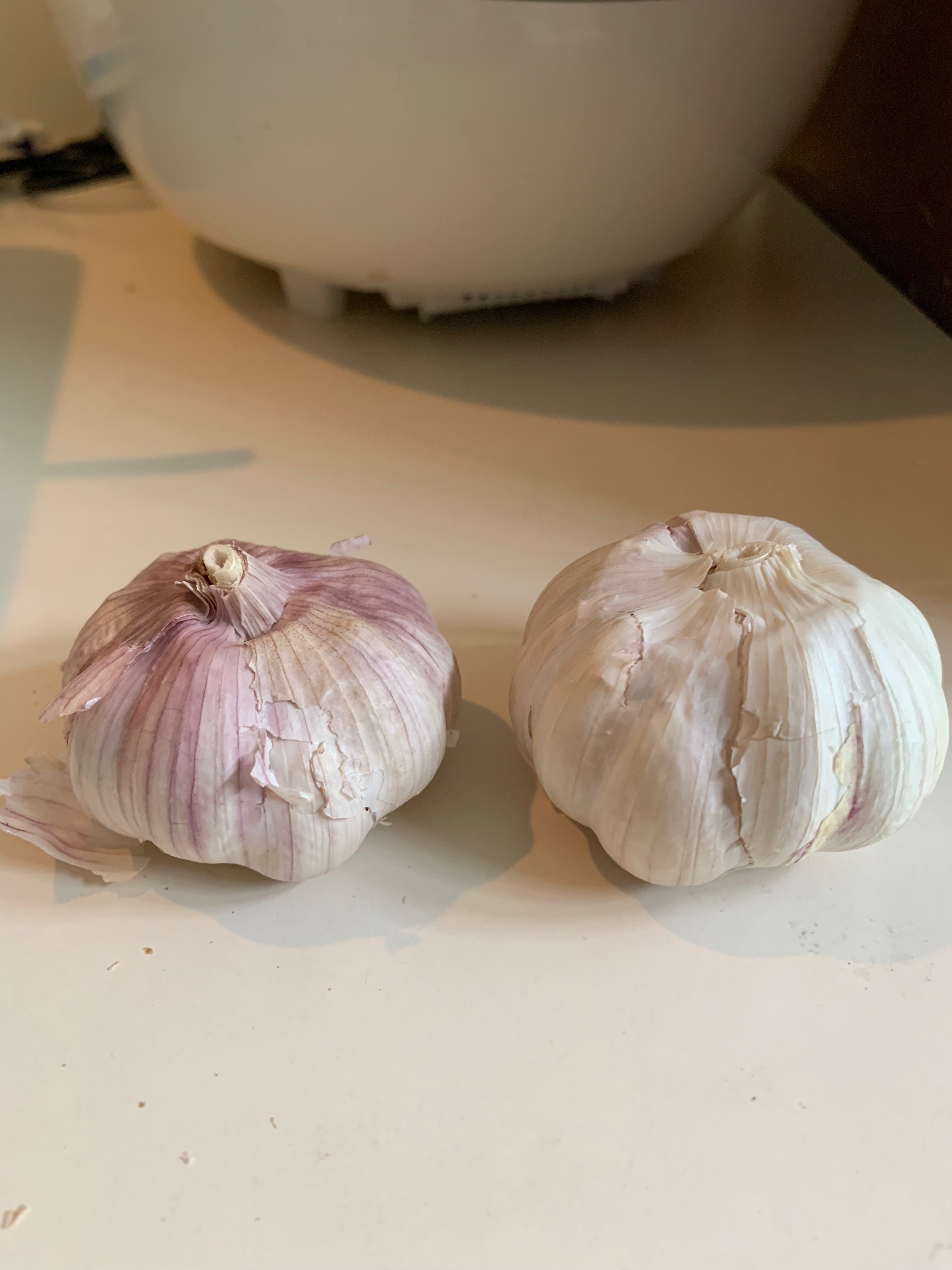
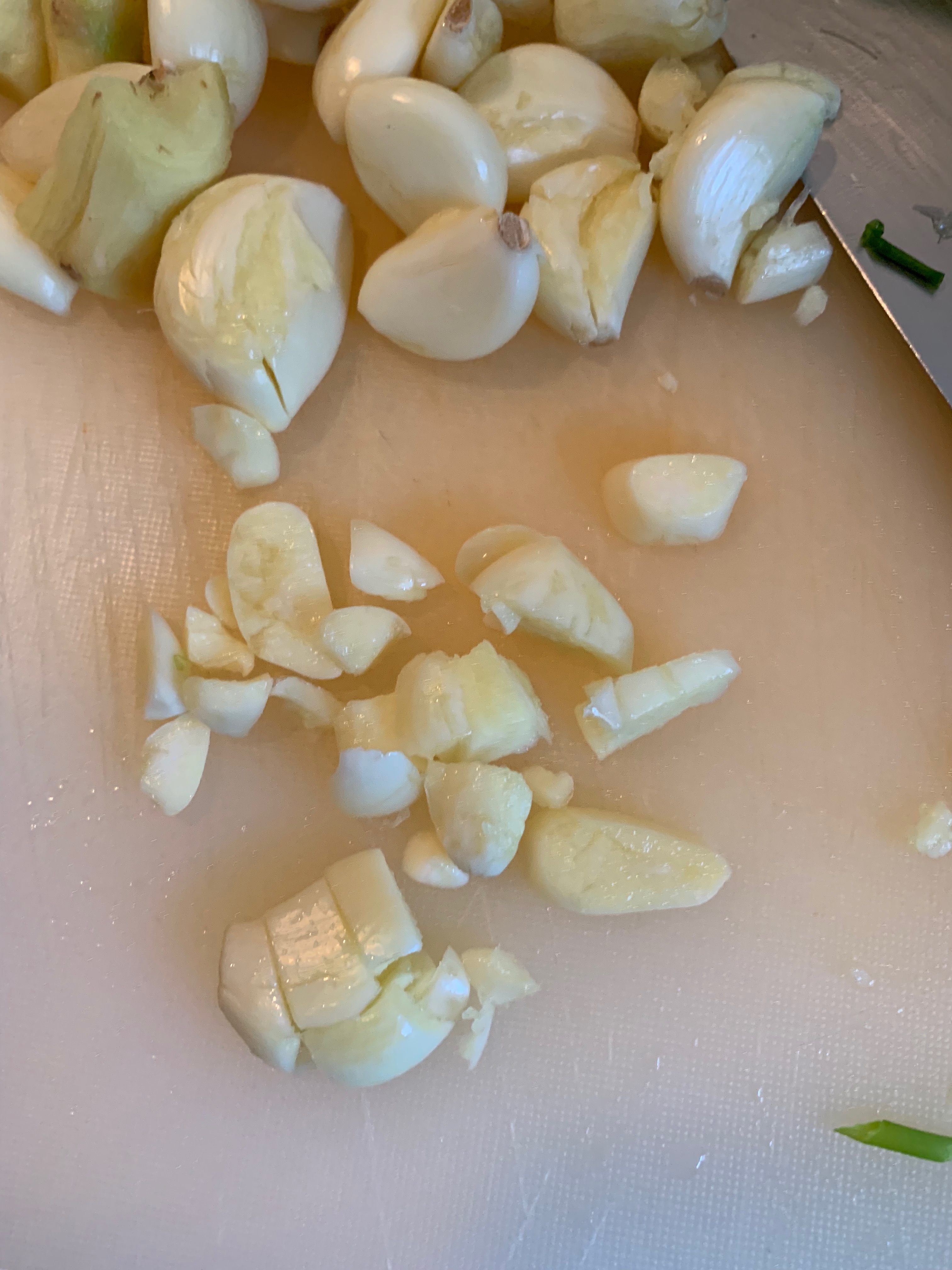
- Peel all cloves from the two garlic heads. Roughly chop.
- Roughly chop the ginger
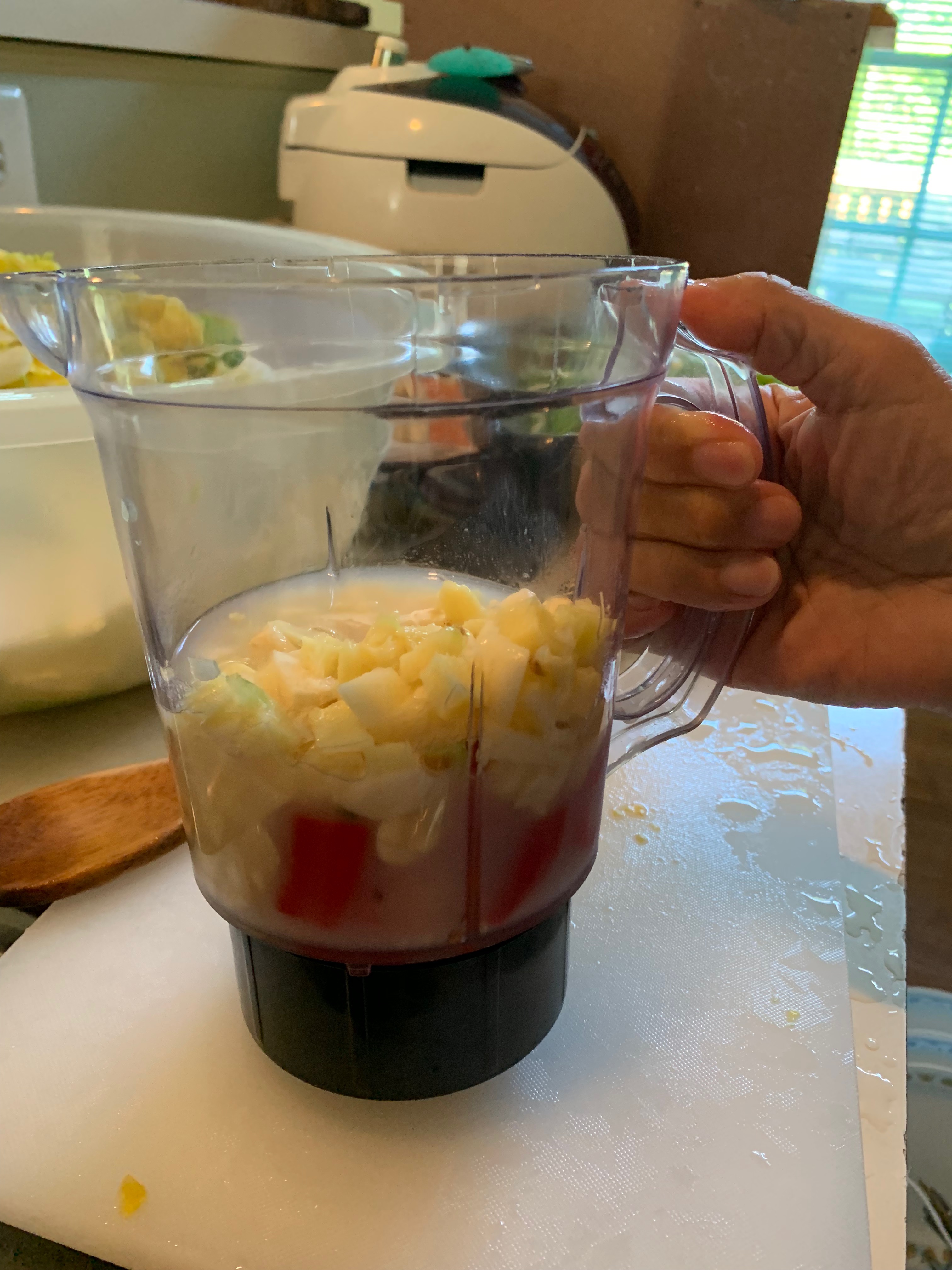
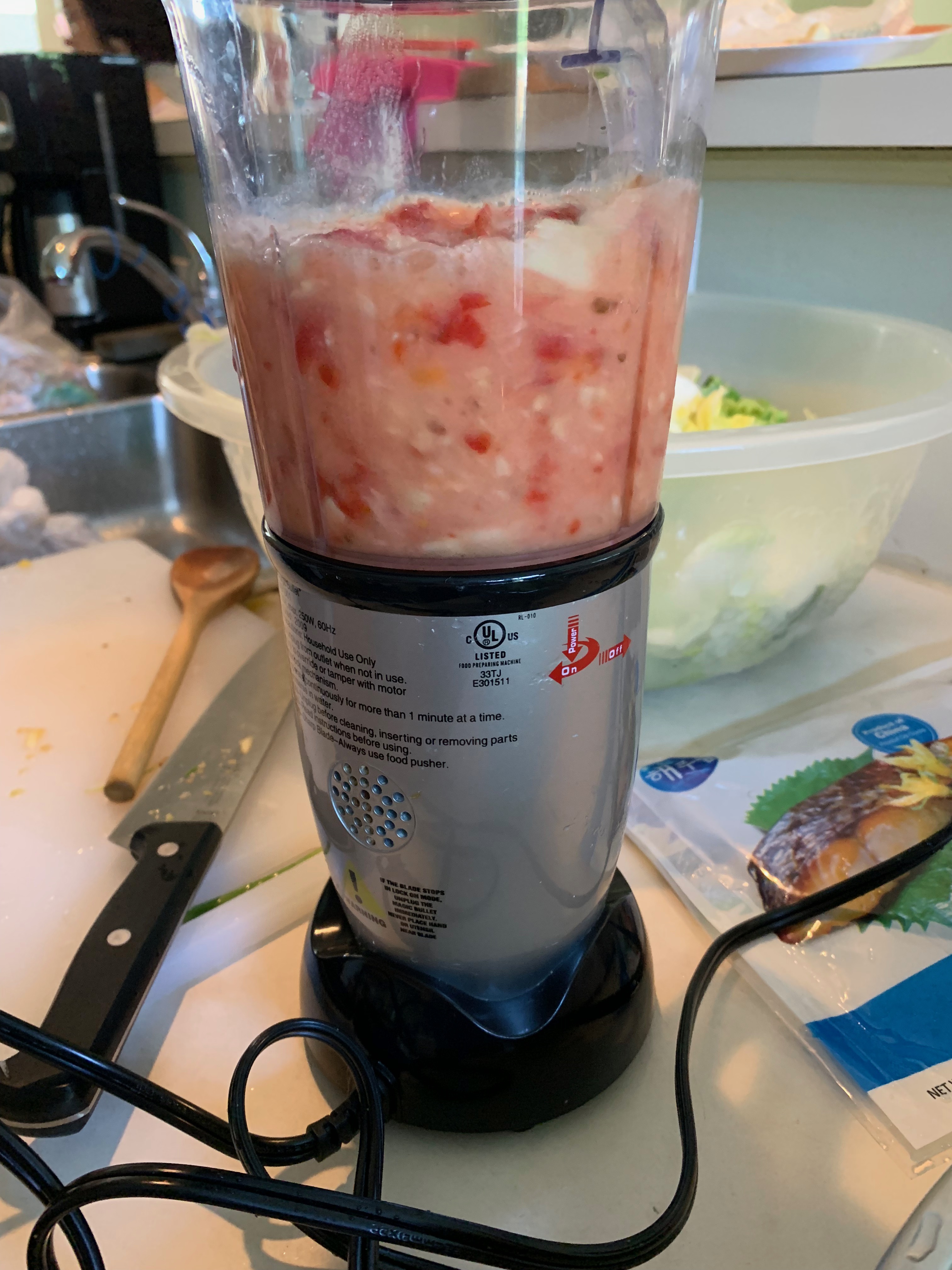
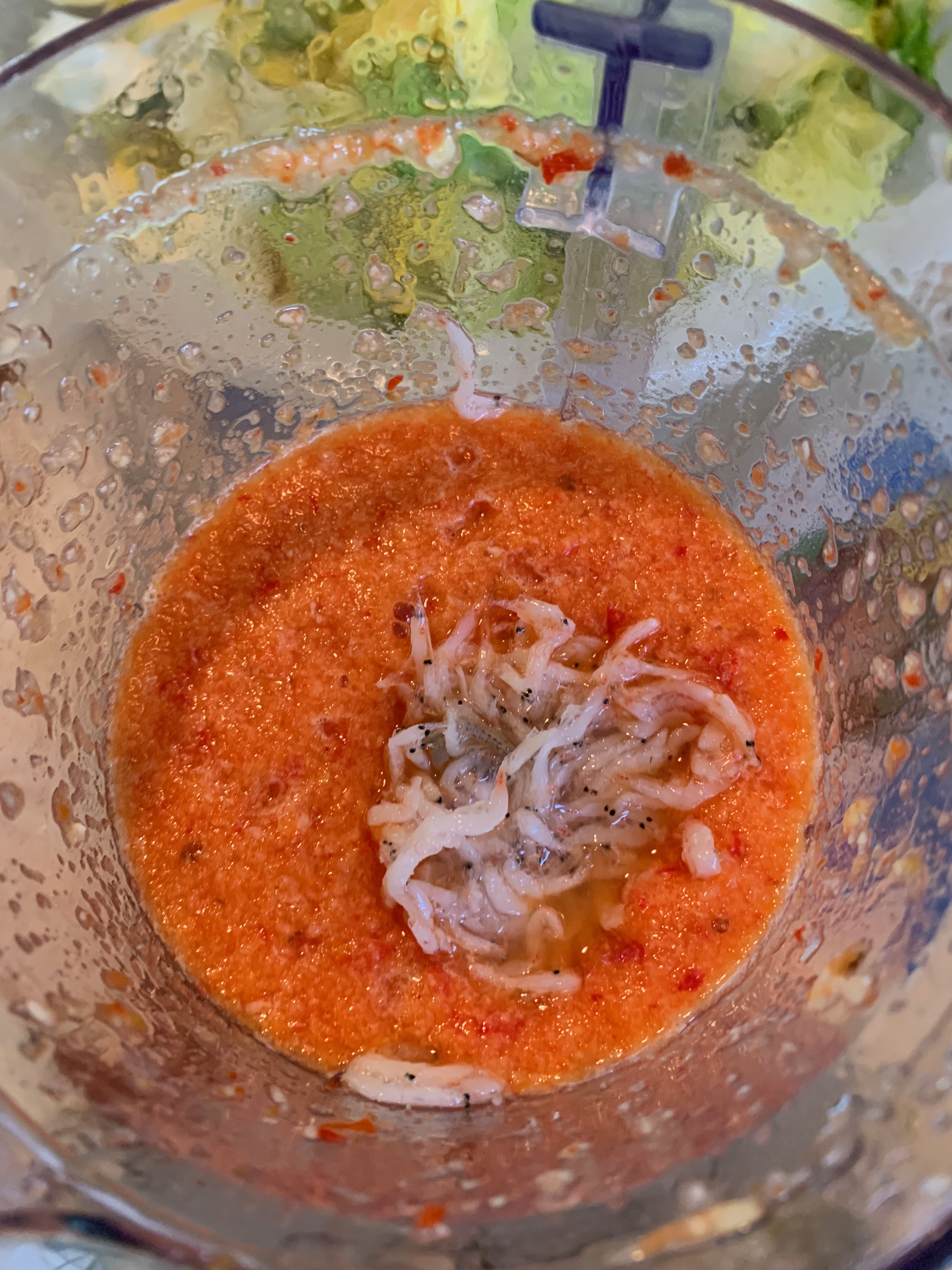
- Place flour-water mixture, chili peppers, garlic, and ginger into a food processor or blender.
- Once blended, add around 1/4 cup of fish sauce. This depends on your taste preference for fish sauce. My mom adds a little less than 1/4 cup while an aunt adds almost a 1/2 up.
- Add 1/4 cup of salted shrimp sauce
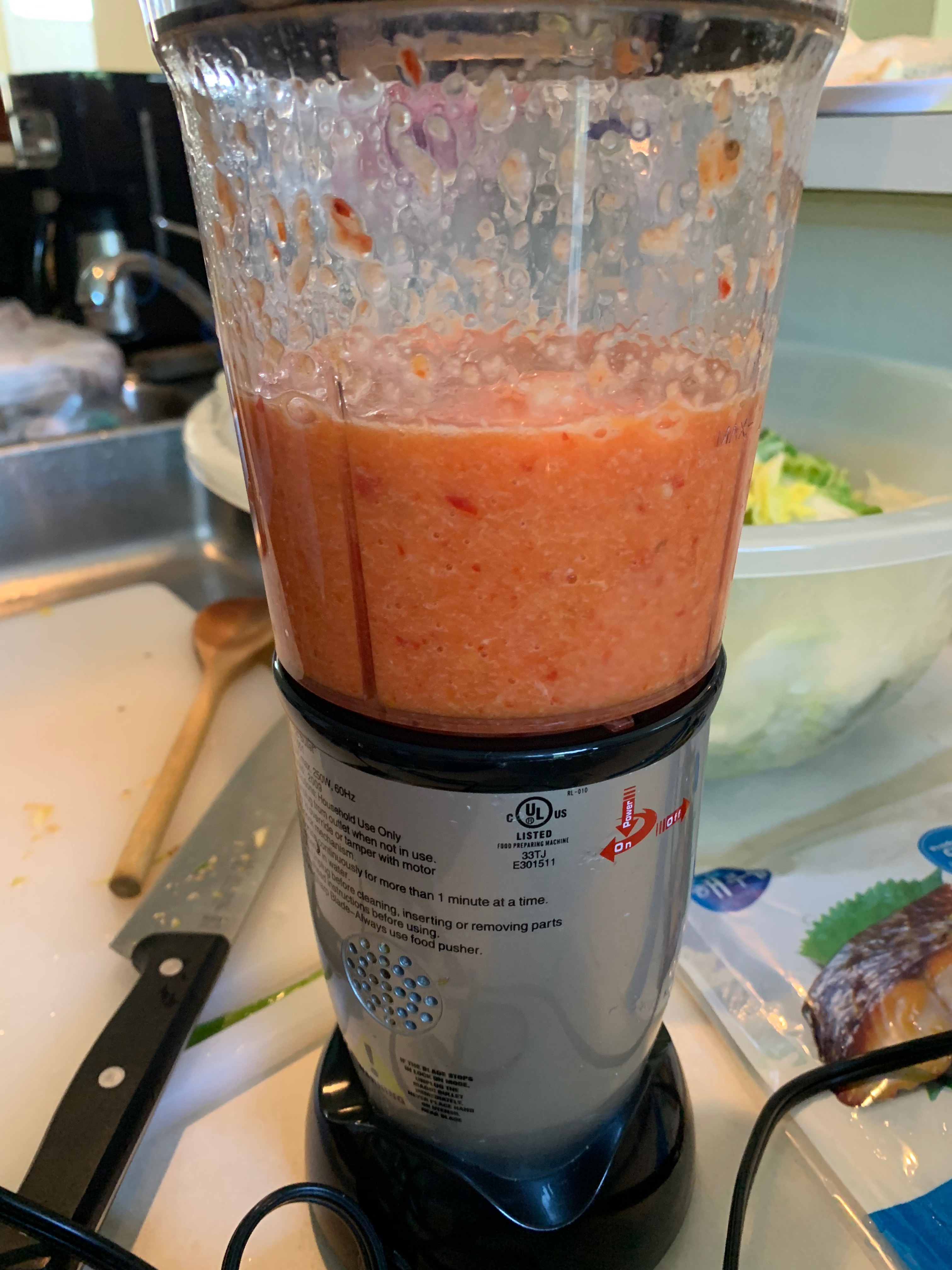
- Blend completely in food processor
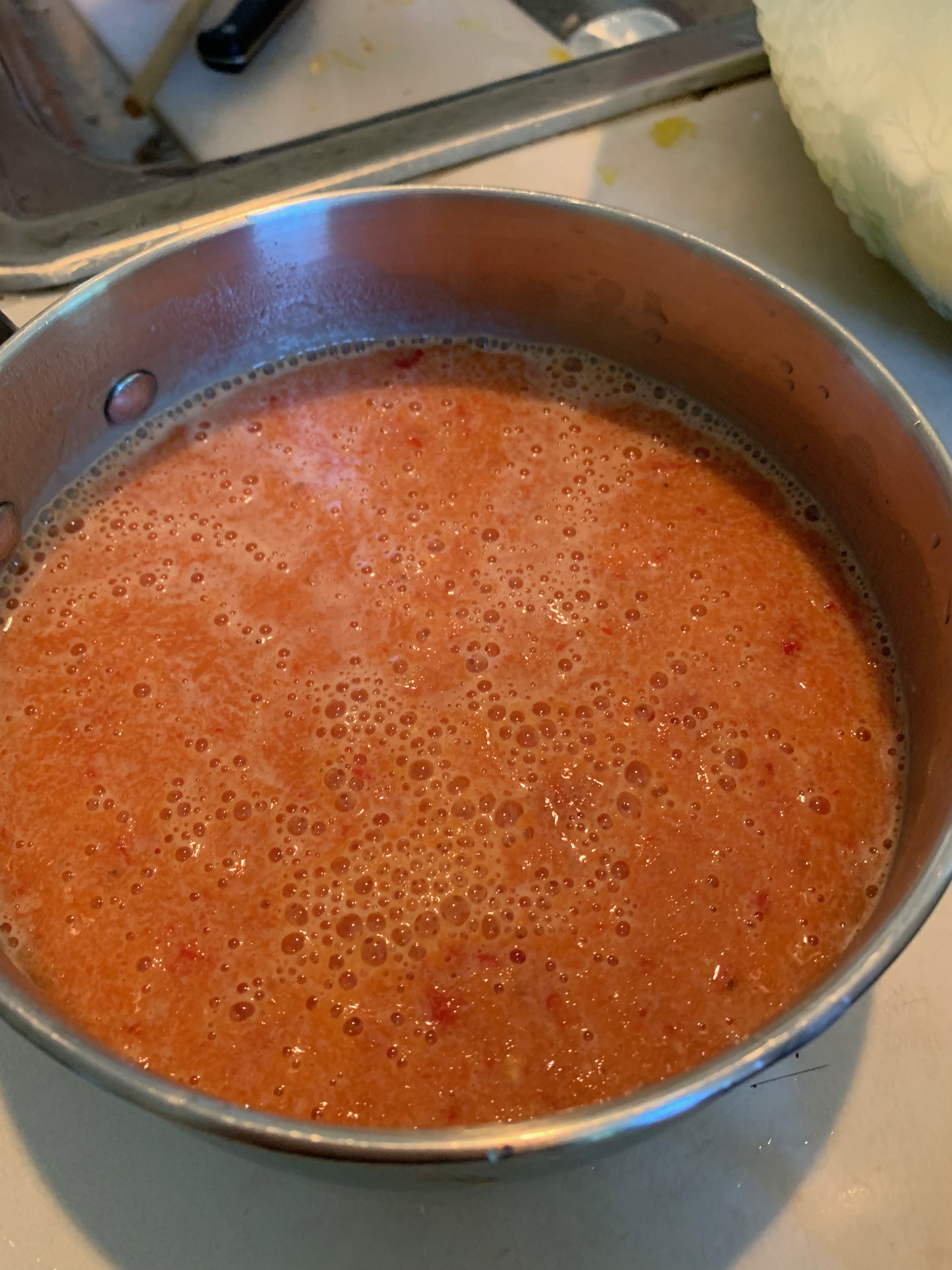
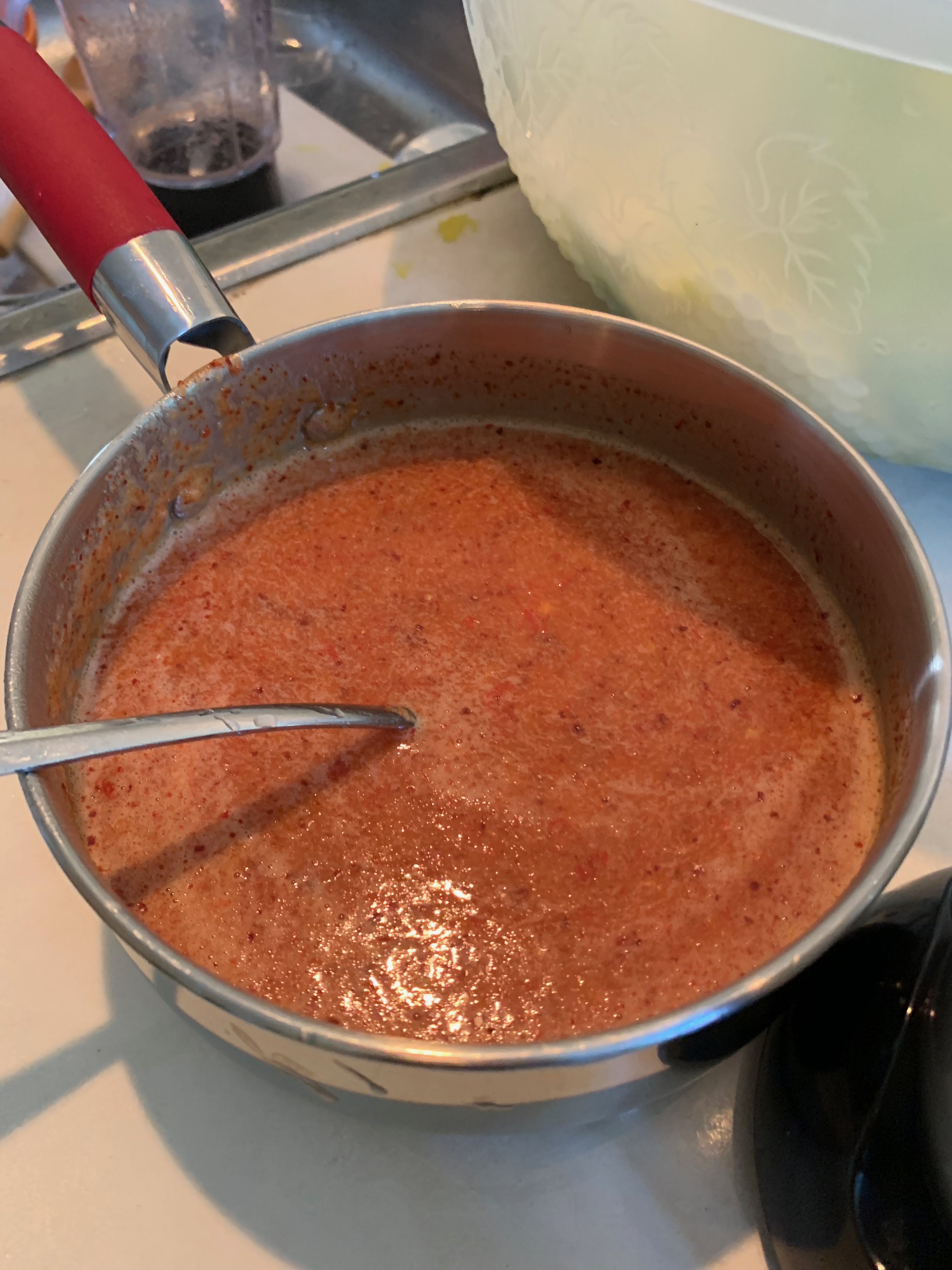
- Then, pour into a small pot (can be the same pot you used to boil flour and water mixture).
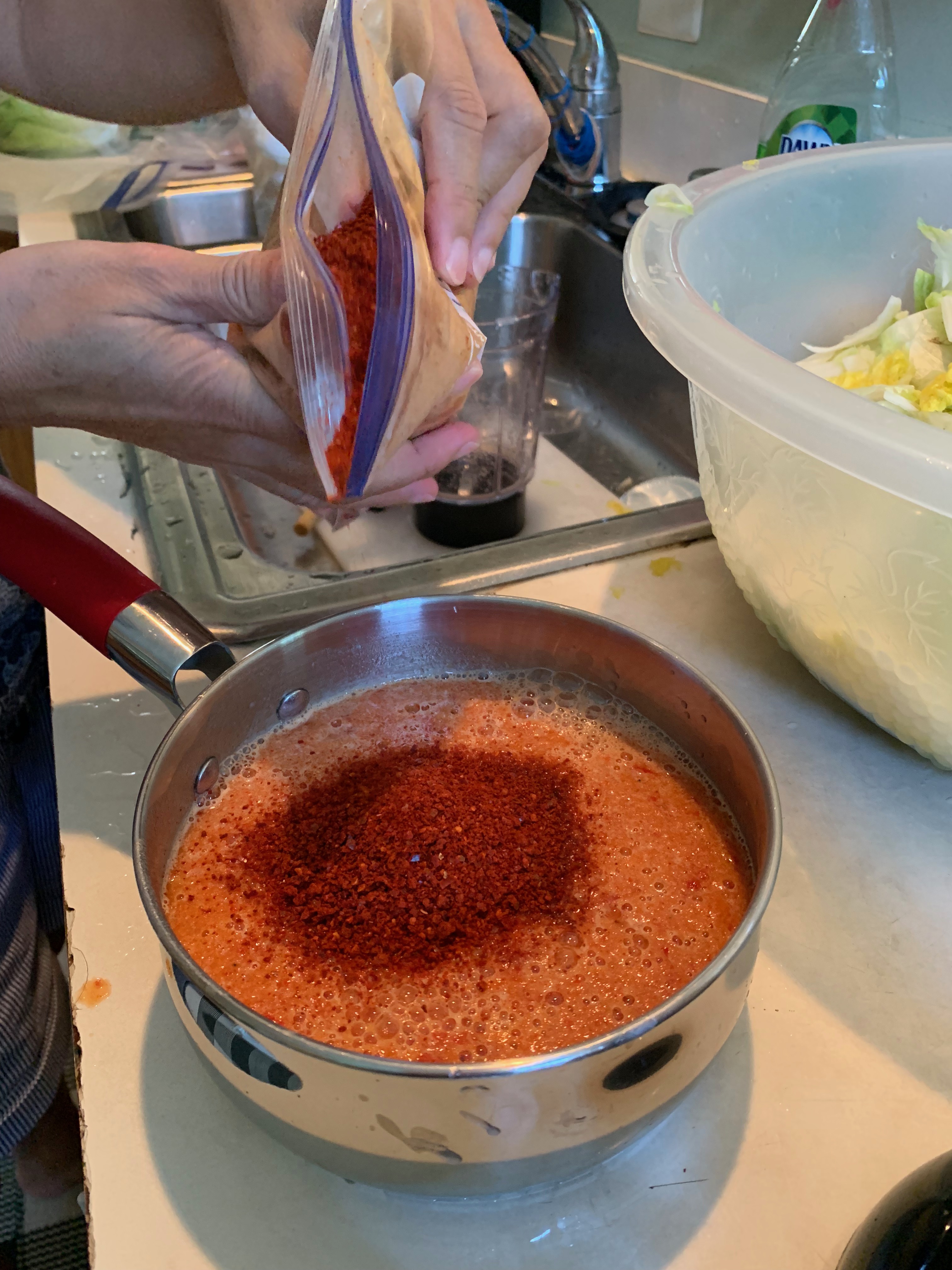
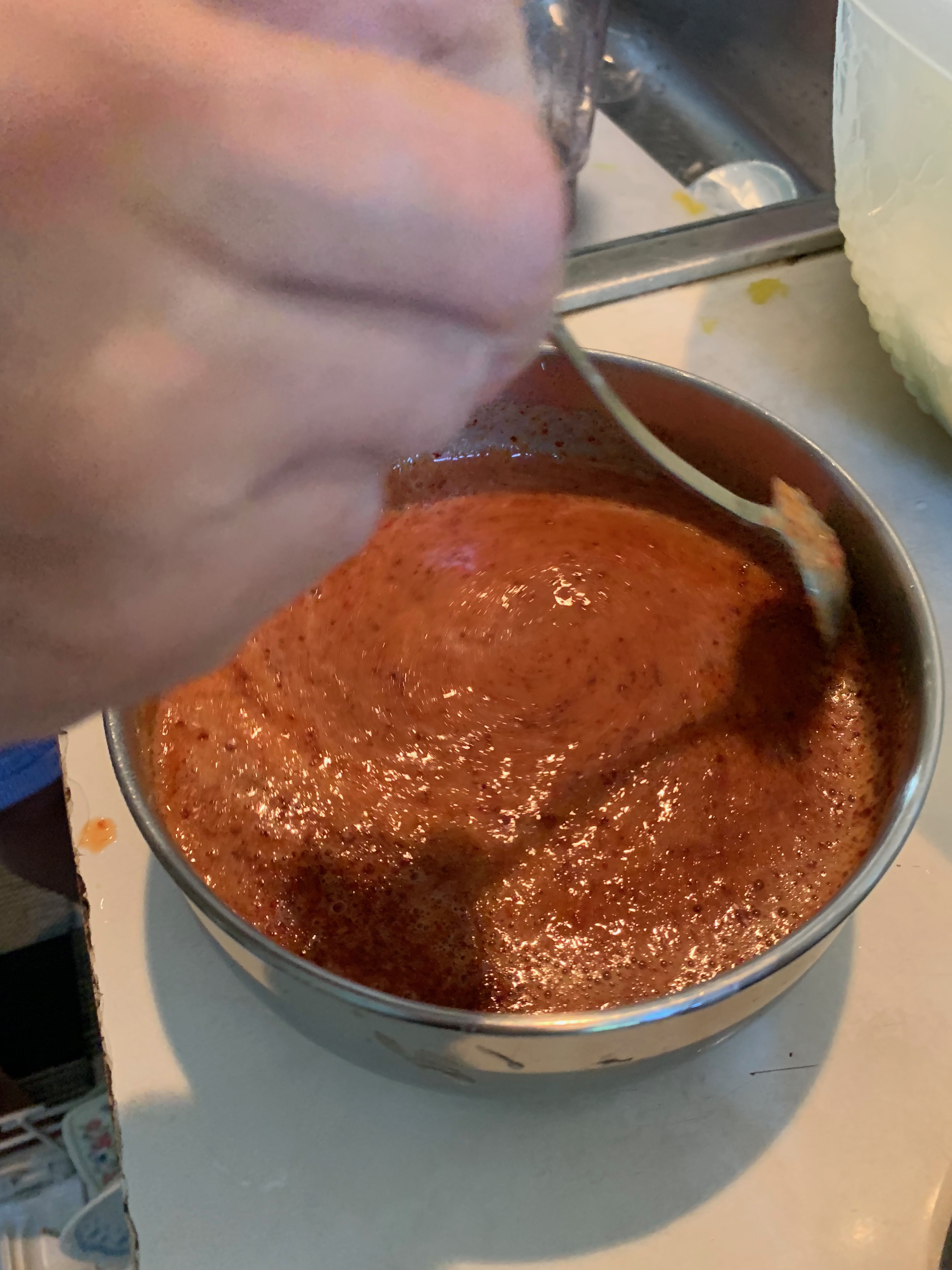
- Add 1/2 cup of chili pepper powder. Again, this depends on your preference for spice. Experiment! Stir in the chili pepper powder.
- Give the cabbage, radish, and scallions a quick toss so everything’s mixed together.
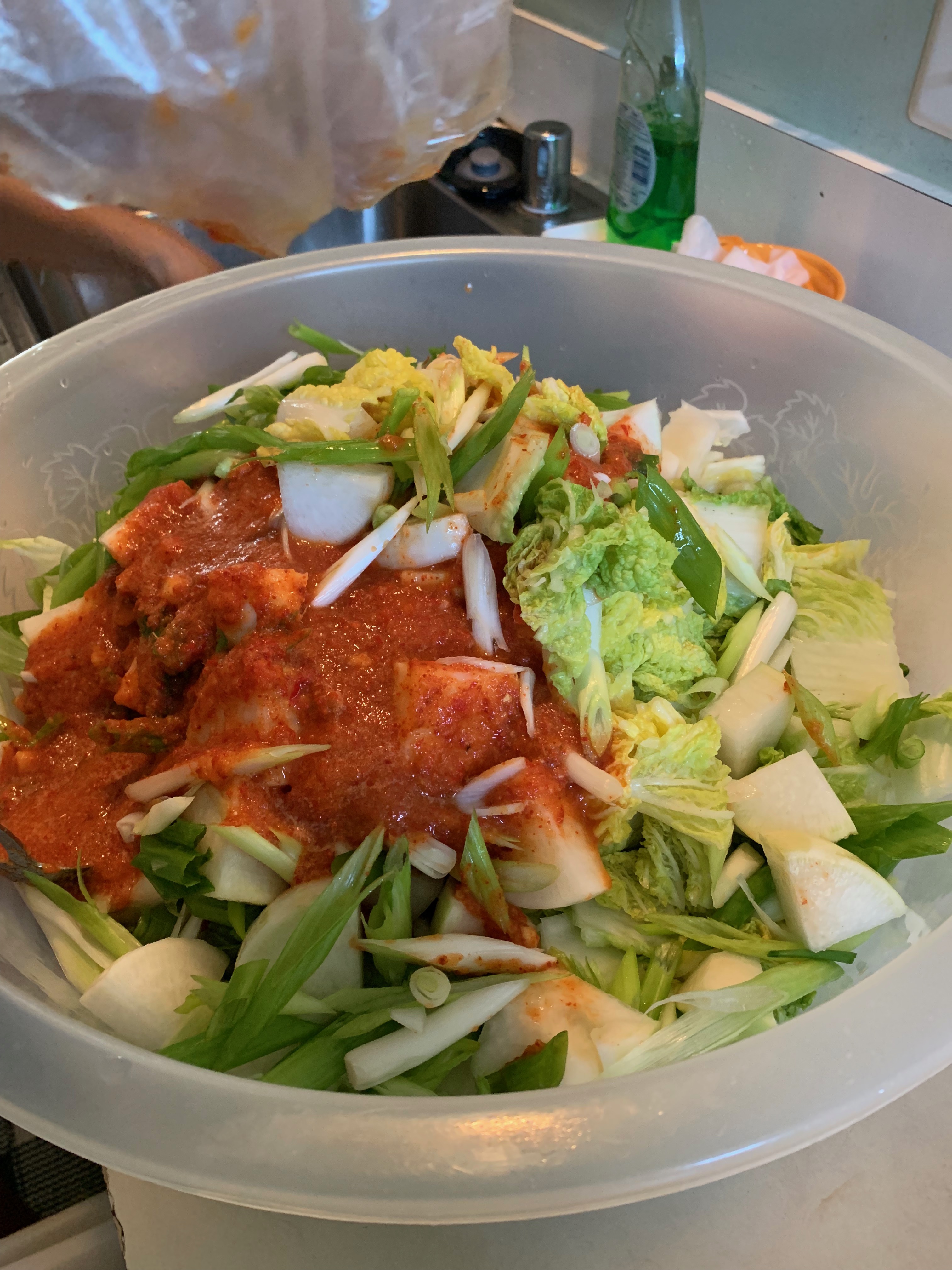
- Then, pour sauce over cabbage, radish, and scallions.
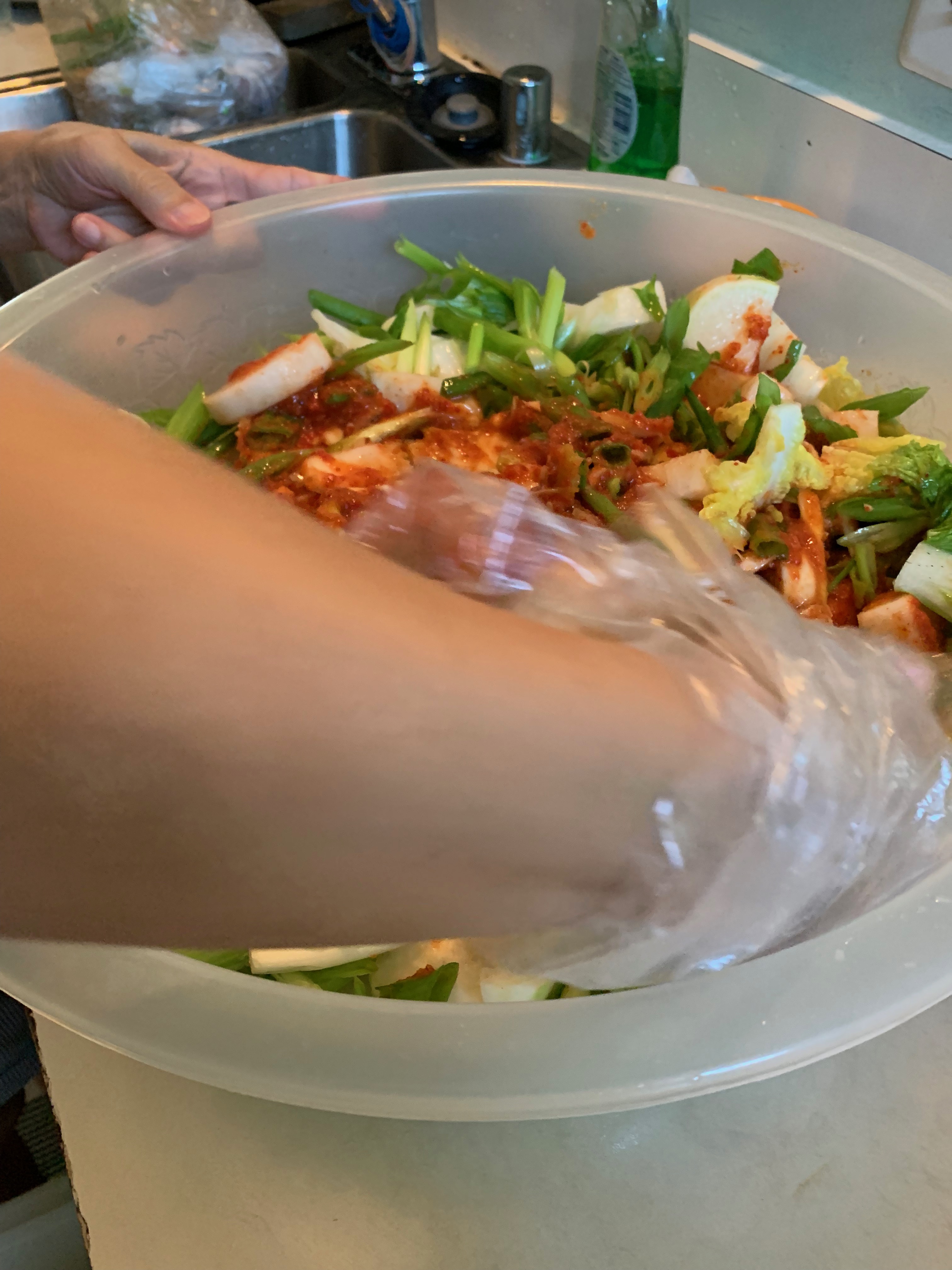
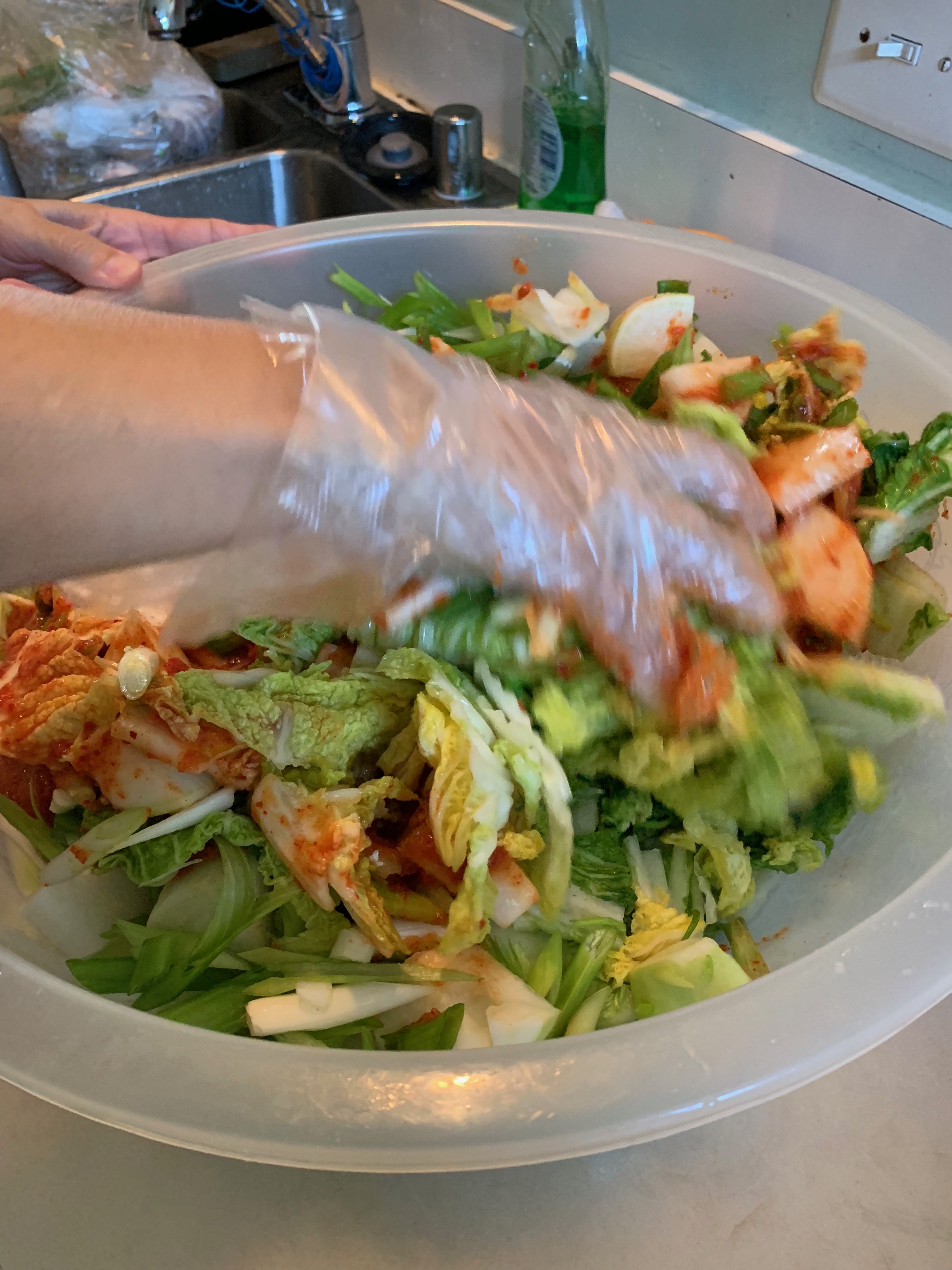
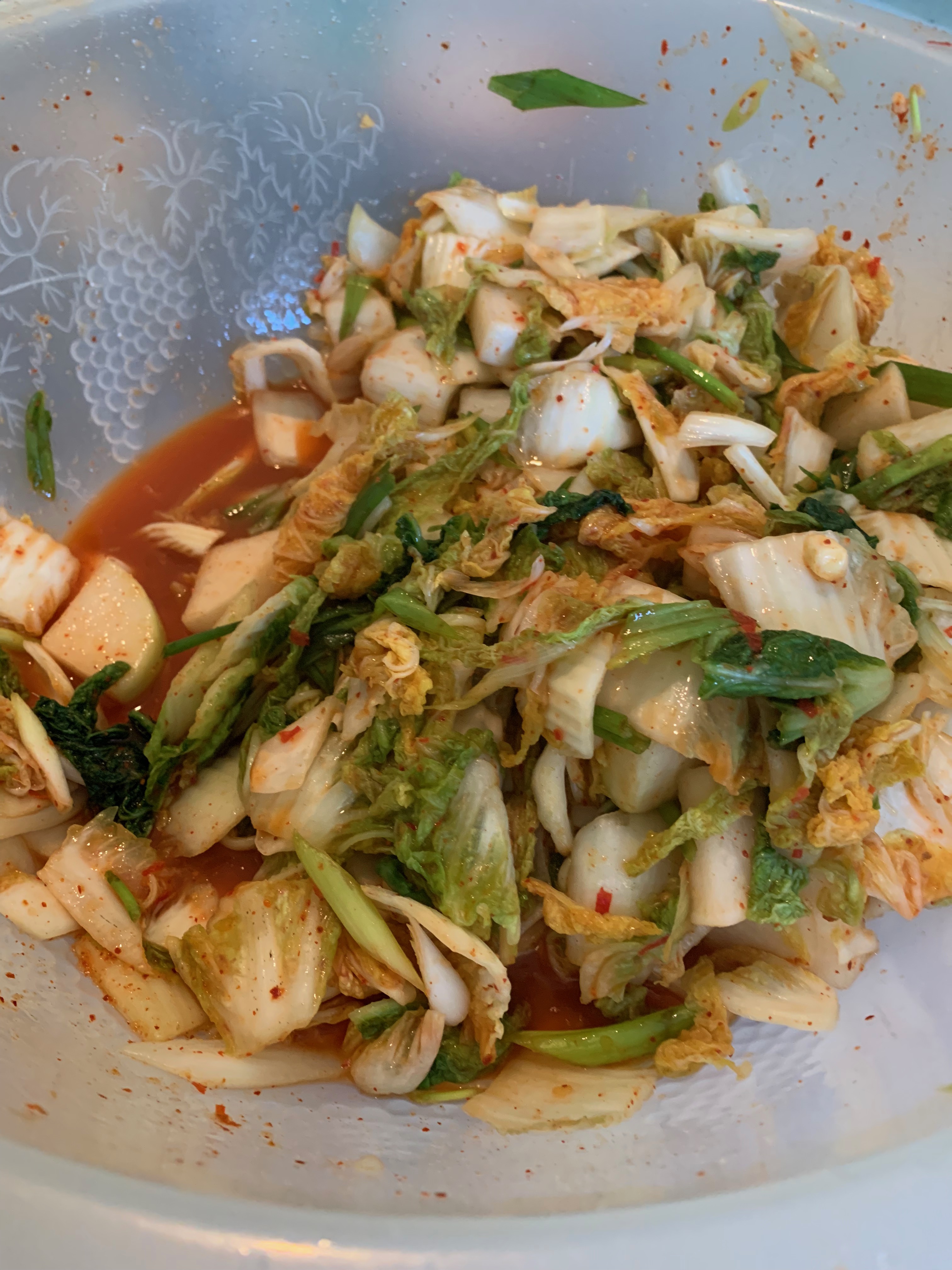
- Put on plastic gloves and gently but thoroughly toss everything together so that the sauce is all over the cabbage, radish, and scallions.
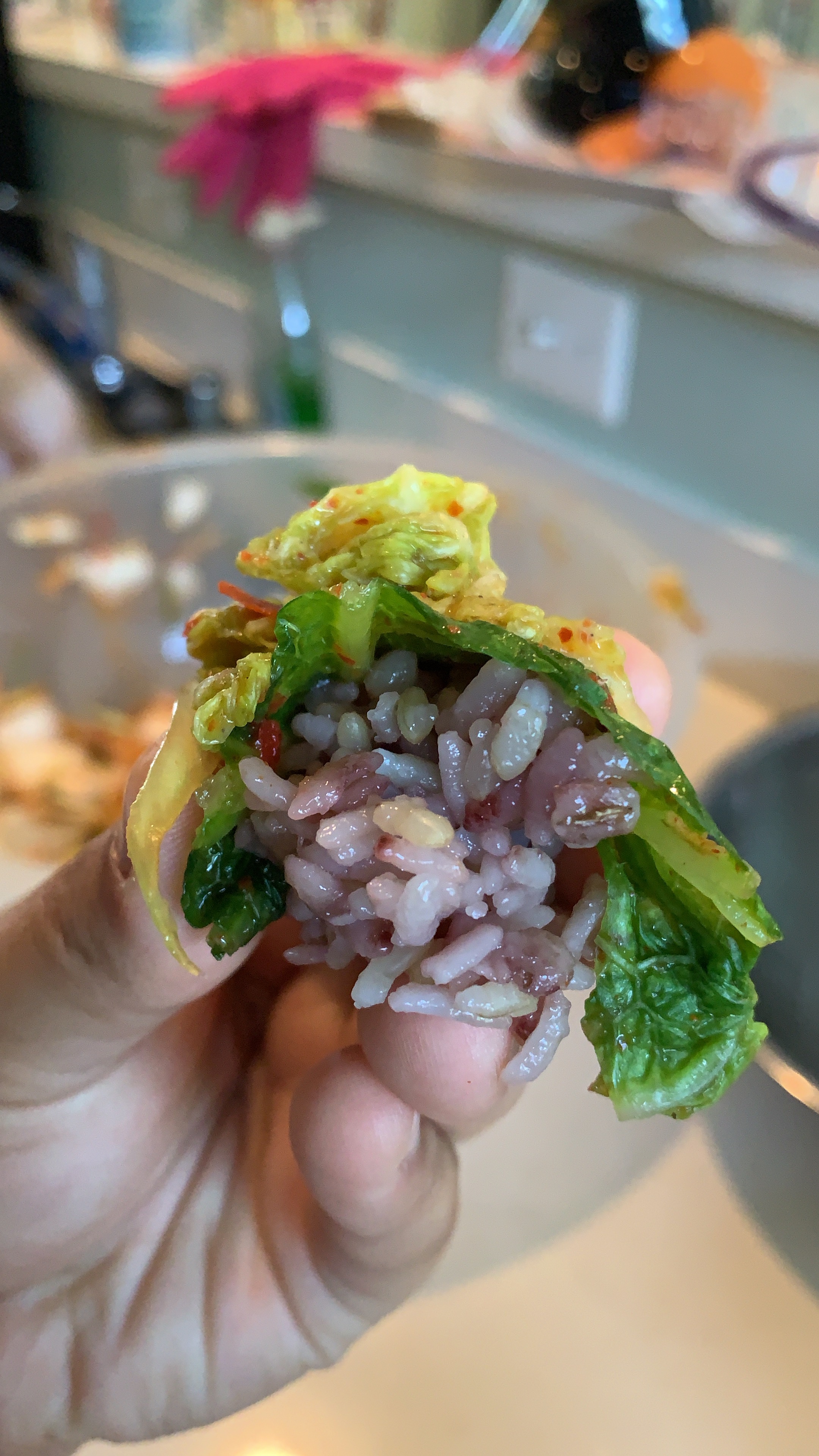
- Give a quick taste test by wrapping a cabbage leaf around some rice!
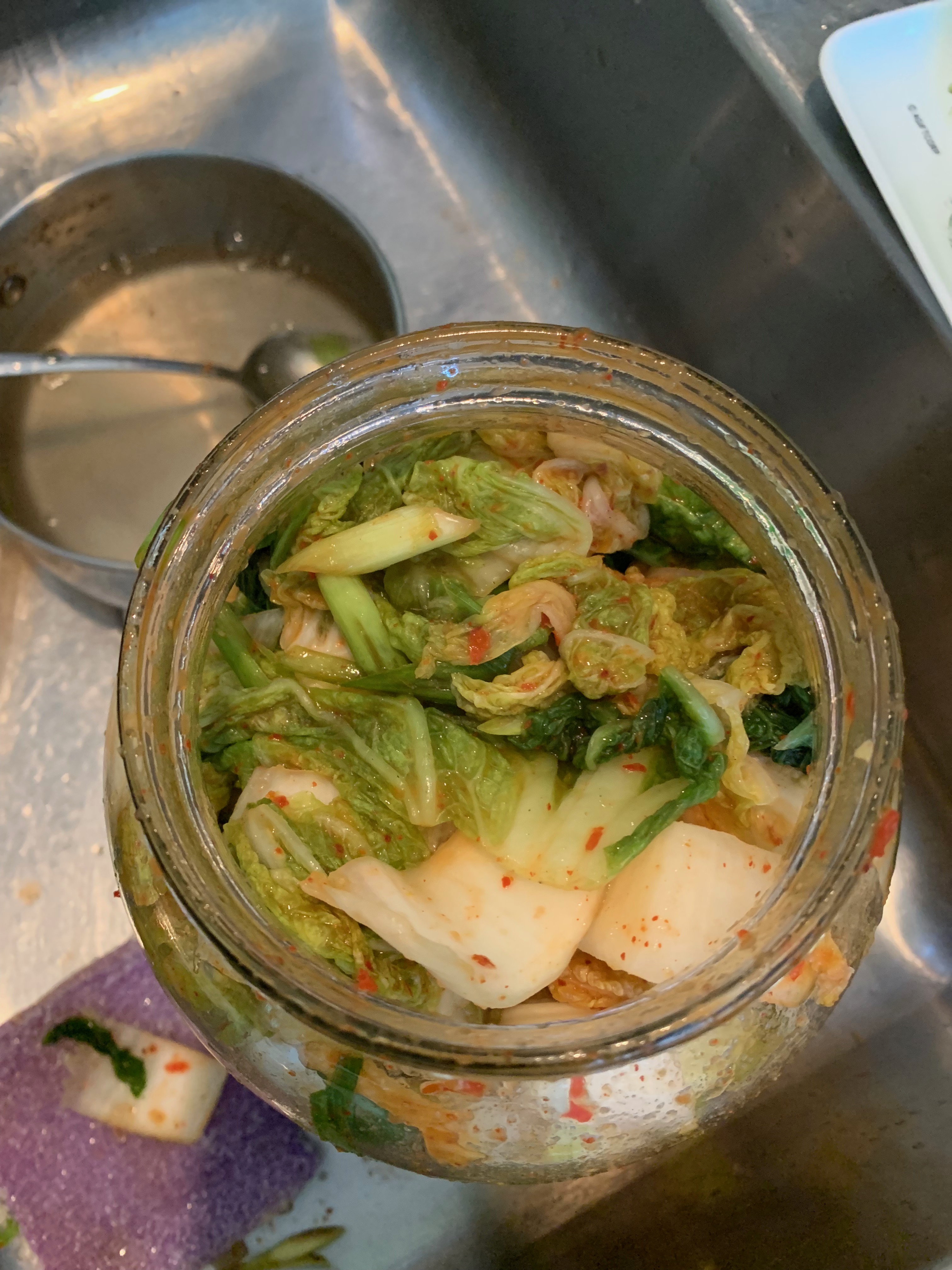
- Get glass jar ready. I’d place it in the sink because the transferring process can get messy.
- Place cabbage in the jar, saving the leafs for the top. Then, use a measuring cup to transfer the liquid from the bowl into the jar. Only transfer the liquid once the jar is full of kimchi. The liquid should come to the neck of the jar.
- Wipe down the jar, close the lid, then place in the fridge!
- Take it out and plate whenever you want to eat!
Enjoy! If you try this recipe, let me know in the comments below or on Instagram @thelittlestoneblog.
As always, thank you for reading! Also, if you have any requests for recipes, particularly Korean soups, let me know!
 the little stone
Leave a comment