
It might sound odd to eat stew for breakfast, especially a fermented soybean (doenjang) stew. However, this stew is soo delicious with a hot bowl of rice on a Sunday morning and steamed or fried egg on the side. It just hits the spot.
This is the recipe for my mom’s doenjang jjigae and maybe I’m biased, but it’s the best one out there 😛
Ingredients for 4 servings
For the broth base:
- 0.3 oz dried anchovies
- 0.1 oz dashima
- 6 cups of water
- 3.6 oz of daikon radish
For the rest of the jjigae (stew):
- 1 hot pepper
- We used a 2.4 oz medium-sized jalapeno
- Any hot pepper will do and you can add more or less depending on your spice preference
- 5.1 oz zucchini
- Again, you can add more or less depending on your preference
- 1 medium potato
- We used three small ones that amounted to 4.6 oz
- This amount also depends on your preference but do be aware that a lot potatoes can make your stew thick and starchy
- 1/2 bag of enoki mushrooms
- One bag was 7.5 oz
- You can use other mushrooms, too! Again, this depends on your preference.
- 2 large spoonfuls/little less than 1/2 cup of doenjang/fermented soybean paste
- The amount we used ended up being 2.9 oz
- One 14 oz pack of soft or medium tofu
- Firm tofu is for frying, not soup!
- 4 scallions
- 1 tablespoon of gochujang (red chili paste)
- 1 tbsp of red pepper powder
- 1/4 tbsp. of dashida
- 3 cloves of garlic
Directions:
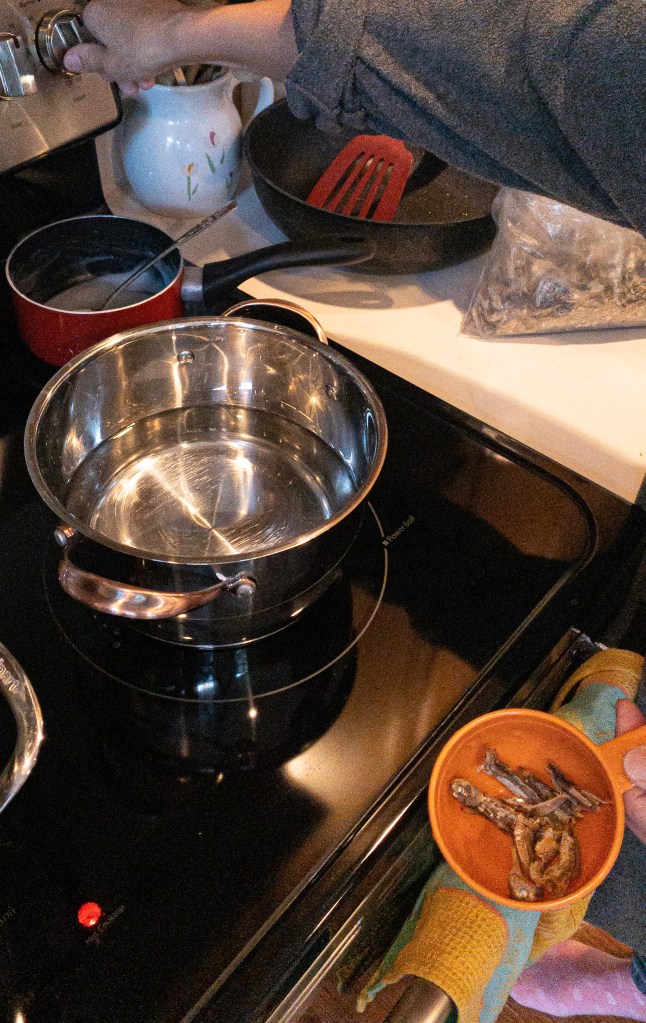
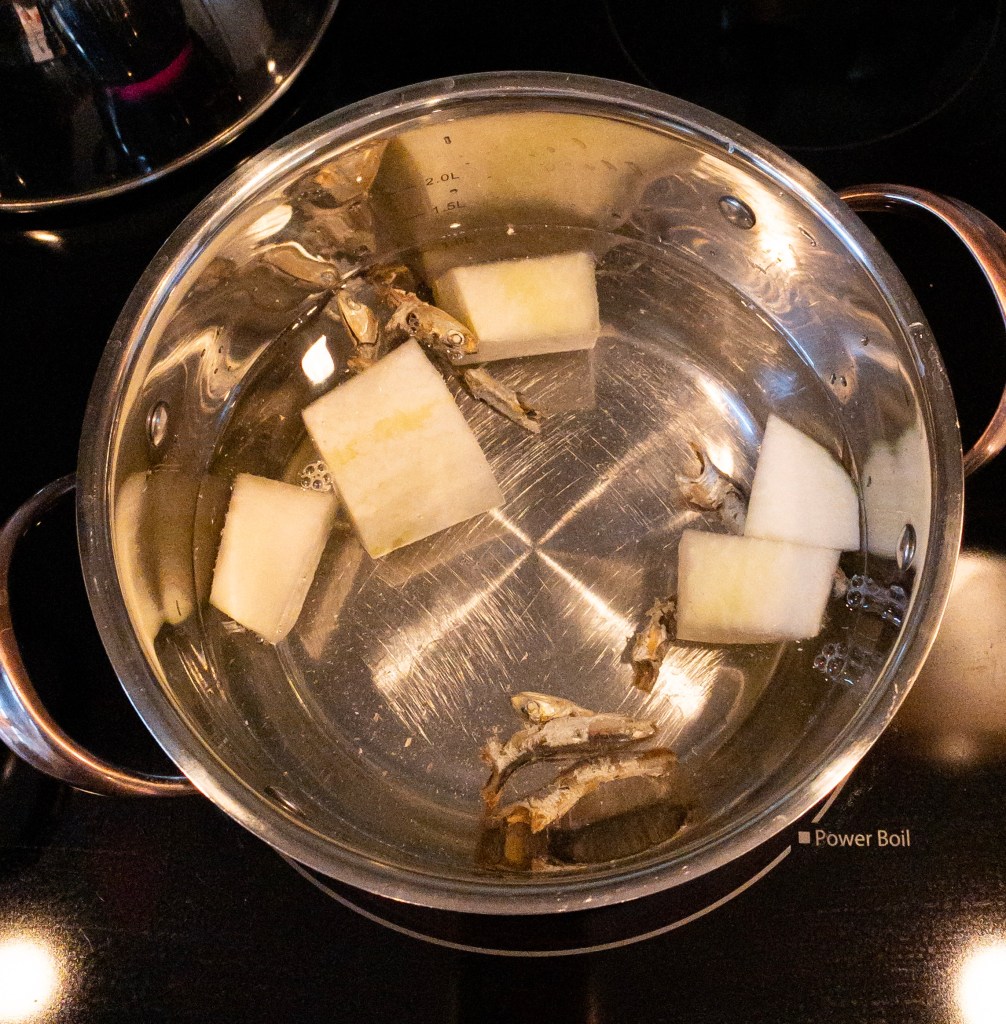
- You need to prepare the broth, first. To do that, pour 6 cups of water into a pot.
- Add the 0.3 oz of dried anchovies.
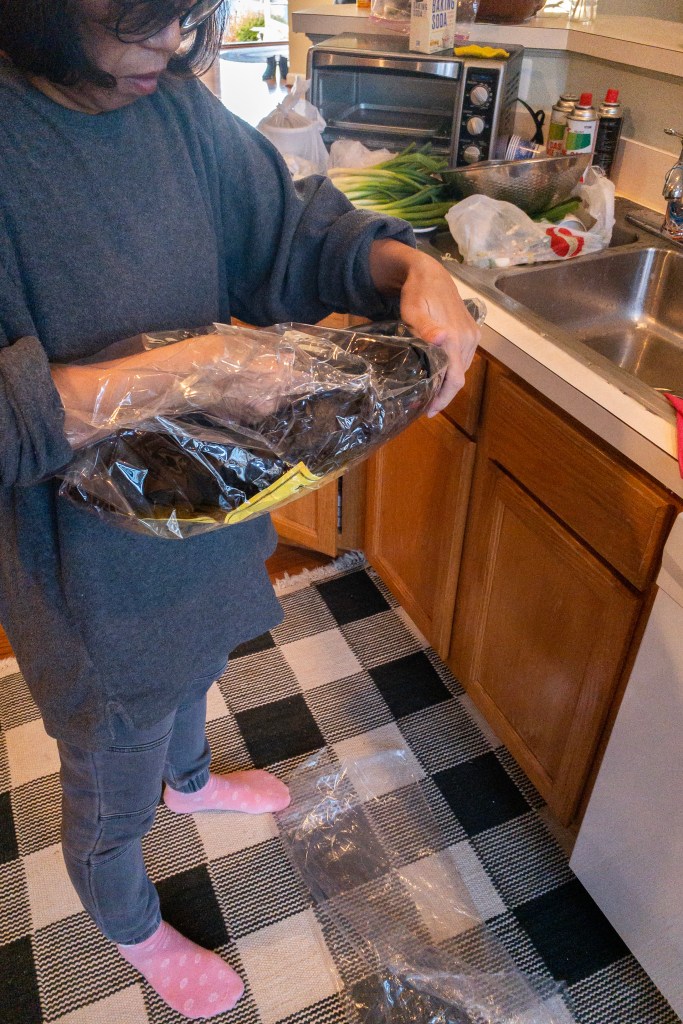
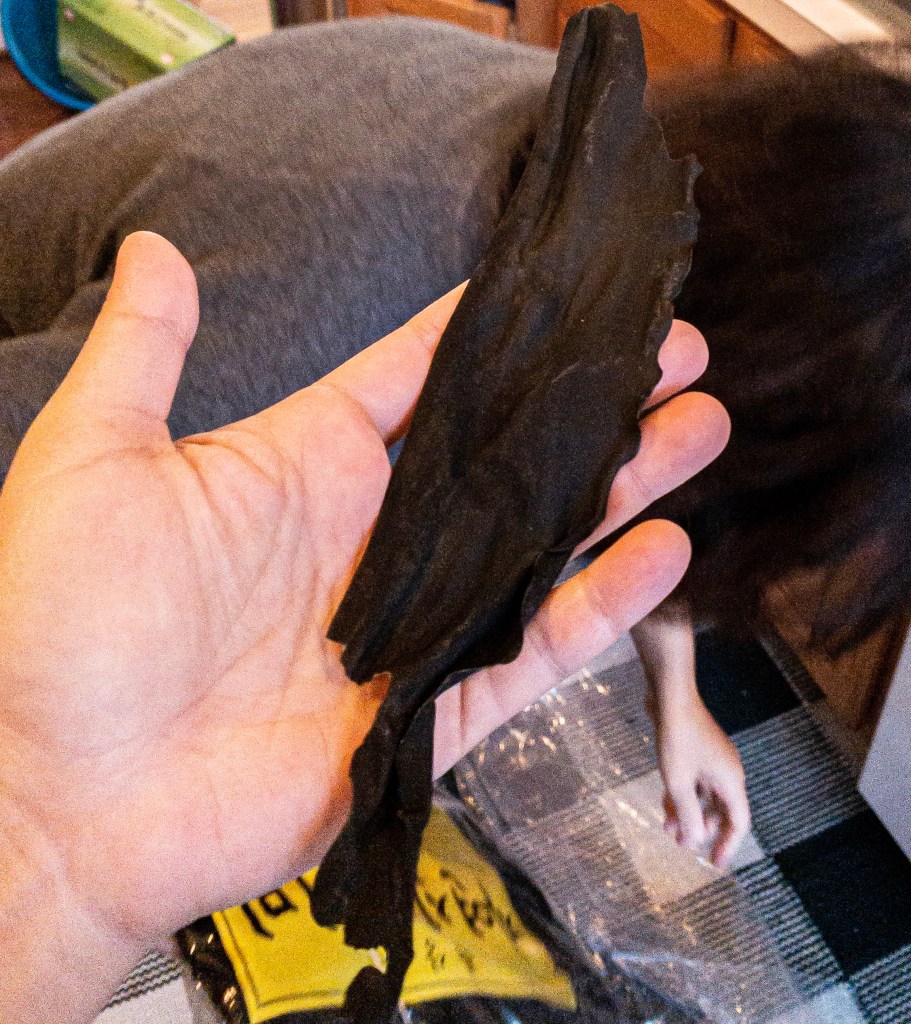
- Add the 0.1 oz of dashima.
- Add the 3.6 oz of daikon radish.
- Turn the heat on high and cover the pot.
- Once it boils, lower the heat to medium low, keeping the top on, and let it cook for 15-20 more minutes.

7. As you prepare the broth, start preparing the ingredients that make this a jjigae (stew).
8. Measure the doenjang and have it ready to go.
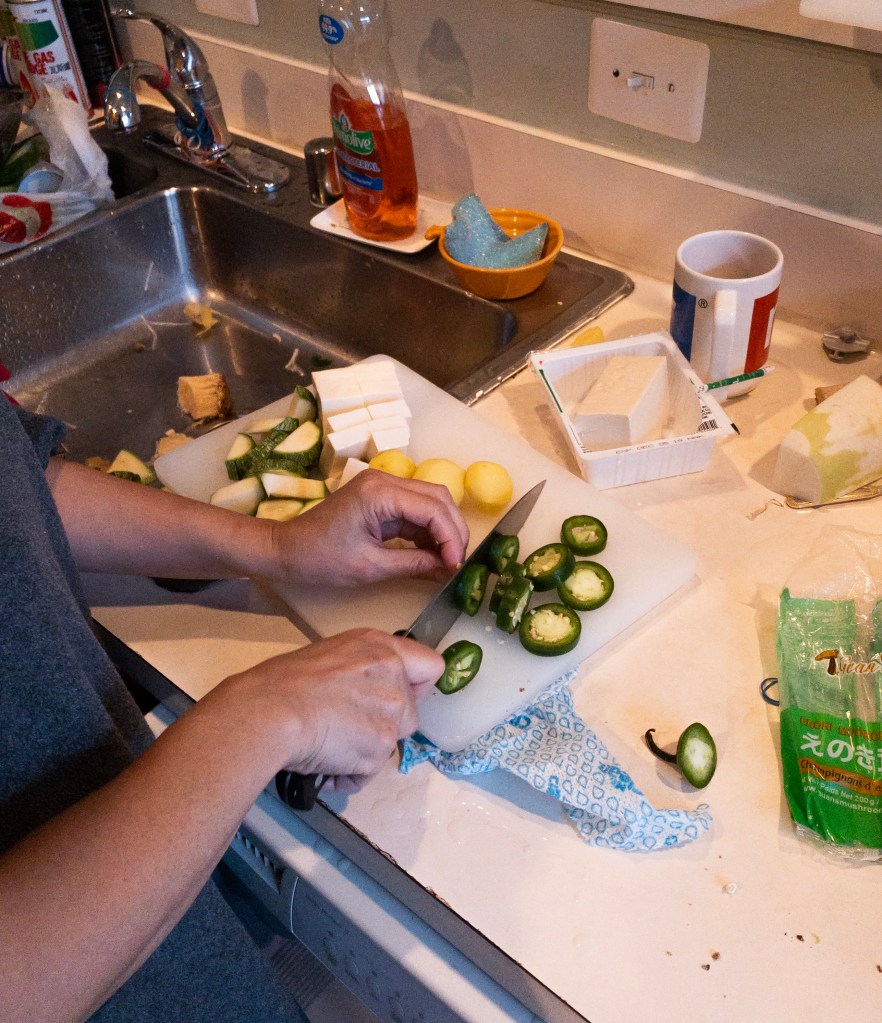
9. Cut your hot pepper, tofu, potatoes, and zucchini into the same sized pieces.
10. Cut the mushroom if you’re not using enoki. If you are using enoki mushroom, just give them a quick rinse and cut off the roots!
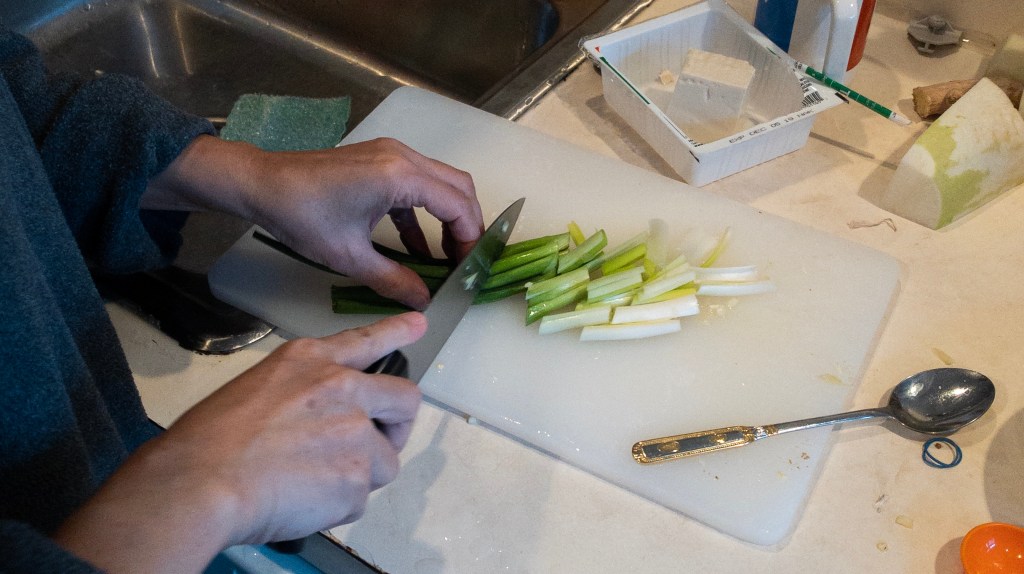
11. Cut the scallions. Lengthwise, first, to make them more narrow. And then cut them across.
12. Mince the garlic.



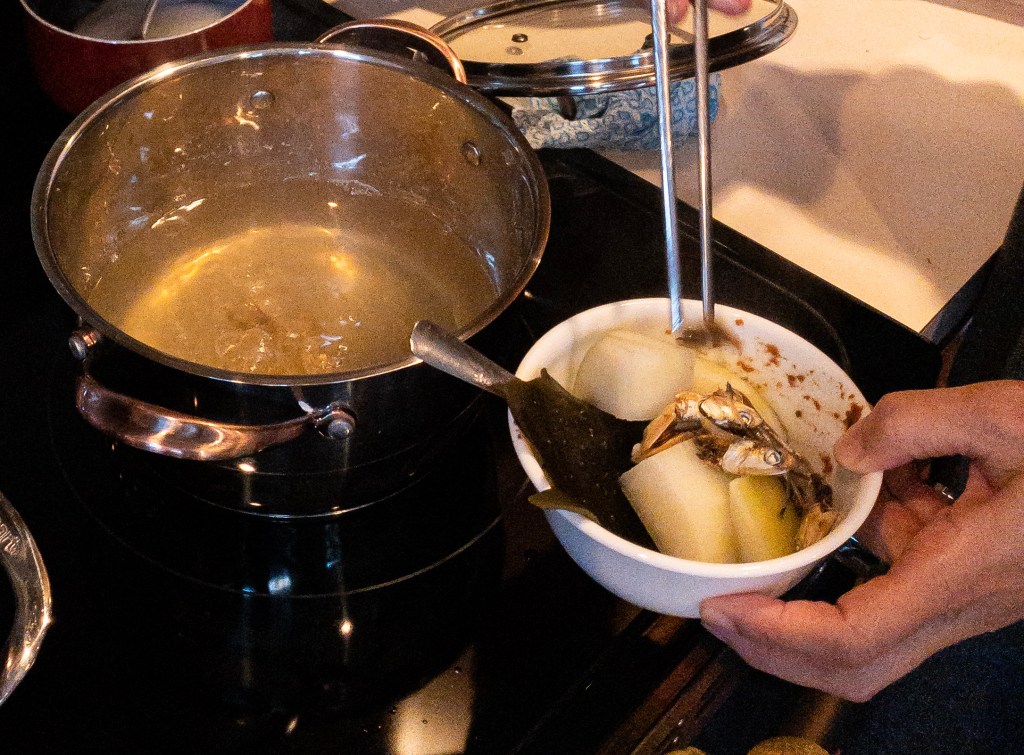
13. Once the broth has cooked for 15-20 minutes, take out all the ingredients in the pot and discard them.
14. Then, turn the heat back on high.
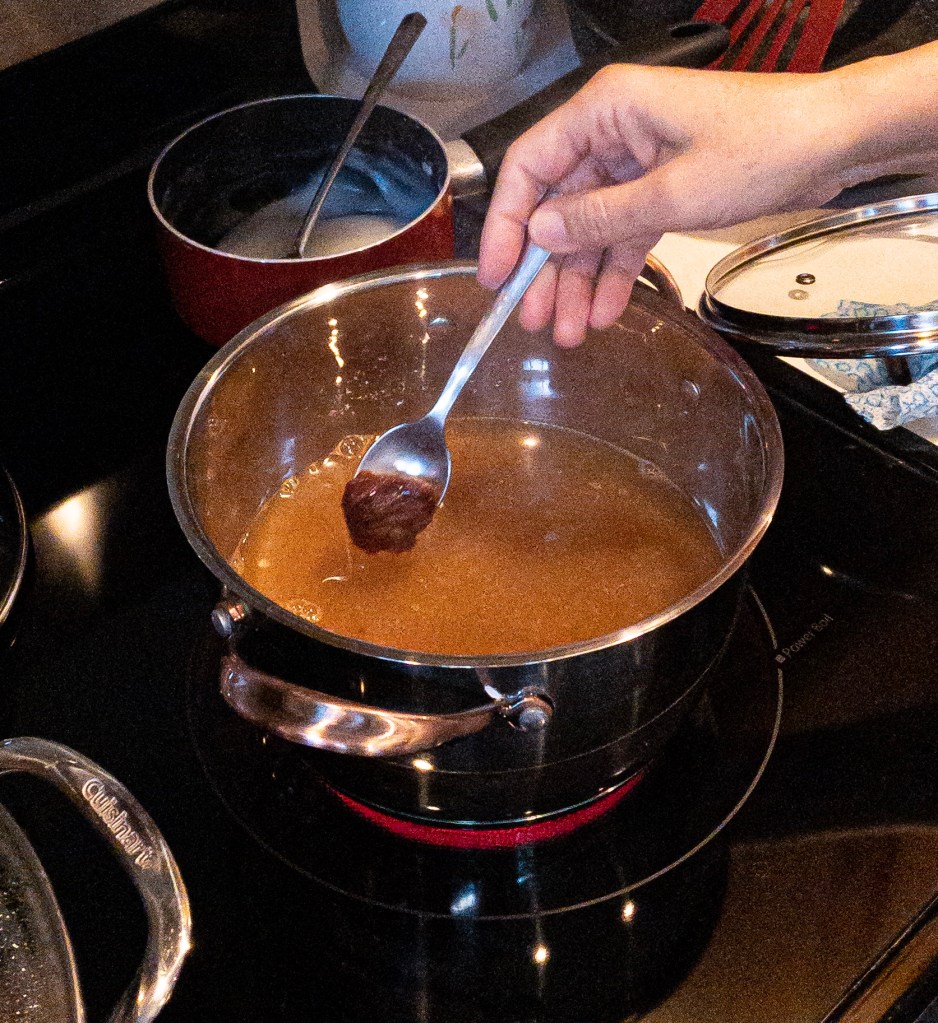
15. Stir the doenjang into the broth.
16. Then, stir in the 1/2 tablespoon of gochujang.
17. Add the jalapenos and potatoes.
18. Add the 1/4 tbsp. of dashida and 1 tbsp. of red pepper powder.
19. Cover the pot again, keeping the heat on high.
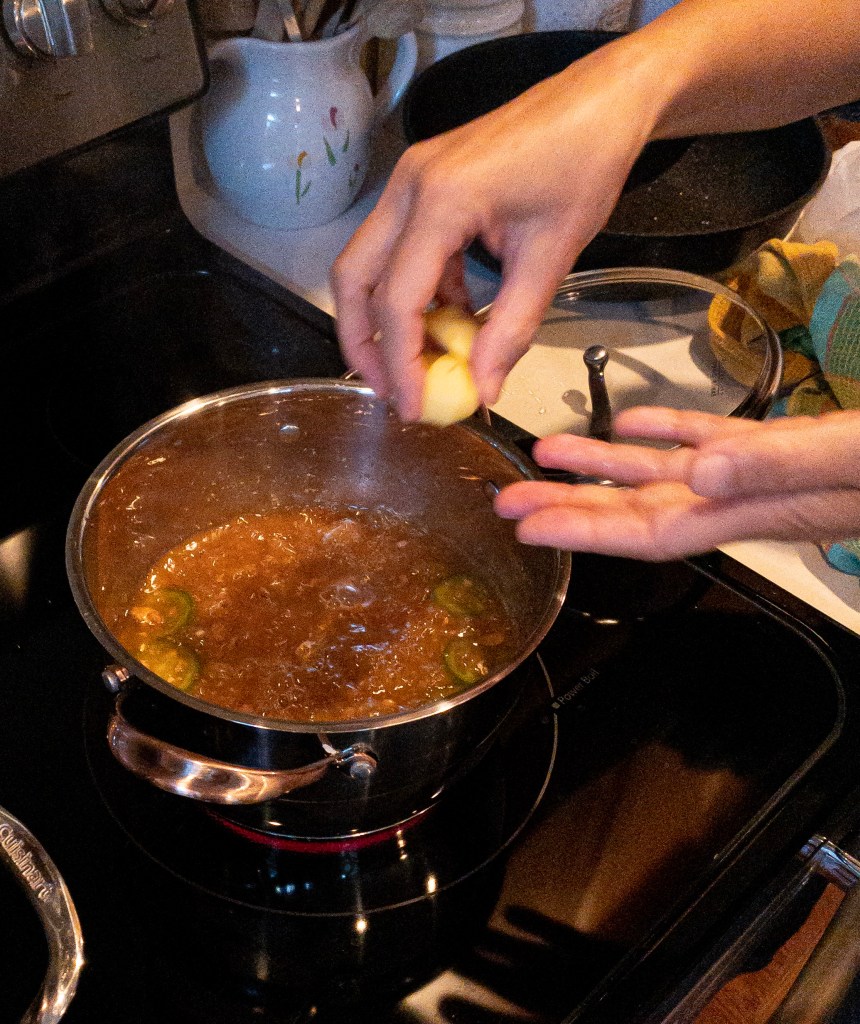
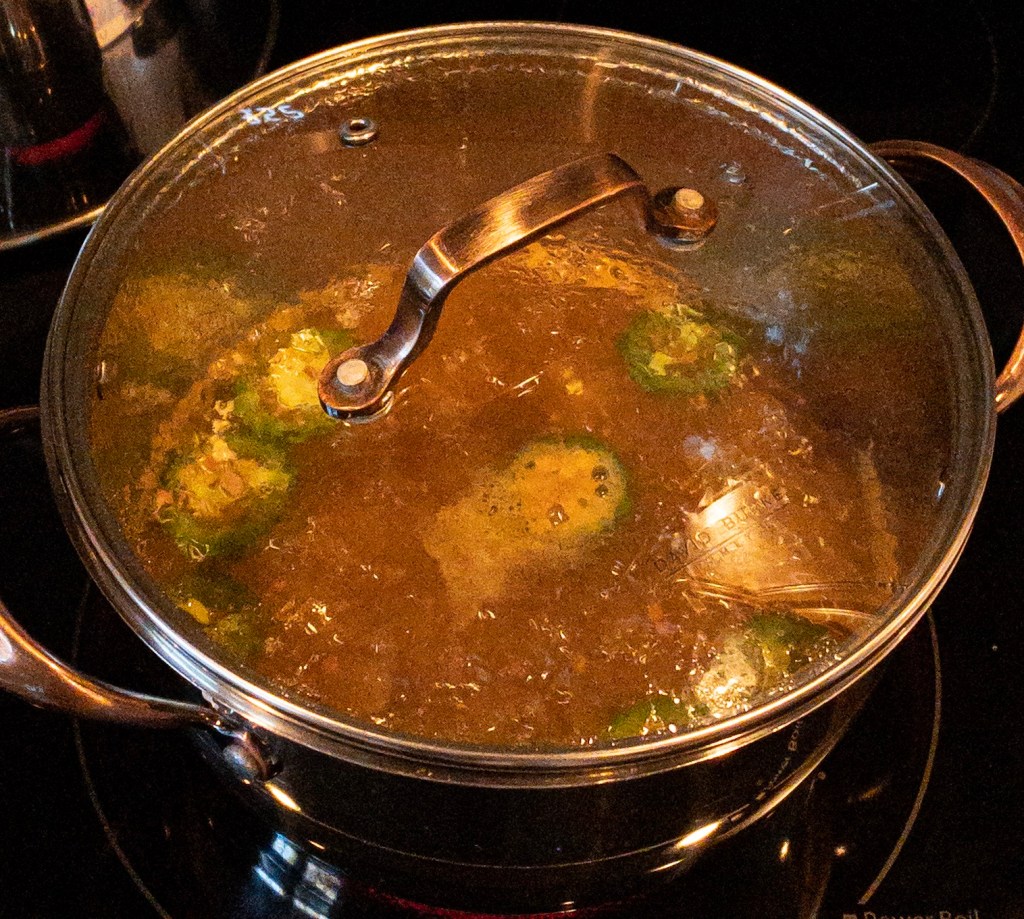
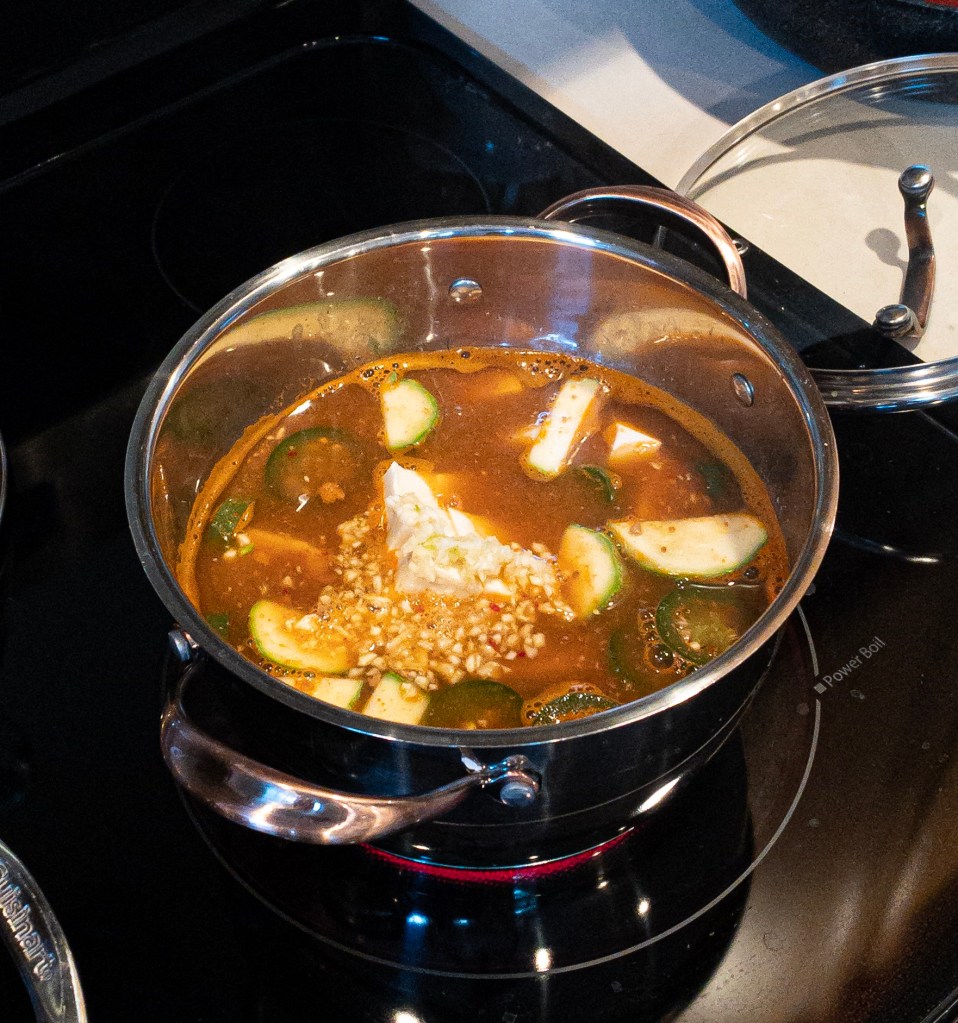
20. Once it starts boiling again, add the garlic, tofu, and zucchini. Keep the heat on high with the cover on top.
21. Keep everything on the stove as such for about 10 minutes.
22. Lastly, add the scallions and the mushroom and let it boil for 3-4 more minutes!
That’s it!

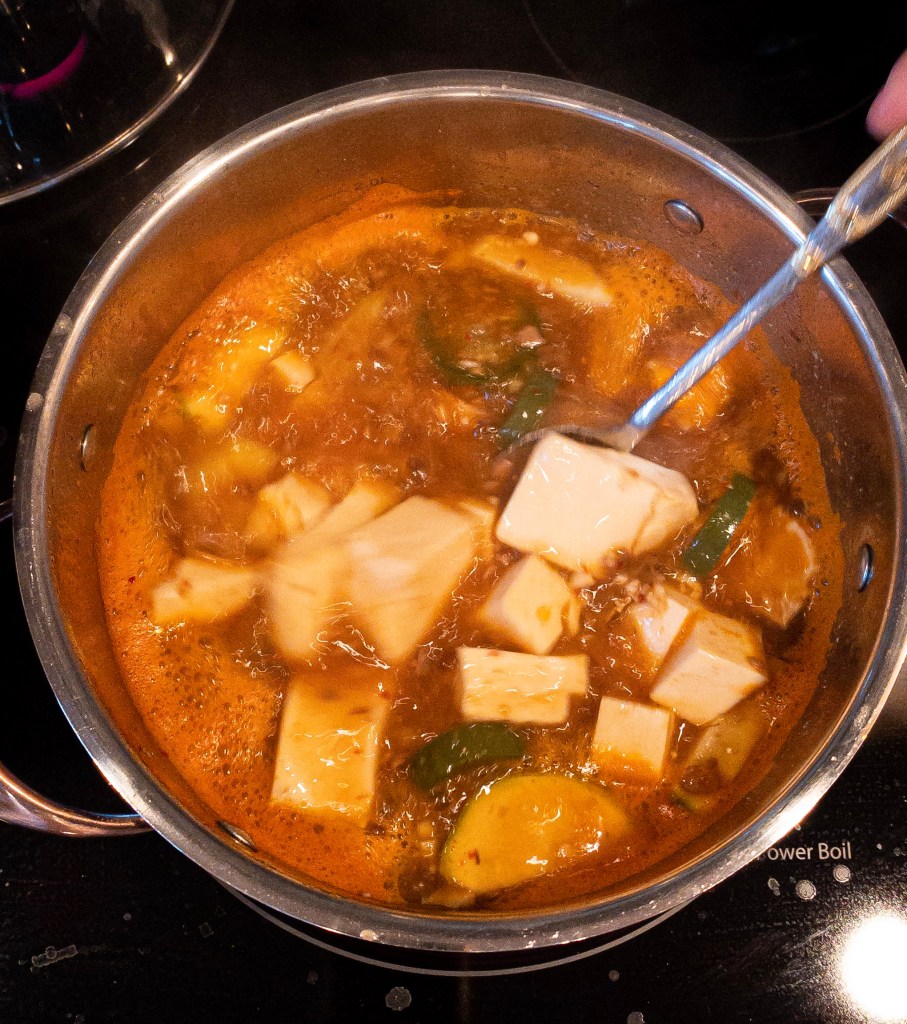
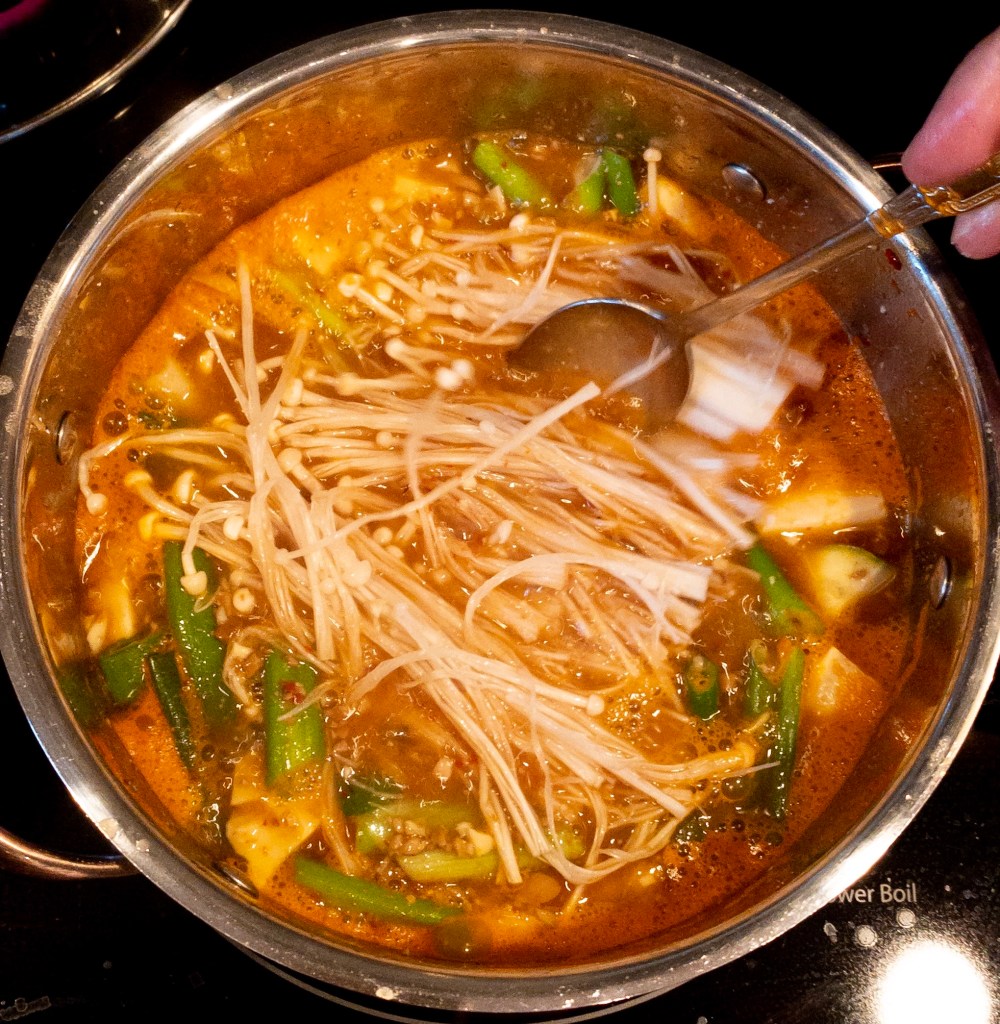
Looks so good! And this stew keeps well in the fridge for 3-4 days. It’s perfect to make ahead on a Sunday night for a quick dinner with some rice or barley on the side!
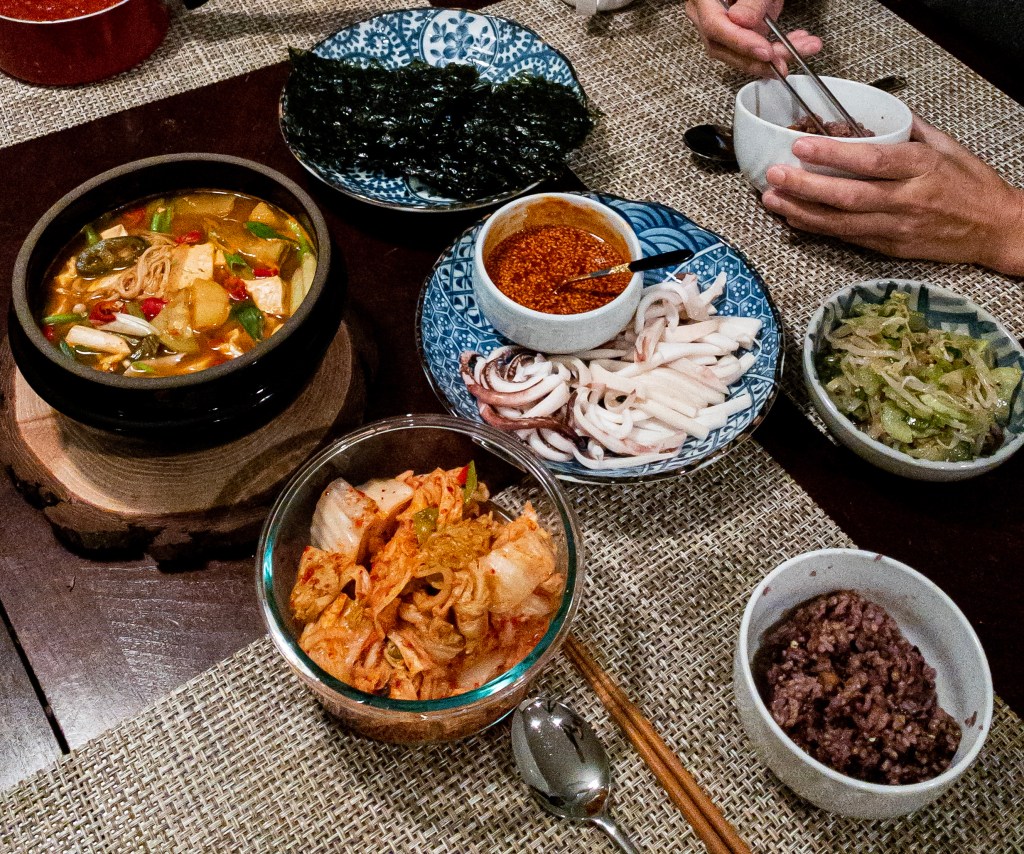
The best way to eat doenjang jjigae is to keep it in a communal stone pot and pour spoonfuls of the bubbling stew on top of your rice. Then, you can mix it all together, maybe add a piece of kimchi on top of your spoonful, and then take a big bite!


Again, it might sound odd to eat stew for breakfast, especially a fermented soybean (doenjang) stew. However, it is freaking delicious with a hot bowl of rice on a Sunday morning and steamed or fried egg on the side. It just hits the spot.
I hope you guys try this recipe, or at least try it next time you see it on the menu or at the Korean bbq place! Korean bbq restaurants usually serve doenjang jjigae and steamed egg as sides. (Just be aware that some doenjang jjigaes might have a stronger anchovy taste than this one.)
Hope you guys enjoyed this post, and if you want any recipes that I haven’t covered yet, please let me know!
As always, thank you for reading! 🙂
 the little stone
Leave a comment