Hello! Thanks for stopping by 🙂
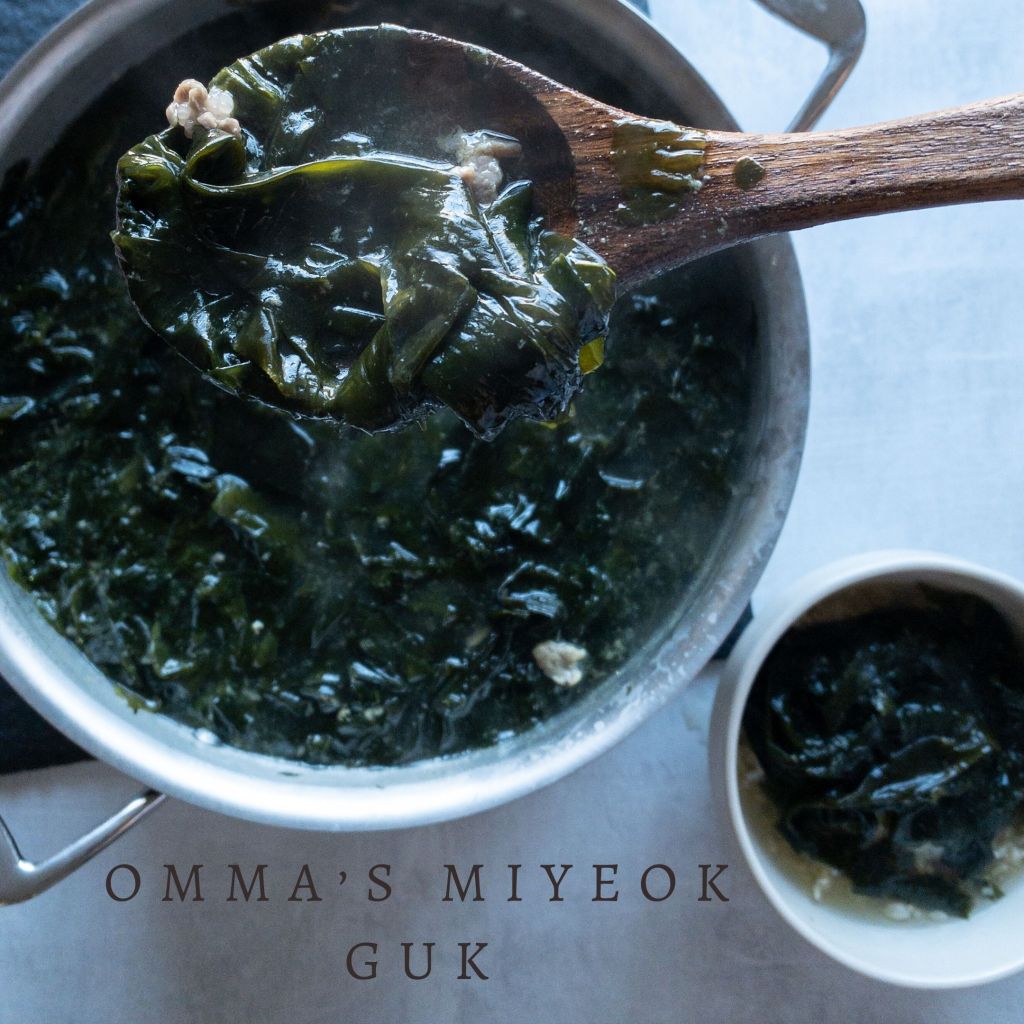
This week’s recipe is a Korean classic but one that you won’t usually find in Korean restaurants. It’s a seaweed and beef soup called miyeok guk. It’s a tradition to eat it on your birthday and to give it to new mothers, as it helps them to produce milk!
At the moment, I can only think of one place in the DMV that serves this soup. It’s called To Sok Jip , and it’s one of my favorite restaurants. It’s in Annandale, VA. If you’re ever there, I’d suggest ordering the broiled croaker with miyeok guk as your soup choice.
This soup might not sound very appetizing, but don’t knock it until you try it! Also, I assure you, if you prepare it the way my mom does, you won’t have any brininess or heaviness. It’ll taste clean.
There are several ways to make this soup. You can add clams instead of beef, sesame oil in addition to the soy sauce, and you can eat the soup with tteok (rice cakes) or chapssal tteok (sweet rice cakes) instead of actual rice.
I really like my mom’s miyeok guk because she doesn’t use sesame oil. My grandma uses sesame oil in hers, and the texture is a bit too oily and the flavor a little too nutty. But to each her own!
One of my favorite ways to eat this soup is to warm it up on the stove the next day with some leftover rice or barley. I literally take the soup and rice or barley out of the fridge and dump it in a pot with the heat on high. I then let the soup boil, lower the heat, and let everything simmer. The end result is kind of like a porridge, and it is so delicious and comforting. I’ll eat miyeok guk like this for breakfast, lunch, or dinner. I usually don’t eat it with any banchan (side dishes), but sometimes I will fry up an egg, or cut up some kimchi or oiji (Korean pickle).
Here are the ingredients and recipe for miyeok guk! The amount below is for about 10 servings.
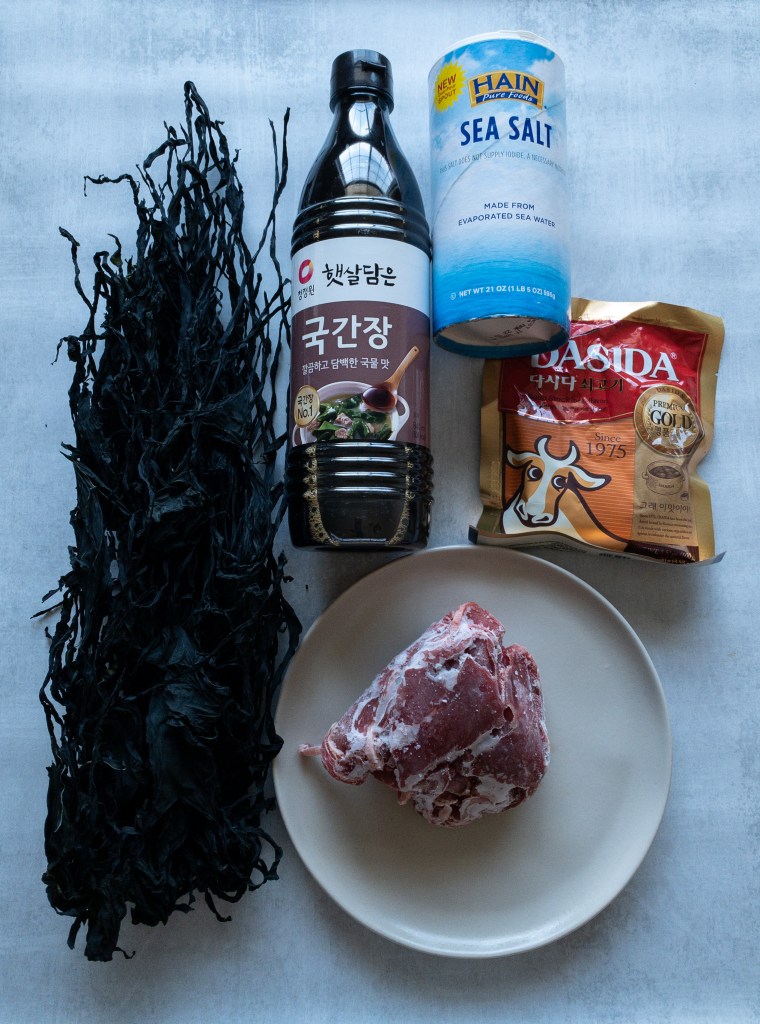
Ingredients for 10 servings:
- 2.5 oz of wakame
- 7.5 oz of lean beef (any cut is fine, you just want it to be lean so the soup doesn’t have a lot of fat in it)
- 2 tbsp. salt
- 2 tbsp. soy sauce for soup (guk ganjang — it’s literally soy sauce that’s specifically made to be put into soup)
- 1/2 tbsp. dashida
Directions:
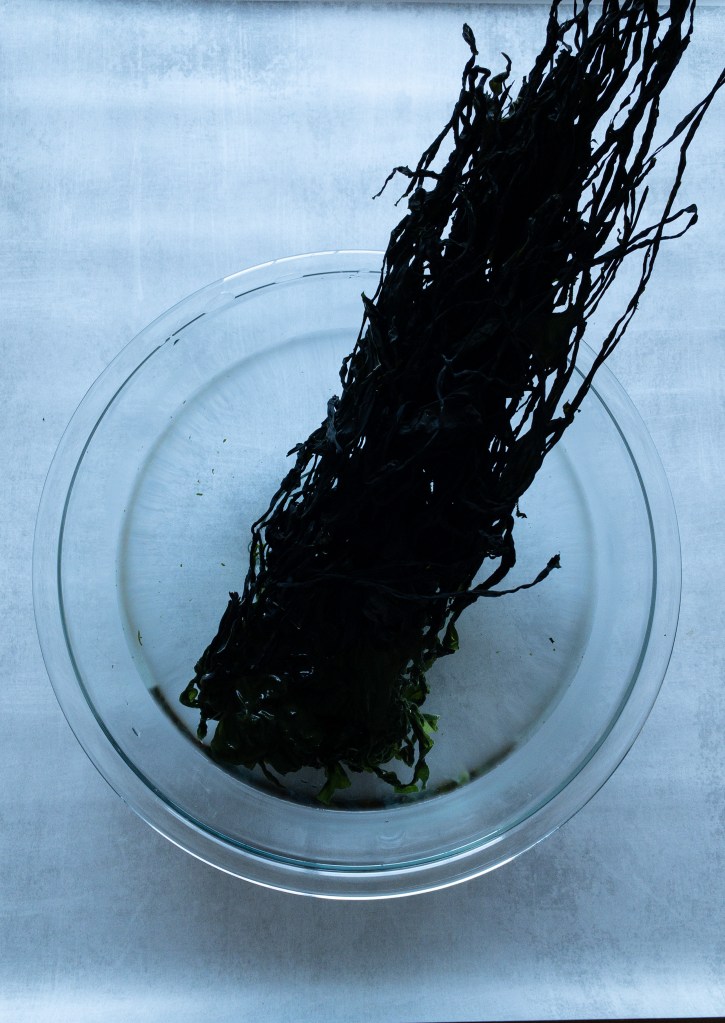
- Take 2.6 oz of the wakame and place it in a large bowl. If this is your first time trying this soup, I’d suggest putting in less seaweed!
- Soak the dried seaweed in warm water. Don’t break the seaweed to fit into the bowl. Let the ends in the water get soft, and then push down the rest of the seaweed until it’s all under the water. You don’t want to break the seaweed right now because it’ll be hard to rinse later on when it’s softened.
- As the seaweed soaks, defrost your meat if it’s frozen. If your meat isn’t frozen, you just have to wait for the seaweed!
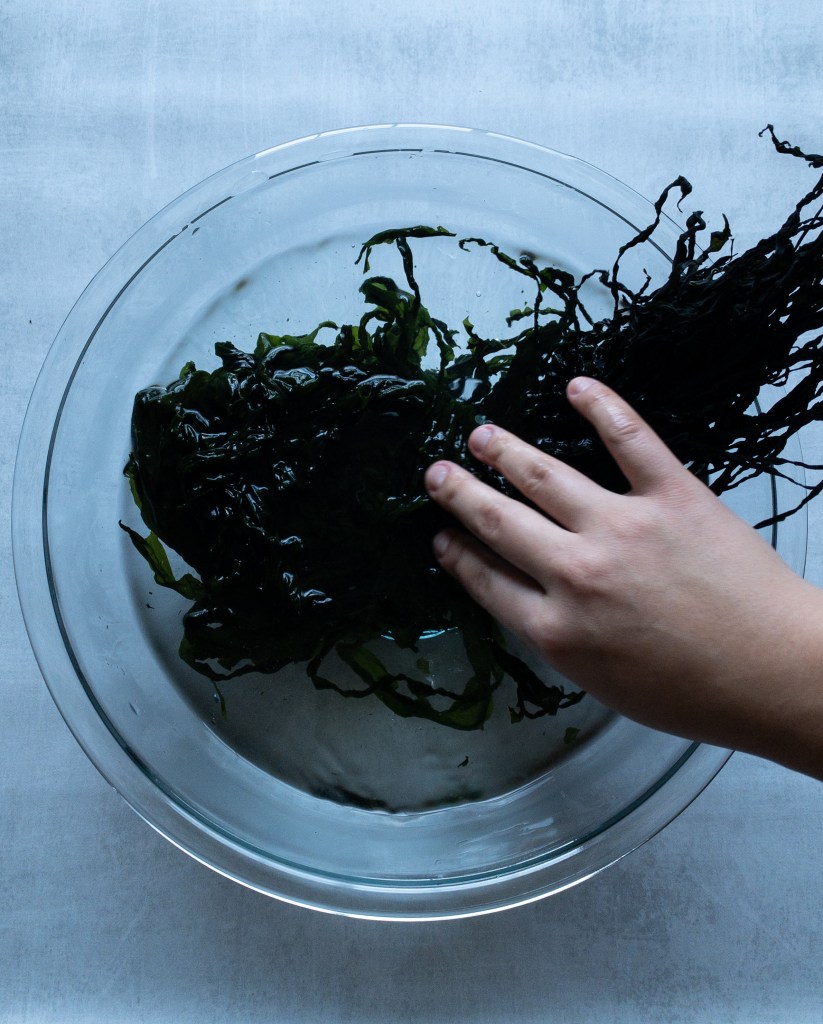
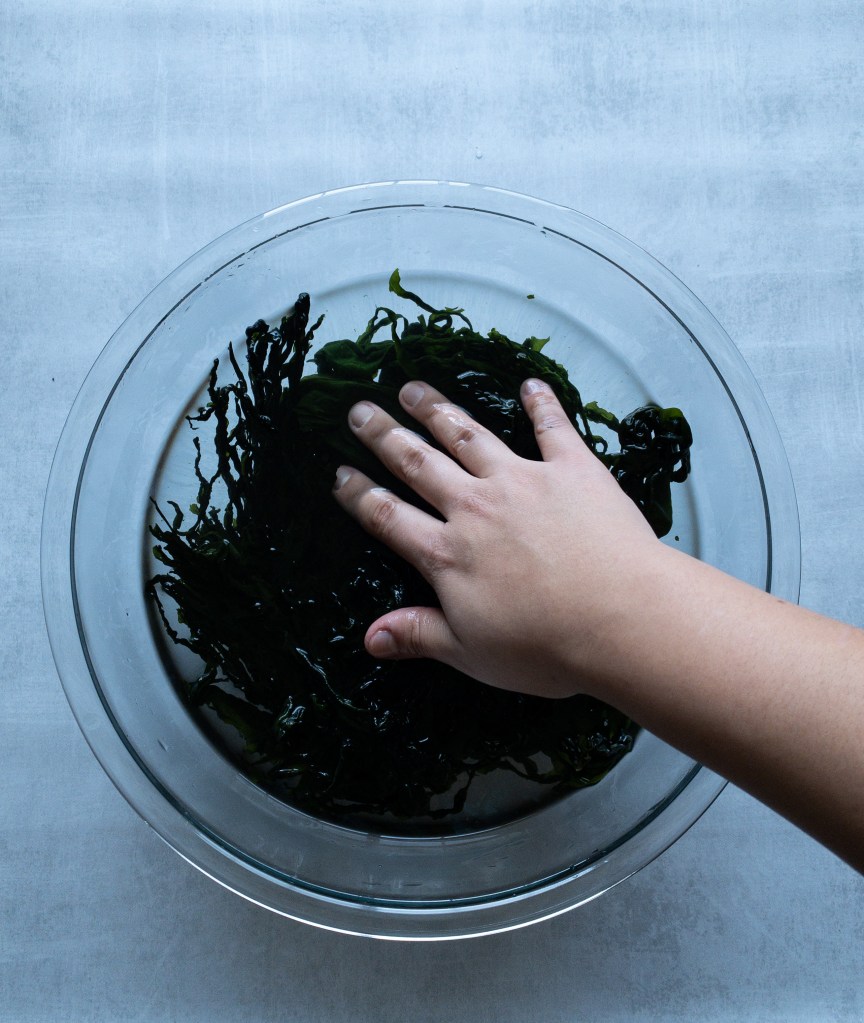

- Let the seaweed soak for about 2 hours. You’ll know the seaweed is ready when it feels soft and silky. There shouldn’t be any hardness.
- Drain the water the seaweed was soaking in, and put some fresh water in the bowl. Give the seaweed a thorough rinse.
- This might be a weird analogy, but you want to rinse the seaweed as if you’re hand-washing laundry. Make sure to knead the seaweed as you clean it!
- Repeat the previous step at least five times through. Rinsing the seaweed helps to prevent the soup from tasting briny and removes any sand.
- Rip the seaweed into smaller pieces. You can rip them lengthwise or across. The pieces don’t all have to be the same size!
- Place the seaweed into a large pot.


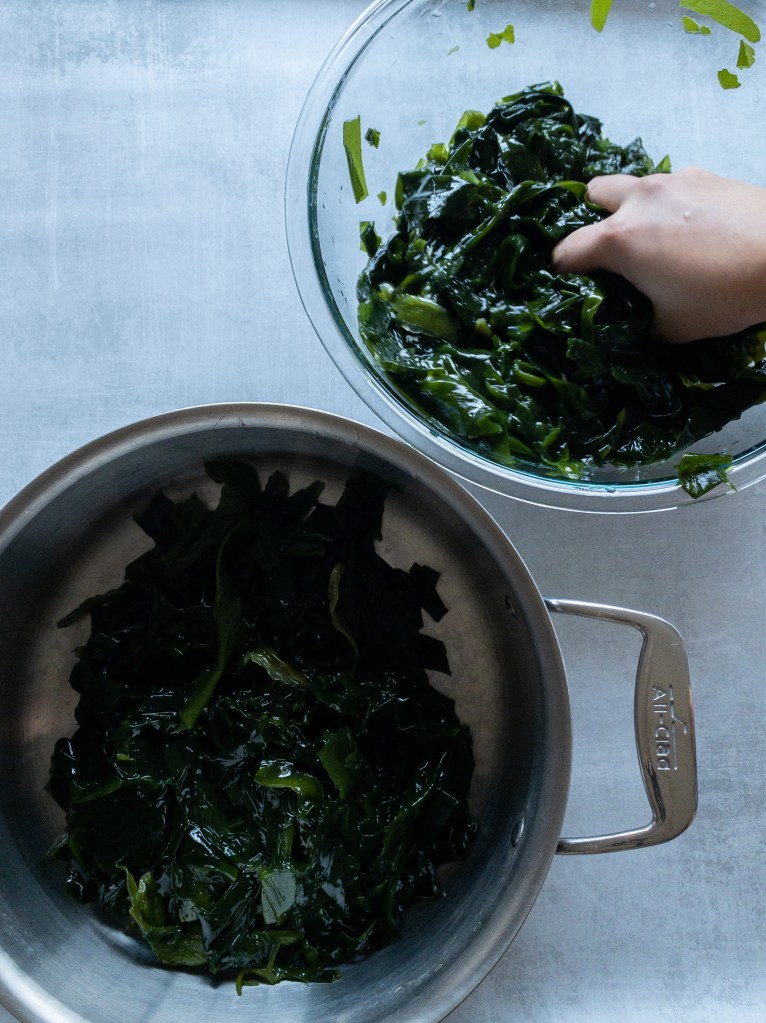
- Slice the beef into small, bite-sized pieces.
- Then, place the beef into the pot.

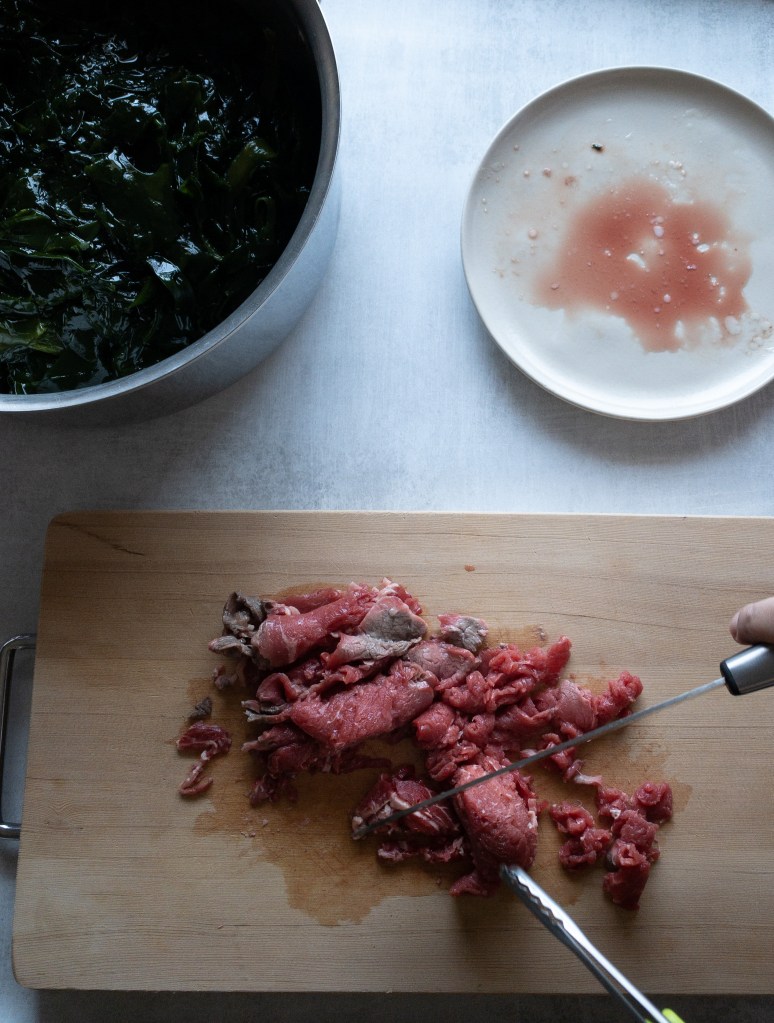
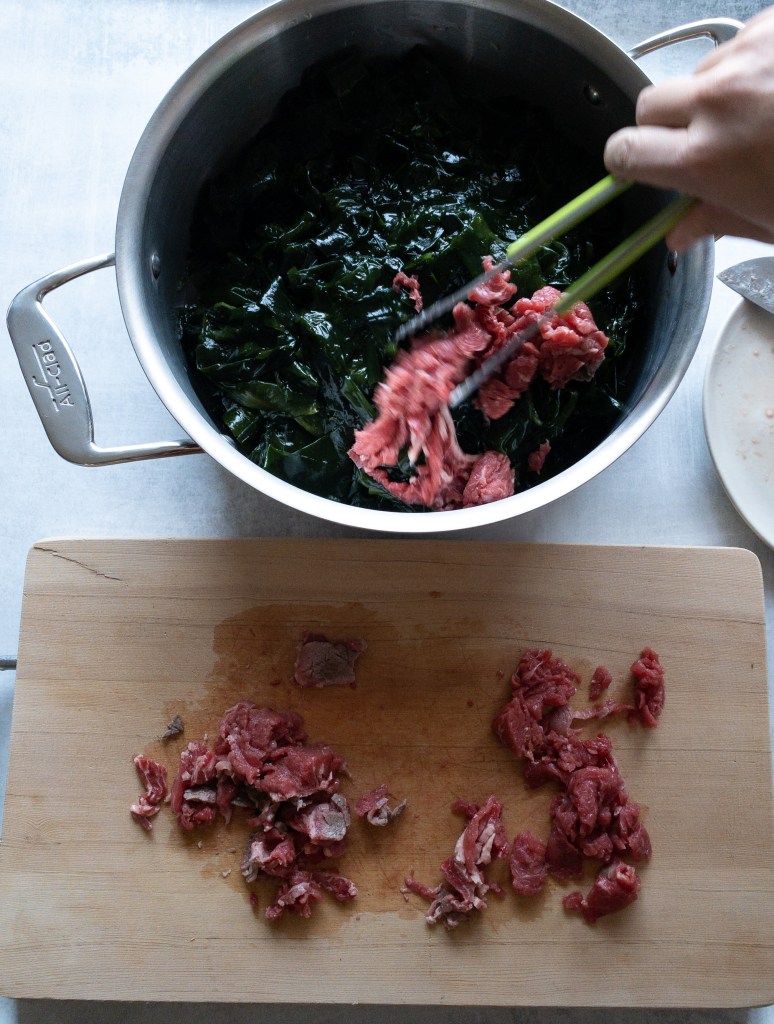
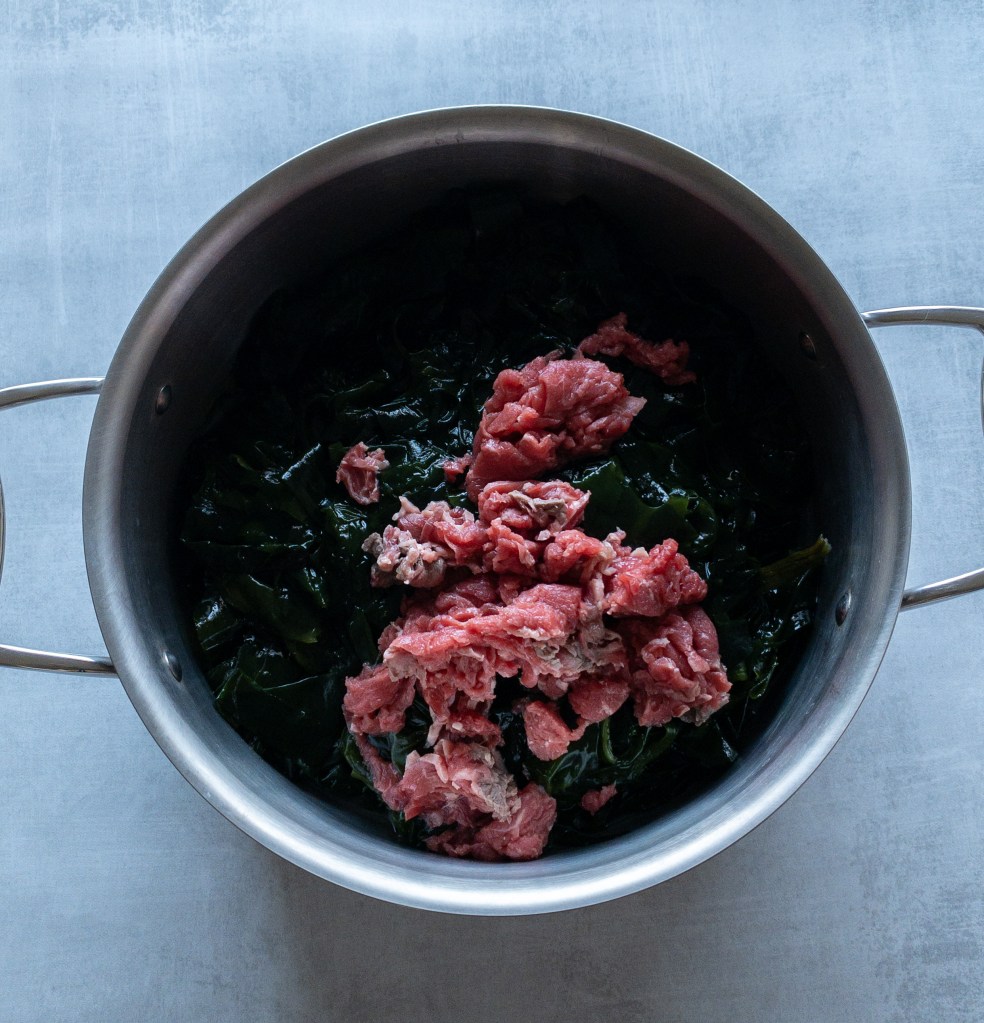
- Put the pot on the stove and turn the heat to medium-high.
- Add 2 tbsp. of salt .
- Add 2 tbsp. of the guk ganjang (soy sauce for soup).
- Add about 1/2 cup of water to the pot
- Then, stir until beef is fully cooked.
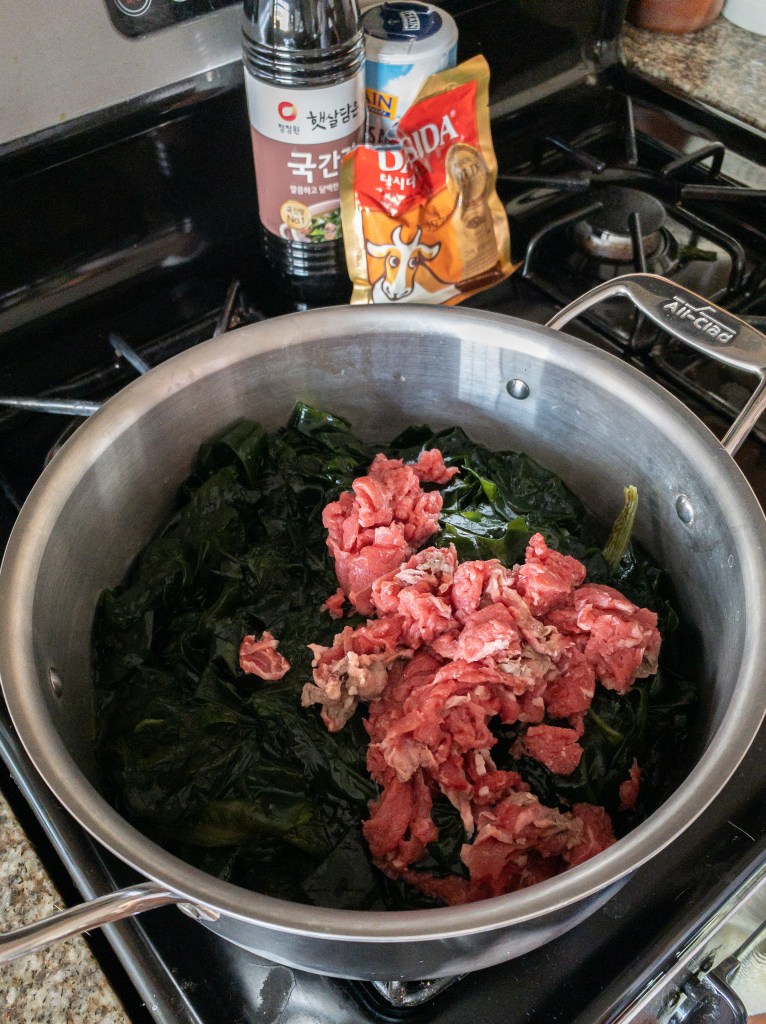

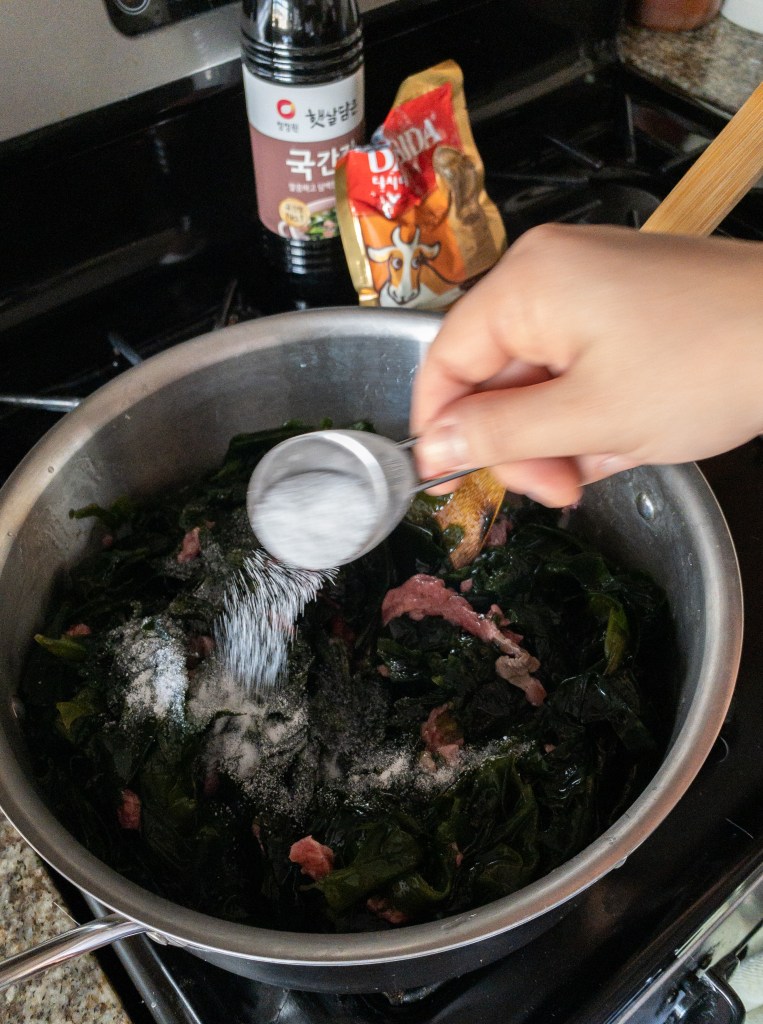

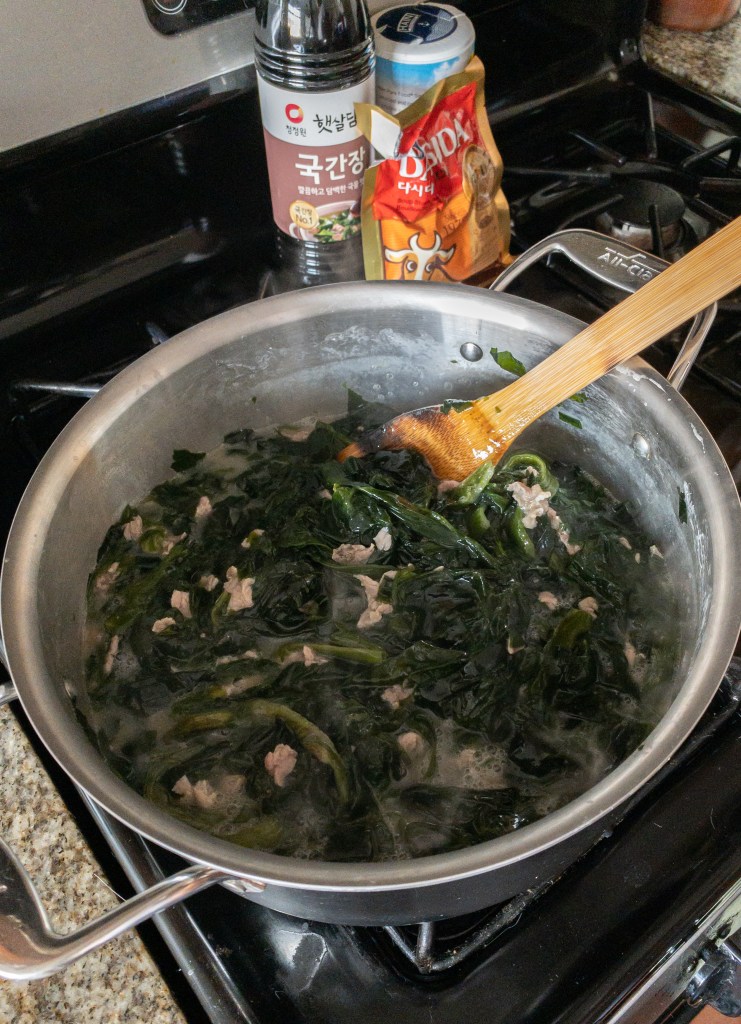
- Add 1/2 tablespoon of dashida to the pot
- Then, fill the pot almost to the brim with water.
- Turn the heat to medium and partly cover the pot
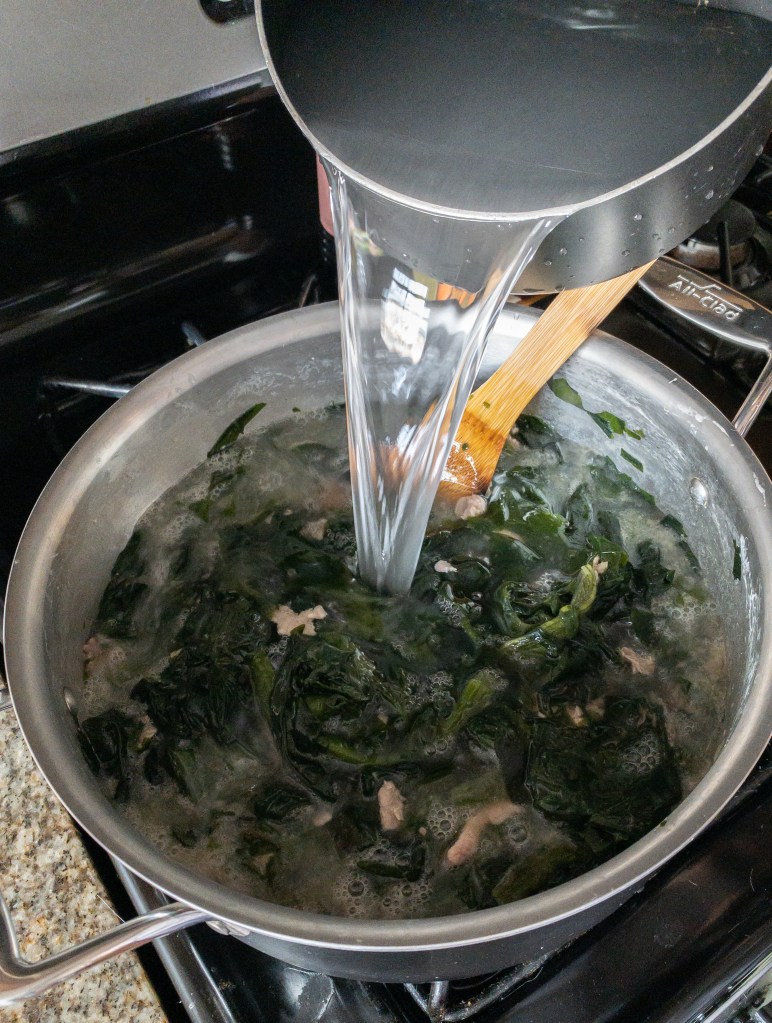


- Once it starts to boil, remove the lid and give the soup a taste. Add more salt and/or guk ganjang if you need to. If it tastes too salty, add some water. Do keep in mind that the soup will become saltier each time you reheat it.
- Increase the heat to medium-high and let the soup cook without a cover for about 10 more minutes.

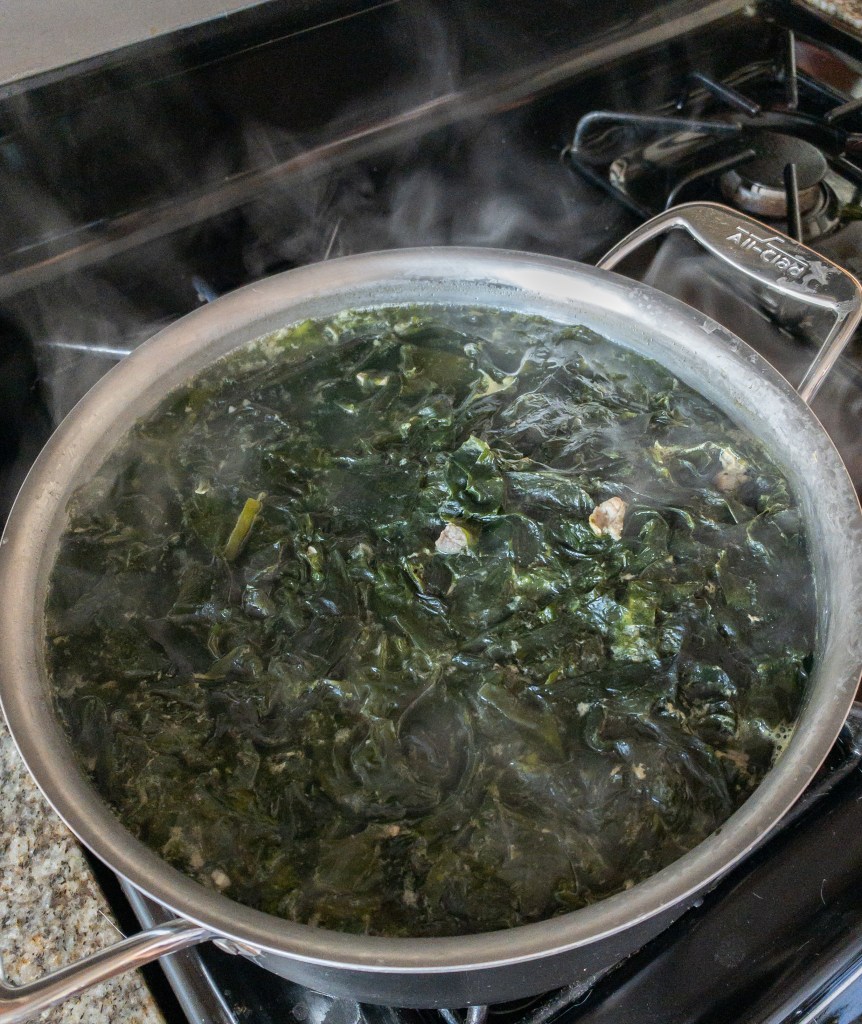
- When it’s done cooking, serve it on the side with some rice or barley, and set aside the rest in a container or jar. It’ll stay good for at least 4 days in the fridge without any reheating. If you want to store it in the fridge for longer than that, just boil it on the stove and then restore it in the fridge. You can also store it in the freezer.
That’s it!
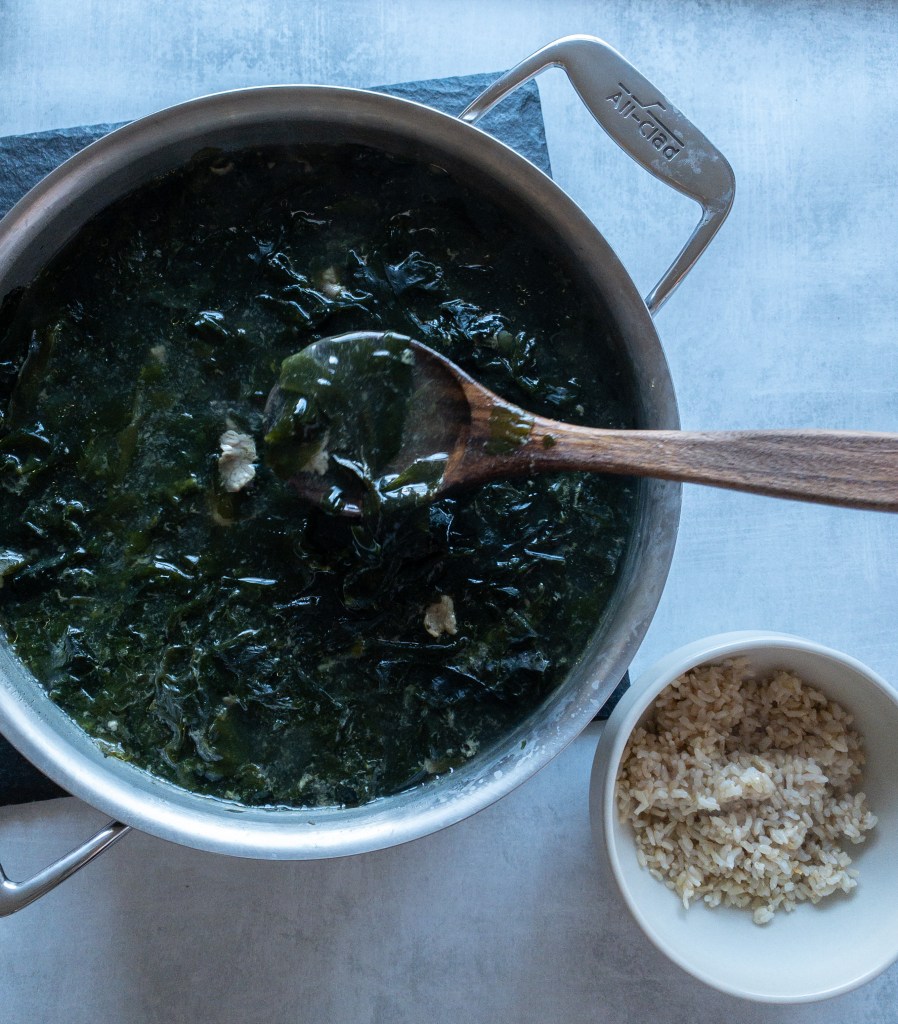
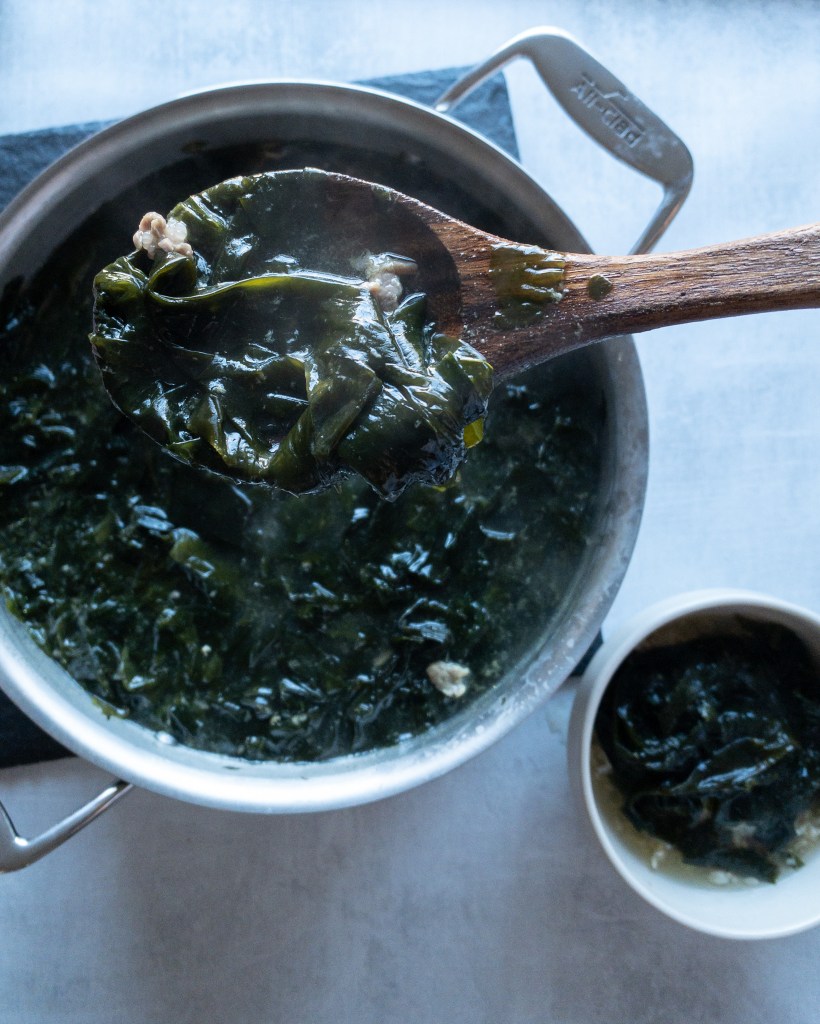
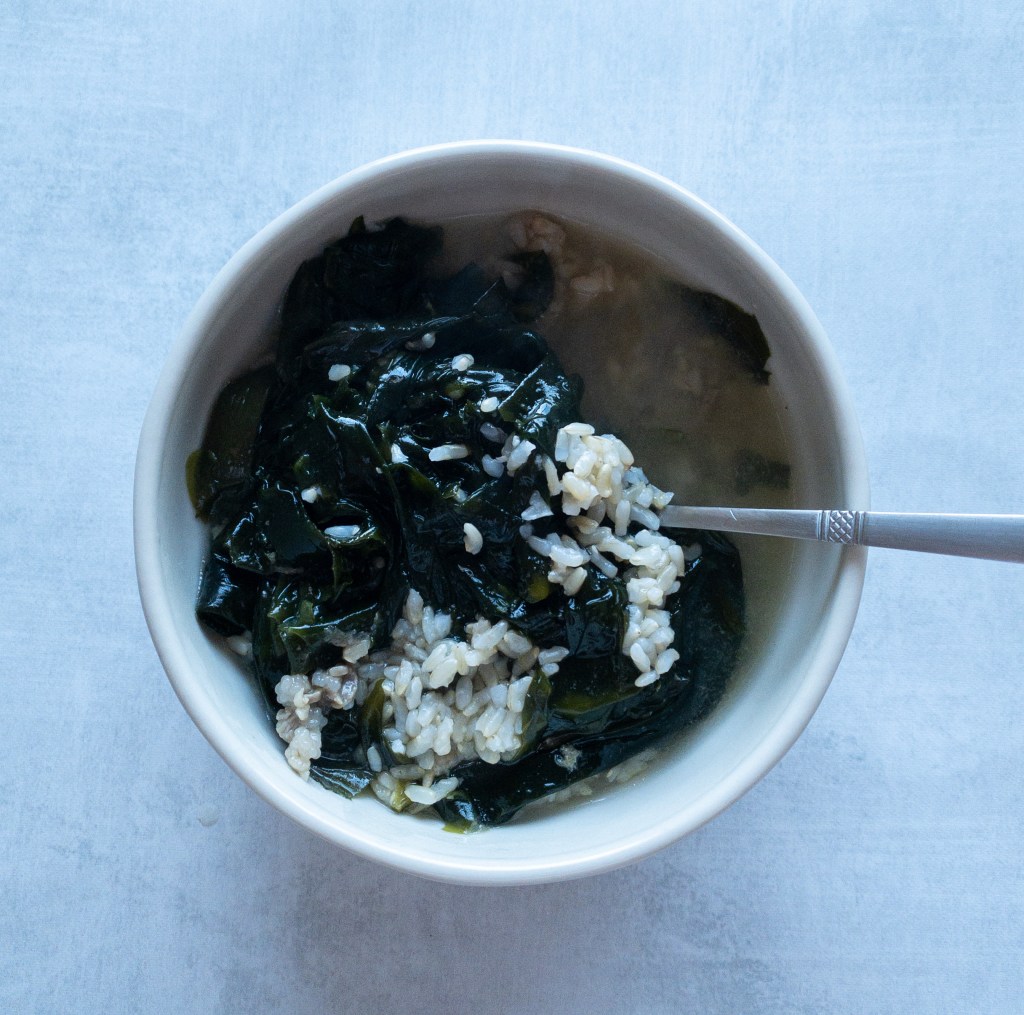
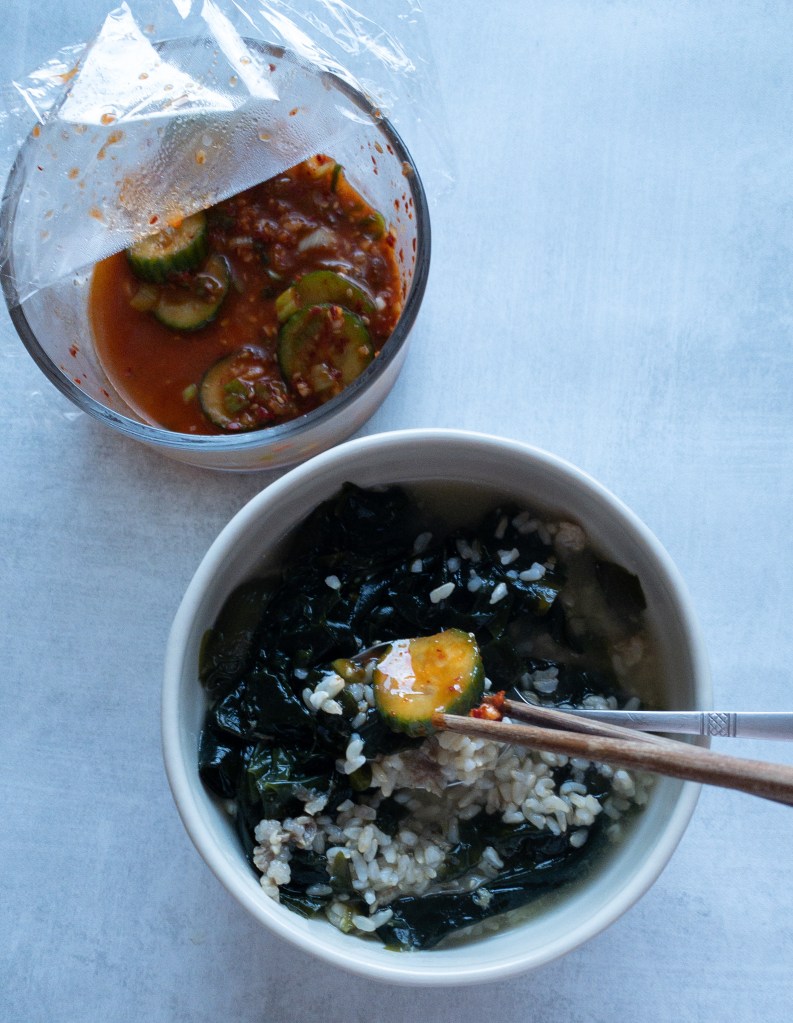

I know the soup doesn’t look very appetizing, and name “seaweed soup” doesn’t help either. But it’s super savory, comforting, and easy to make.
If you don’t plan on making it, I at least encourage you to try this soup the next time you see it. And don’t be put off if you don’t like it the first time you try it! There are different variations depending on who the cook is.
Anywho, that’s all for this week. If you decide to make this soup, have any miyeok guk recipes of your own, or disagree with my stance on the use of sesame oil in this soup, feel free to leave a comment below or on Instagram @thelittlestoneblog.
Thank you for reading!!
 the little stone
Leave a comment