
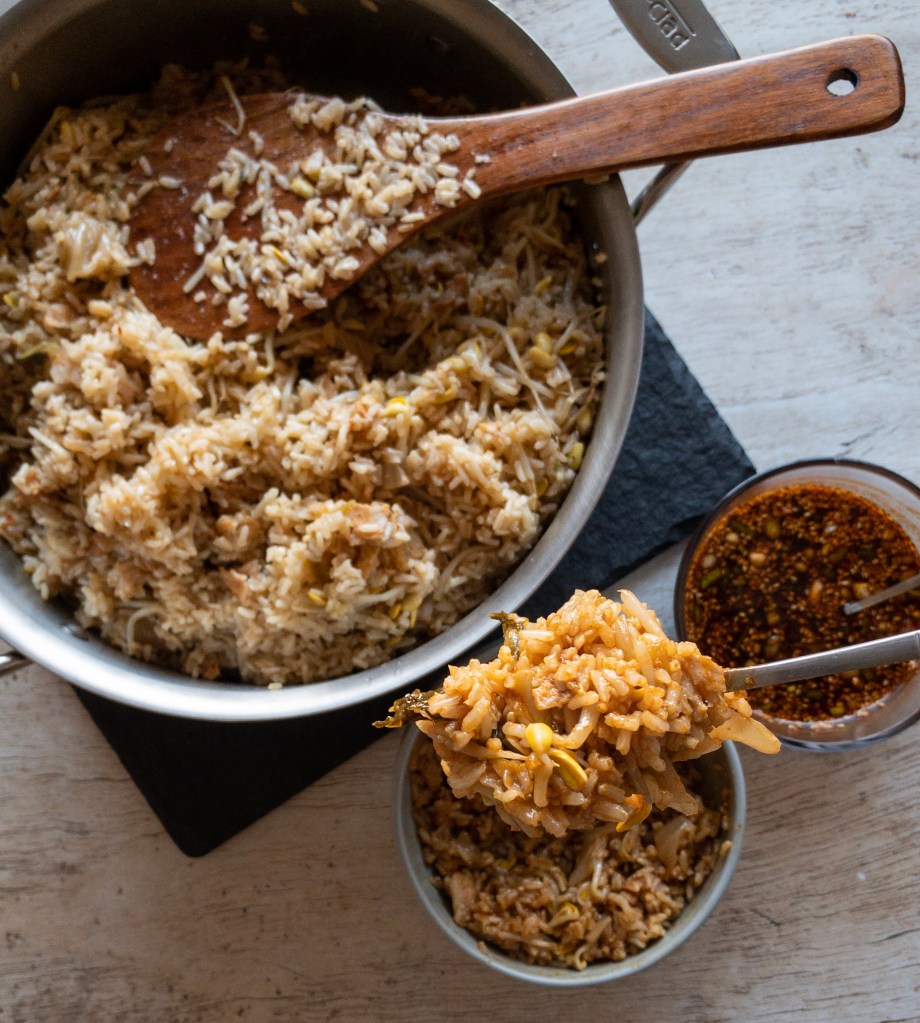
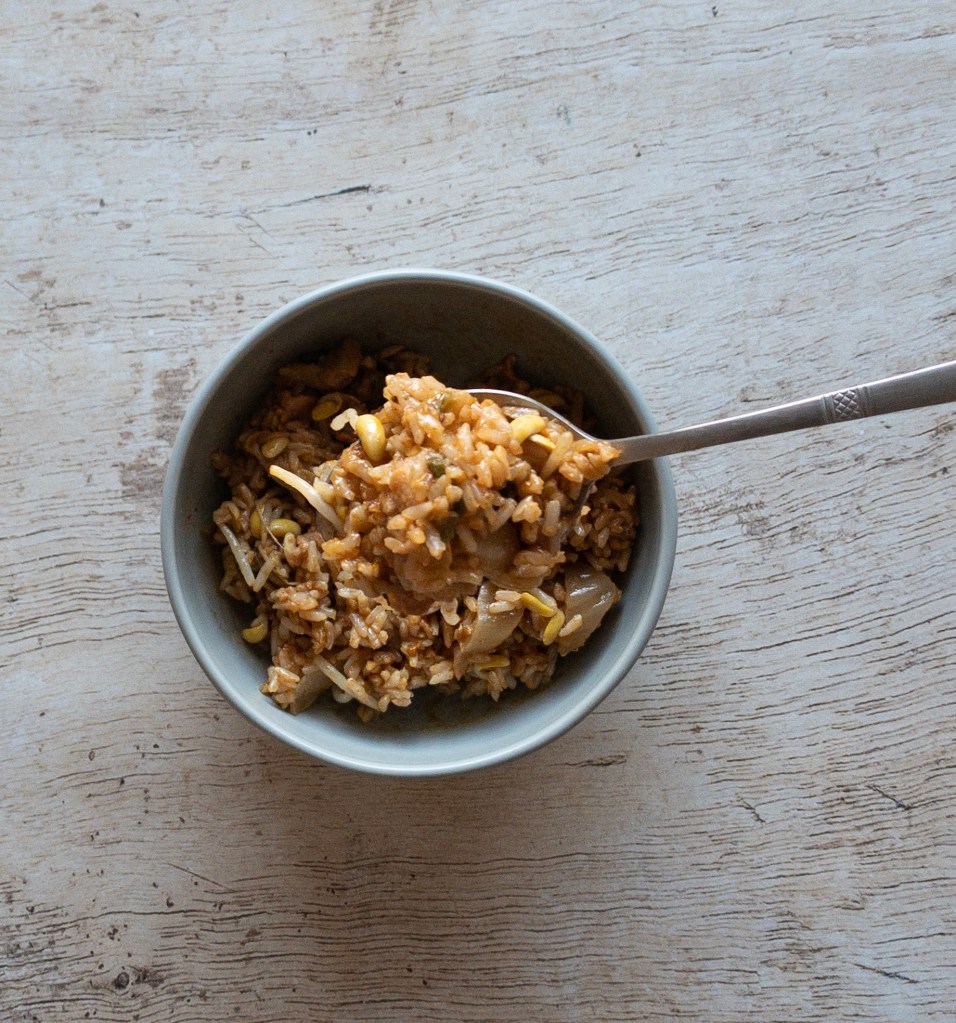
After upping my photo gear and skills a bit, I decided to reshoot some of the recipes I’ve already posted. This was also a test to see if my recipes were all that great, and based off the remake of this dish, I can assure you that they are 😉
This time around, though, I used brown rice instead of white rice. The texture was definitely different, but it was still delicious and I didn’t have to adjust any of the measurements in the recipe!
Also, I wrote “extra fermented kimchi” as one of the ingredients, but if you buy a jar from the grocery store, that’s still fine to use!
Check out the original post and recipe below, as well as the new pictures!
————
I remember getting into a fight with a girl in middle school because I told her I was excited to eat kimchi bbap when I got home, and she tried to correct me by saying I meant kimchi bokkum bbap (kimchi fried rice).
I later learned that she had no idea what dish I was talking about because kimchi bbap is a food from what is now North Korea. It’s a dish my mom learned from her mom, or my grandma. My mom’s parents are from a province called Hwanghaedo, which is now part of North Korea.
At the beginning of the Korean War, my grandpa was living in a village in Hwanghaedo with his first family. He left them for what he thought was temporarily to seek refuge further south. However, he was never able to return to that family. He eventually married my grandma, and another progeny was created.
The dishes, and variations of popular Korean dishes my mom learned to make from my grandma and great grandma are unique to northern Korea. For instance, their kimchi usually has more liquid in it than the kimchi prepared in southern Korea. As such, they’ll usually pour the kimchi liquid over rice or noodles, which used to be a popular winter snack.
One dish that’s distinct to Hwanghaedo is one of my favorites: kimchi bbap. It’s not fried. A popular dish you usually see in restaurants is kimchi bokkum bbap, or kimchi fried rice. This is not that dish.
When preparing kimchi bokkump bbap, you place cooked rice on the pan with some oil, kimchi, sesame oil, and sesame seeds.
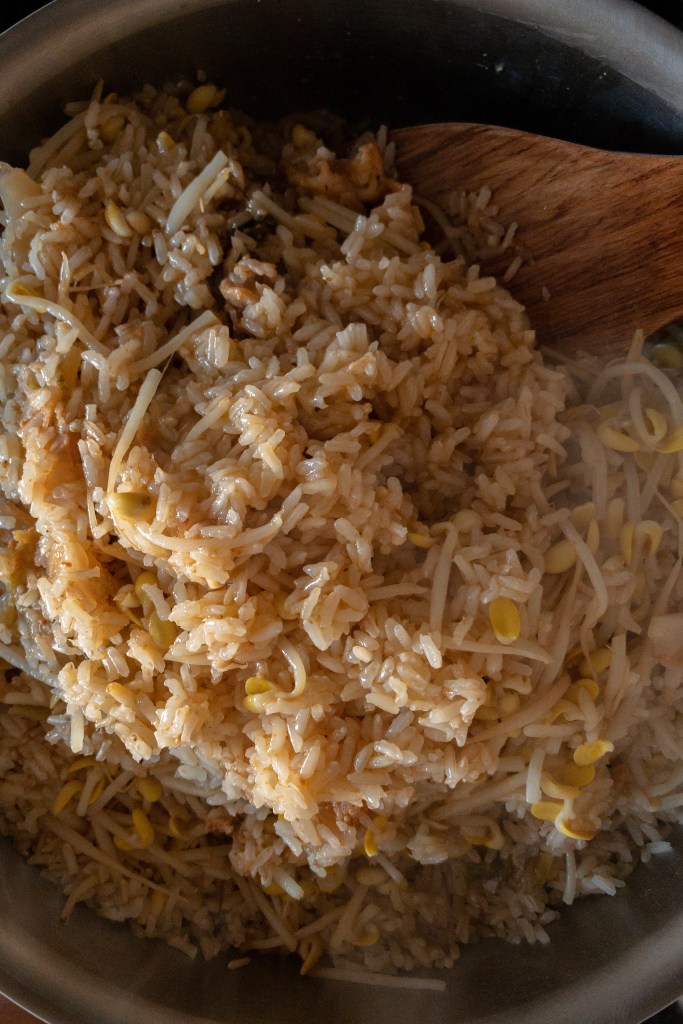
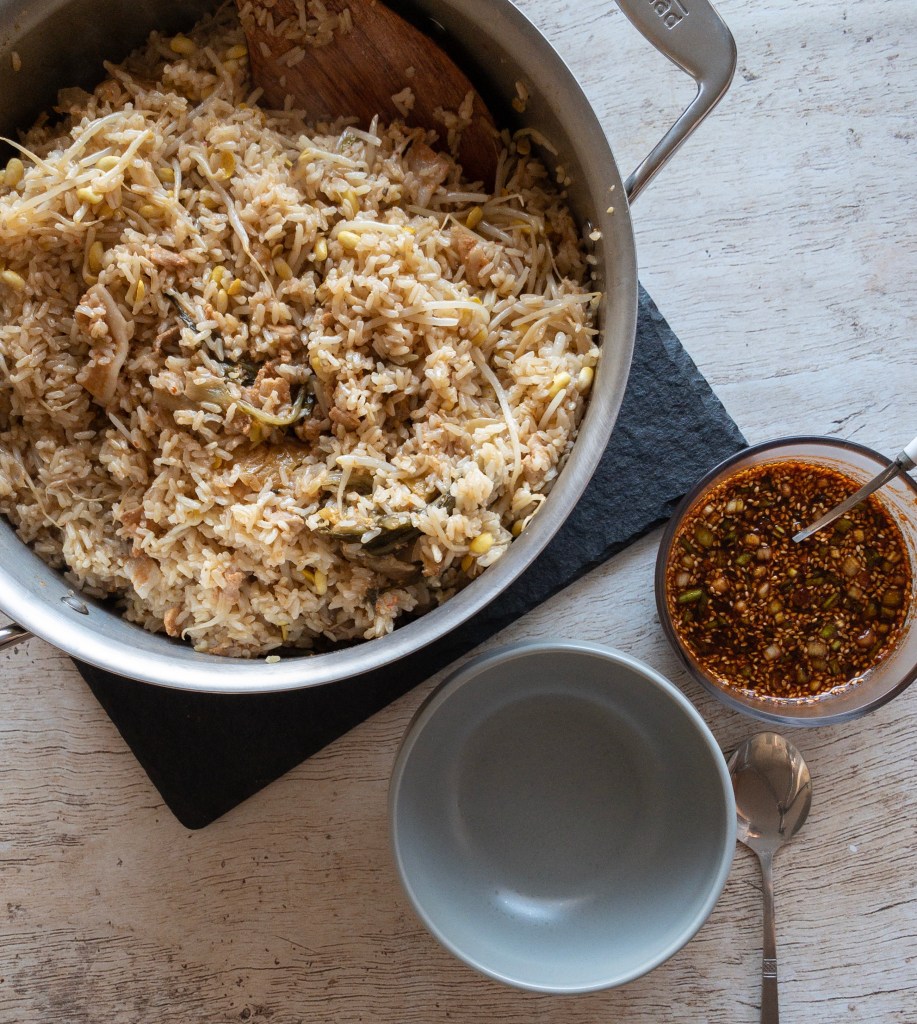
When preparing kimchi bbap, you cook the rice with the liquid from the kimchi, or kimchi 국물 (gugmul), pork, kimchi, and bean sprouts. You then top the dish with 양념 간장 (yangnyeom ganjang), or seasoned soy sauce.
It’s so savory, and I find myself polishing off a huge bowl in a matter of minutes only to be craving more.
I’m so excited to share this recipe I learned with you all, as it’s a treasured dish in my family! I’m grateful my mom took the time to teach me how to make this so it can carry on for generations.
I hope this recipe and the blurb above highlight the diversity amongst Koreans and Korean cuisine as it becomes more ubiquitous. Just like food in Massachusetts is different from food in Texas, the same applies to Korea and I’m sure just about any country!
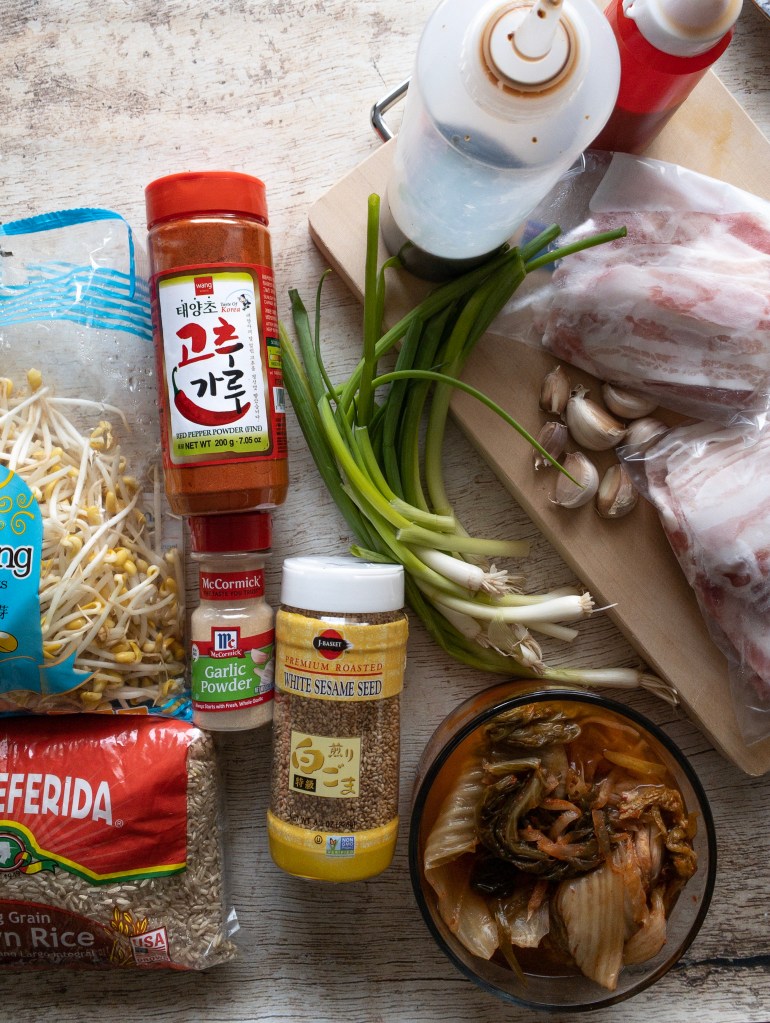
Ingredients for rice:
- 5 cups of short-grained white rice or brown rice
- 1 bag of bean sprouts1
- 1 lb of pork belly or pork neck
- 11 scallions (8 for the rice and 3 for the seasoned soy sauce)
- 4.5 tablespoons of sesame oil (3 for the rice and 1.5 for the seasoned soy sauce)
- 3 tablespoons of sesame seeds (2 for the rice and 1 for the seasoned soy sauce )
- 2 tablespoons of garlic powder
- 3.5 cups of extra fermented kimchi
- 2.5 cups of kimchi 국물 (gugmul)/juice(?)/liquid
Ingredients for seasoned soy sauce (양념간장)
- 8-9 tablespoons of soy sauce
- 6 cloves of garlic
- 1 tablespoon of sesame seeds
- 1.5 tablespoons of sesame oil
- 2.5-3 tablespoons of red pepper powder (depending on your spice preference)
- 3 scallions
- 1-2 hot green chili peppers (optional)
Directions for the rice:
- Set aside a large bowl.
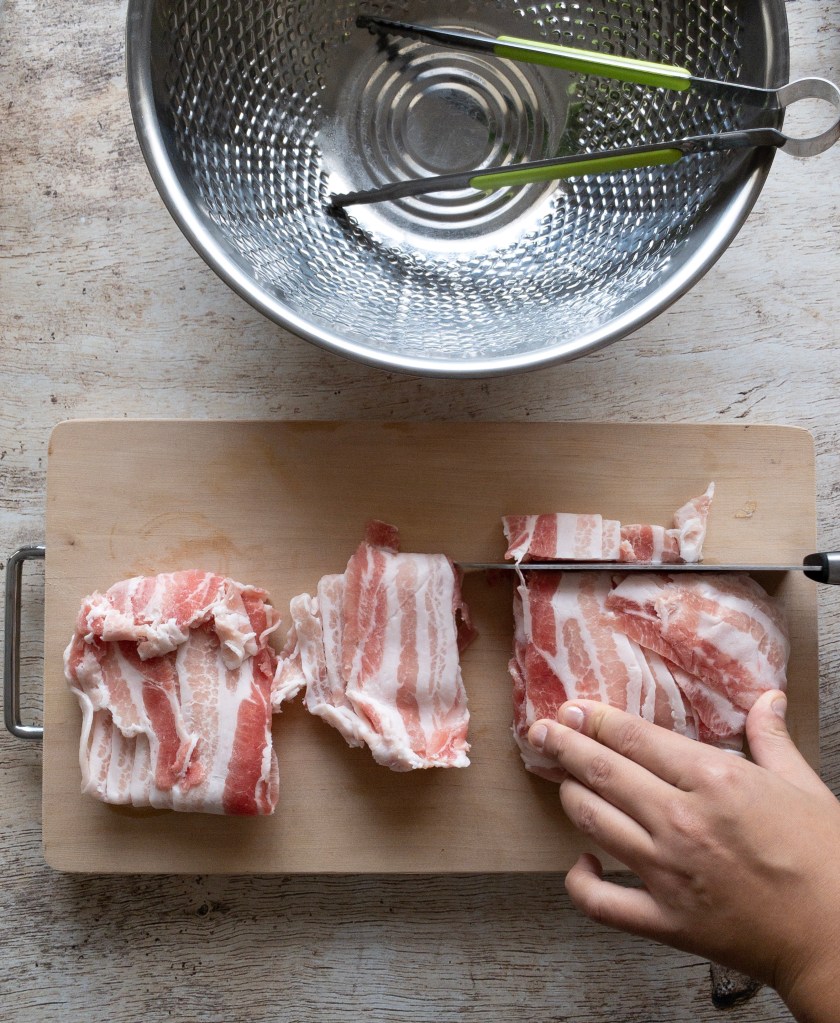
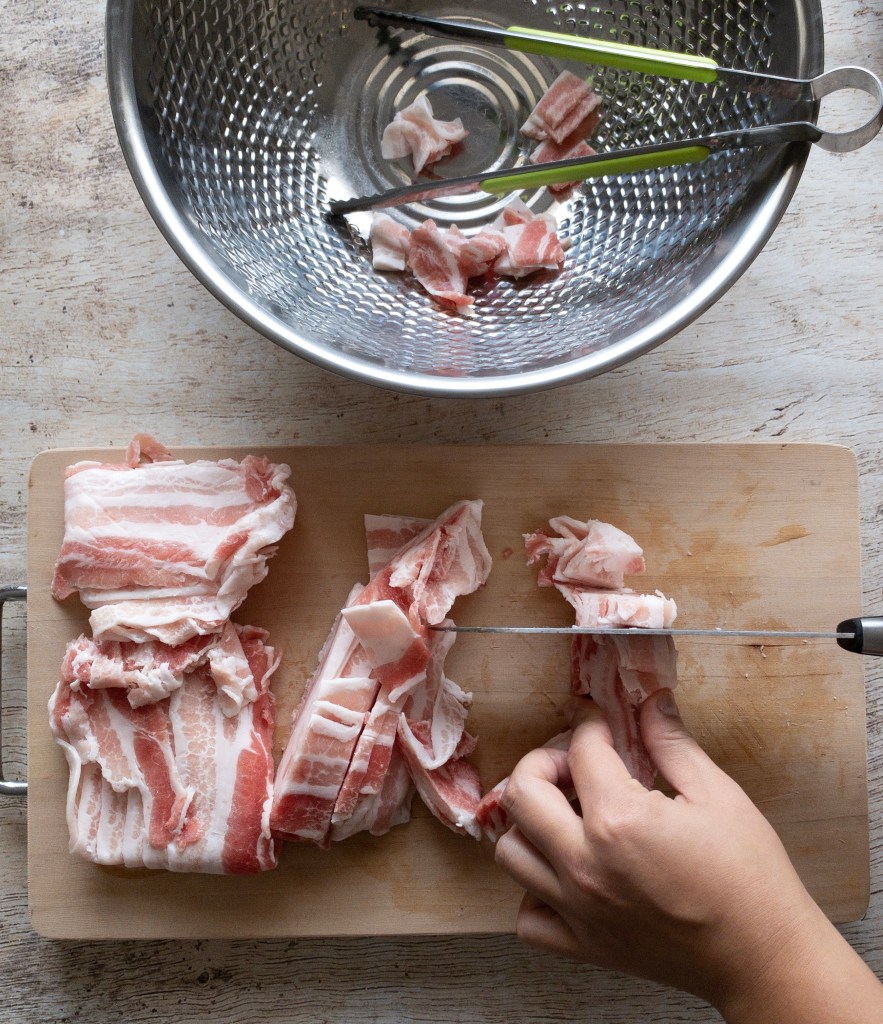
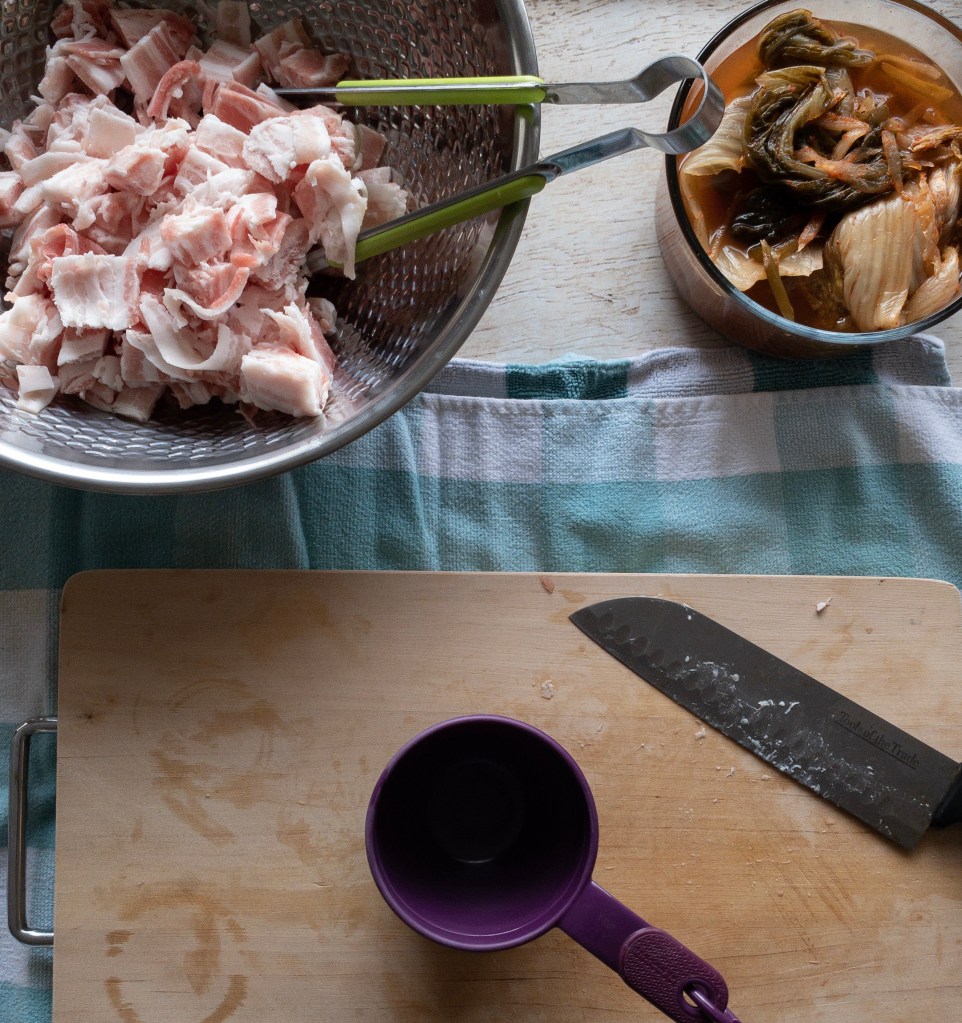
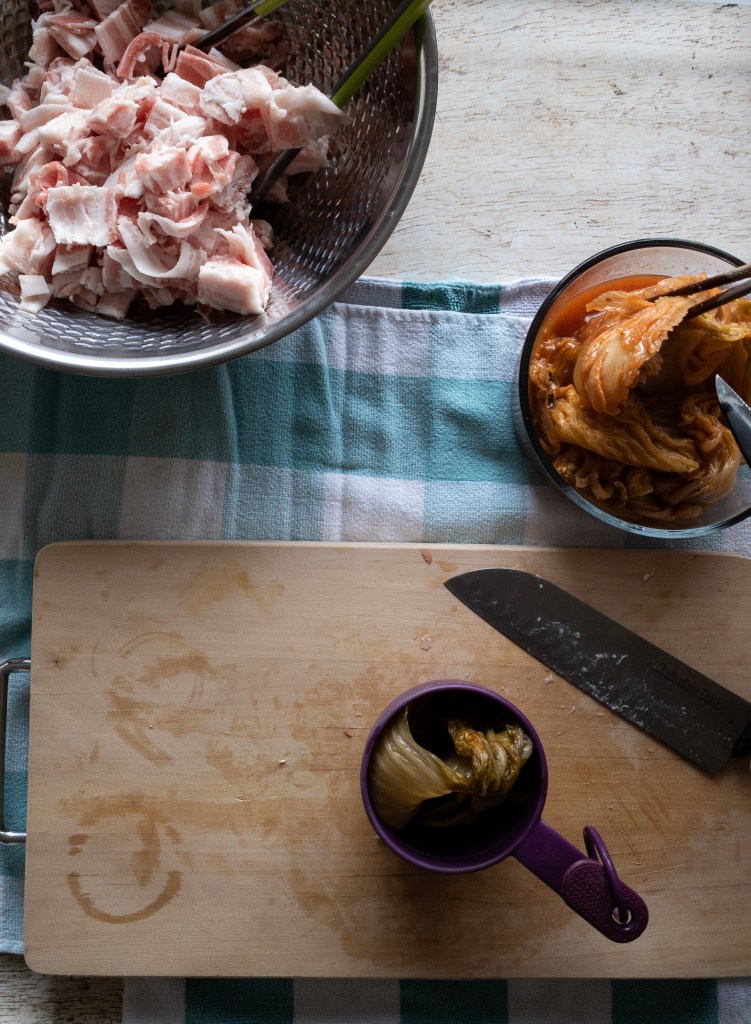
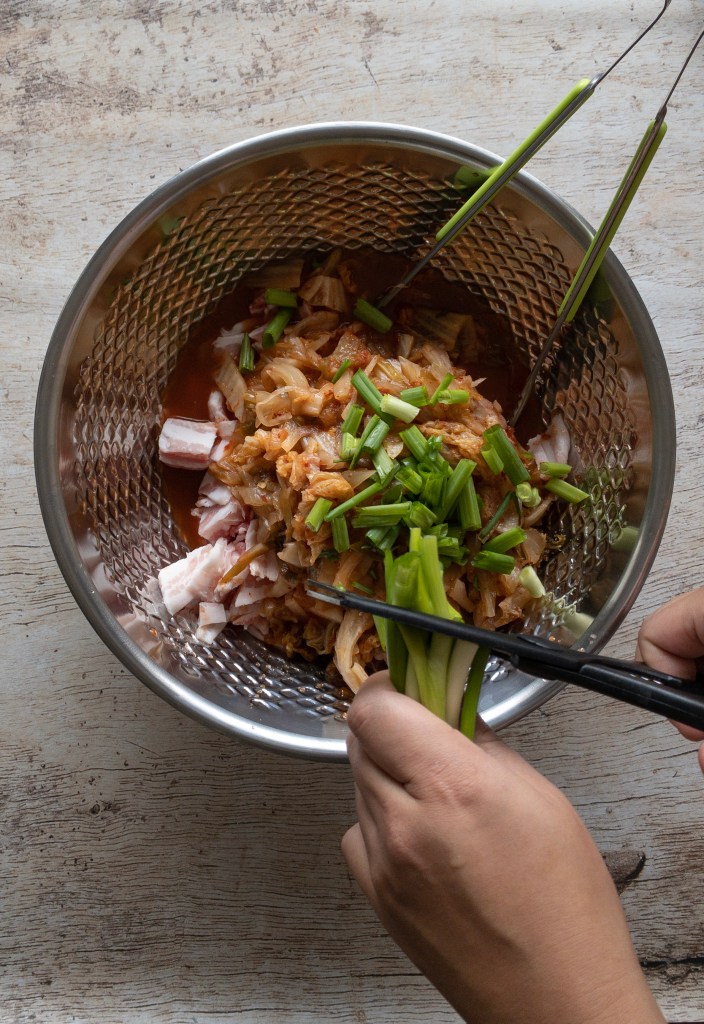
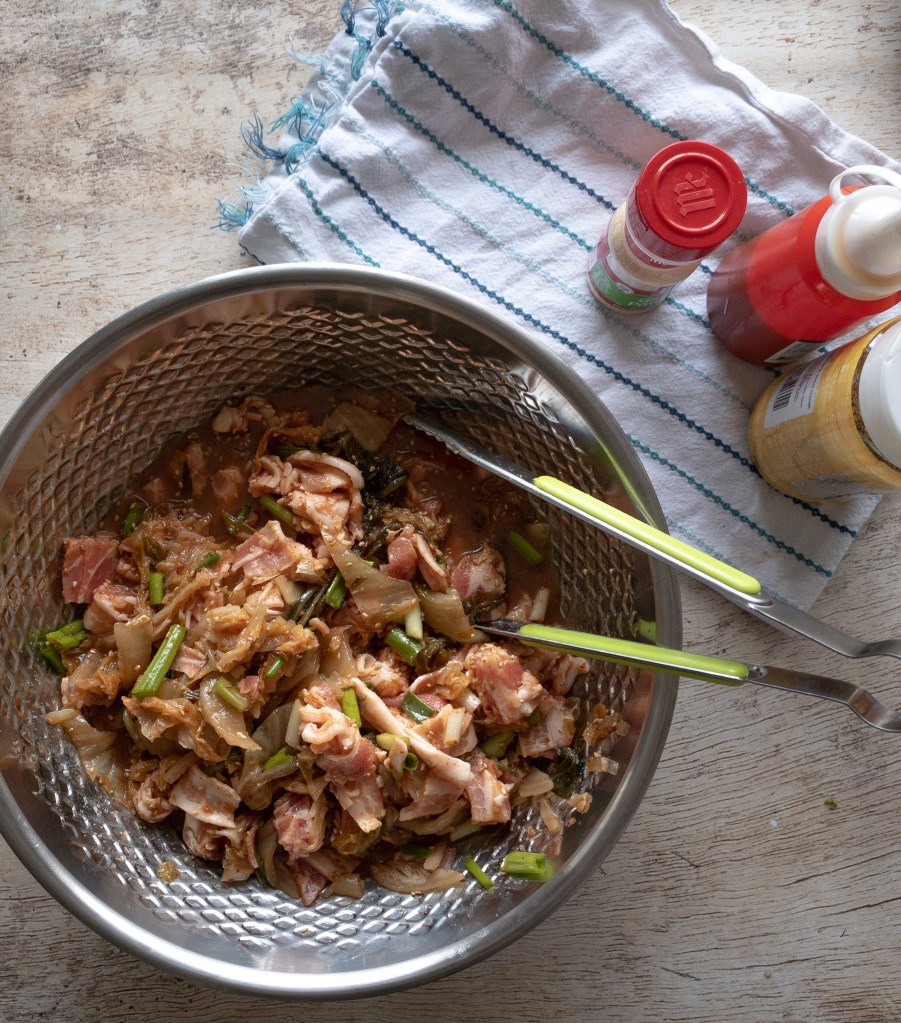
- Cut pork into small pieces. Add to bowl.
- Cut scallions into small pieces. Add to bowl.
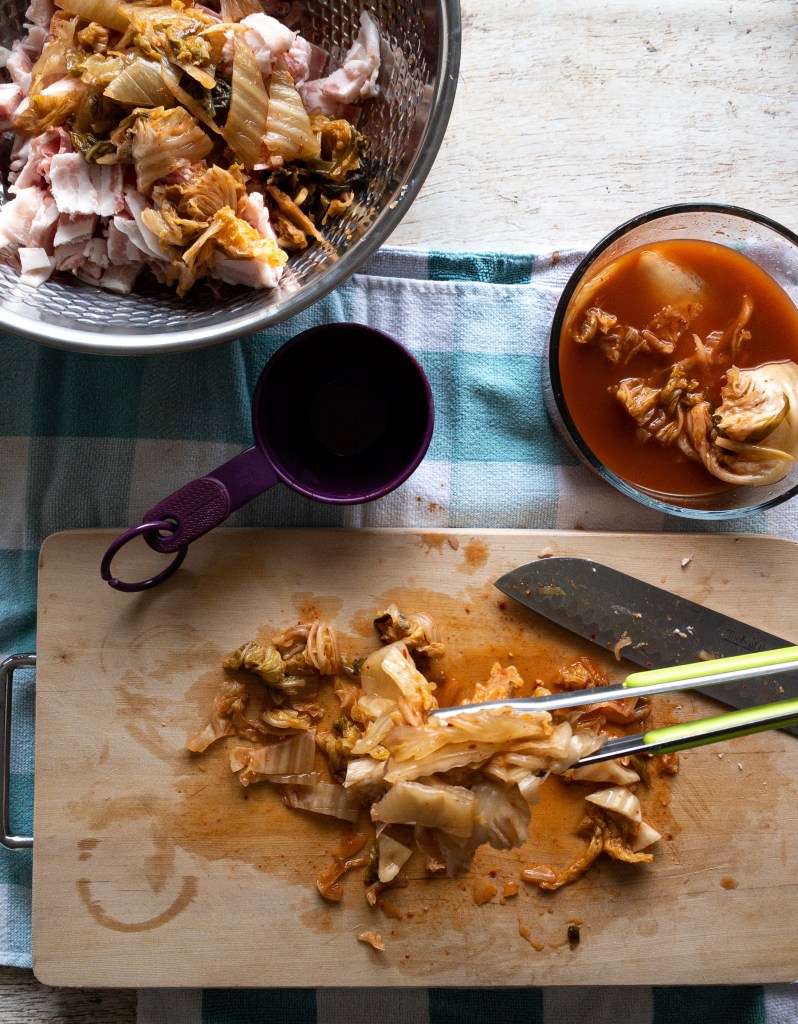
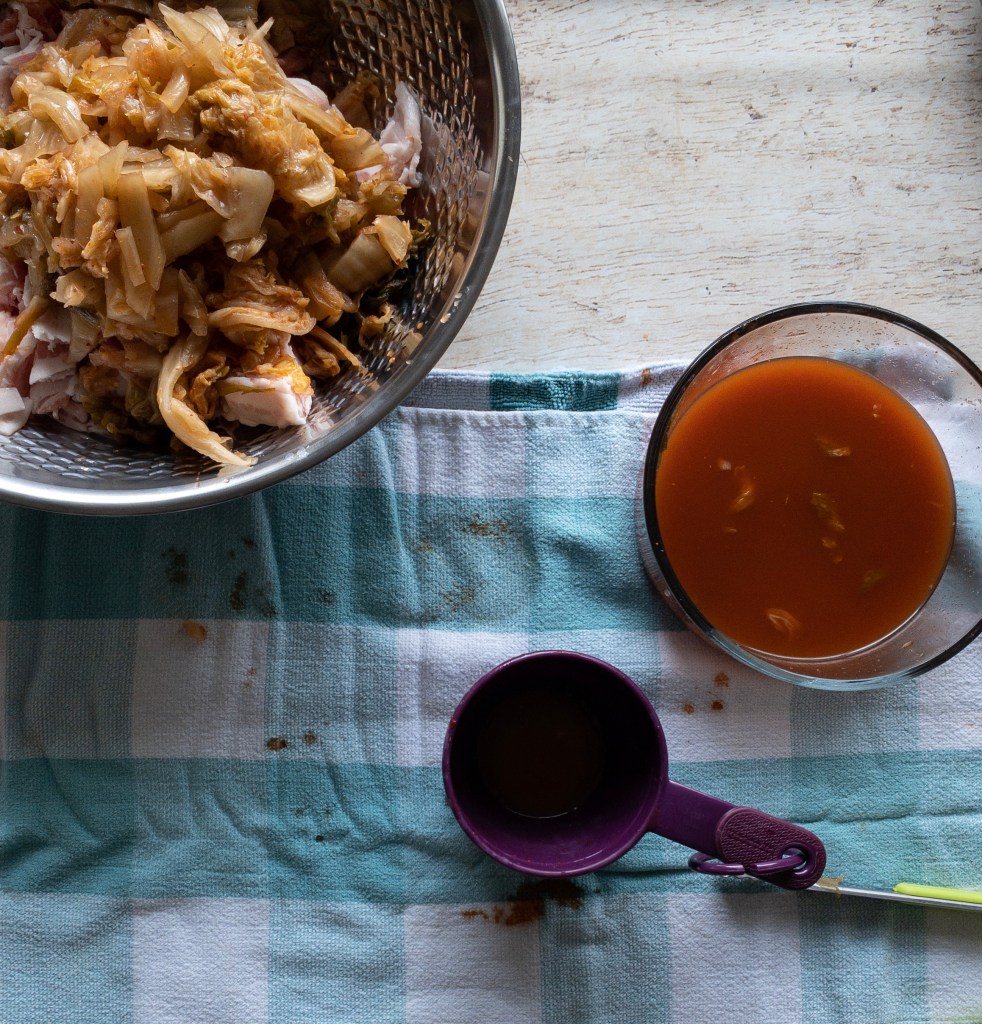
- Cut kimchi into small pieces (roughly the same size as the pork pieces). Add to bowl.
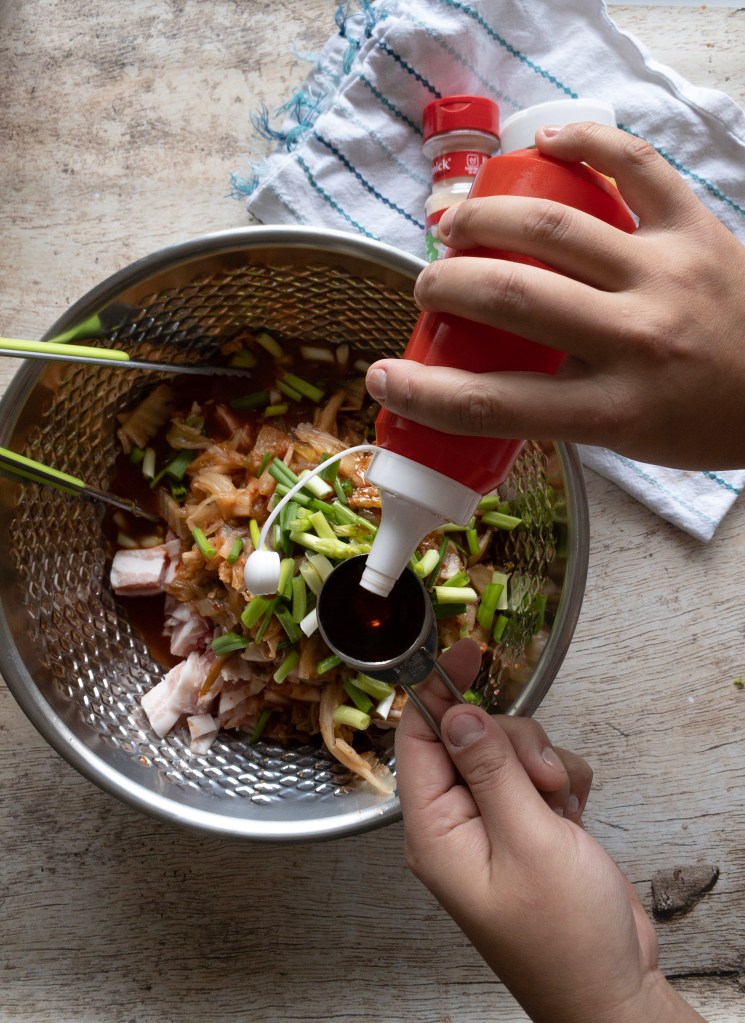
- Add kimchi 국물 (gugmul) to bowl.
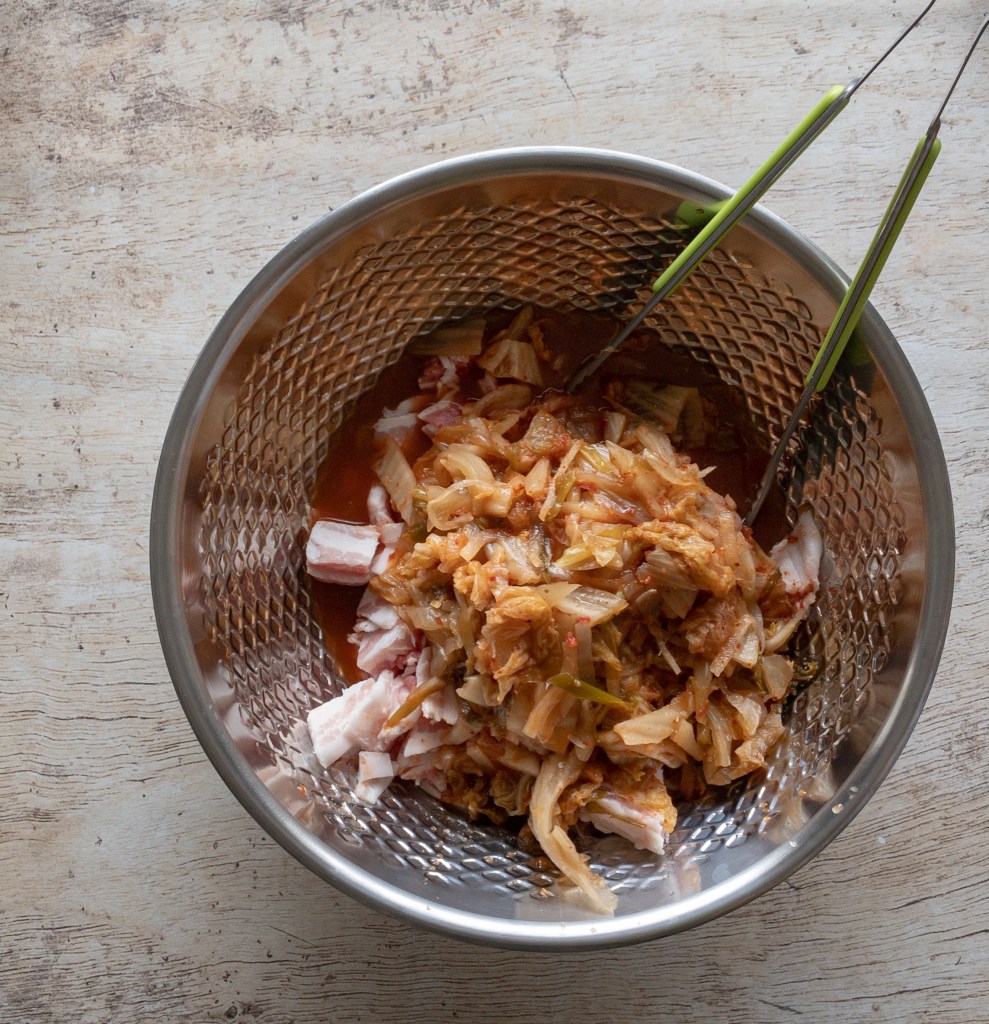
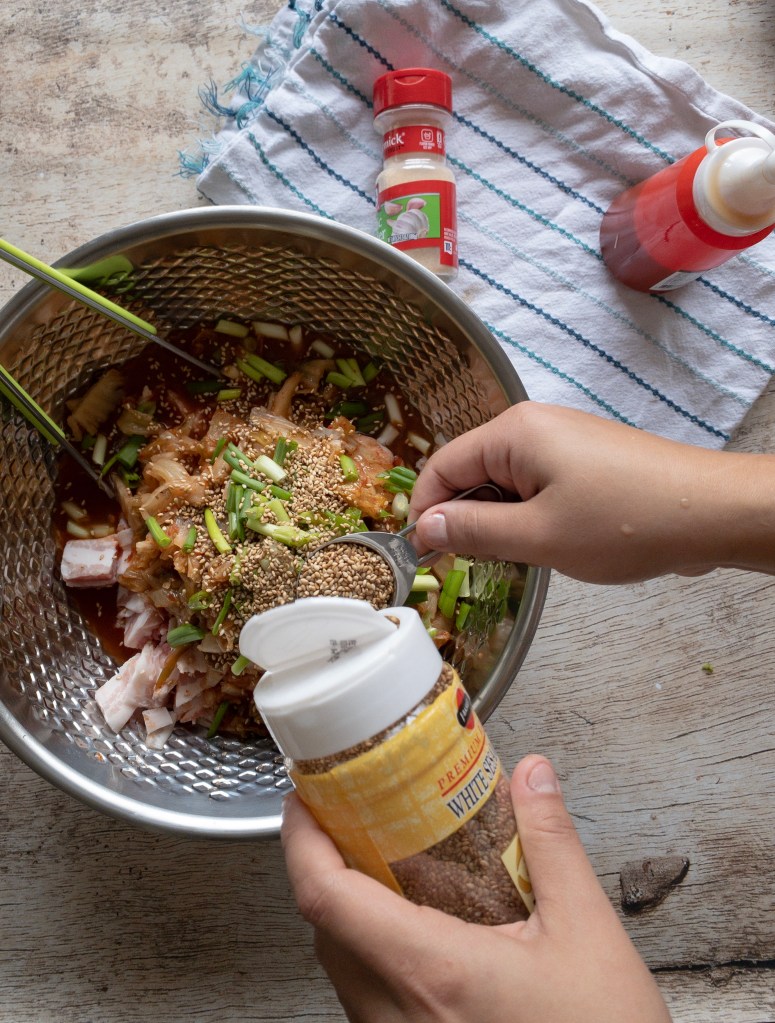
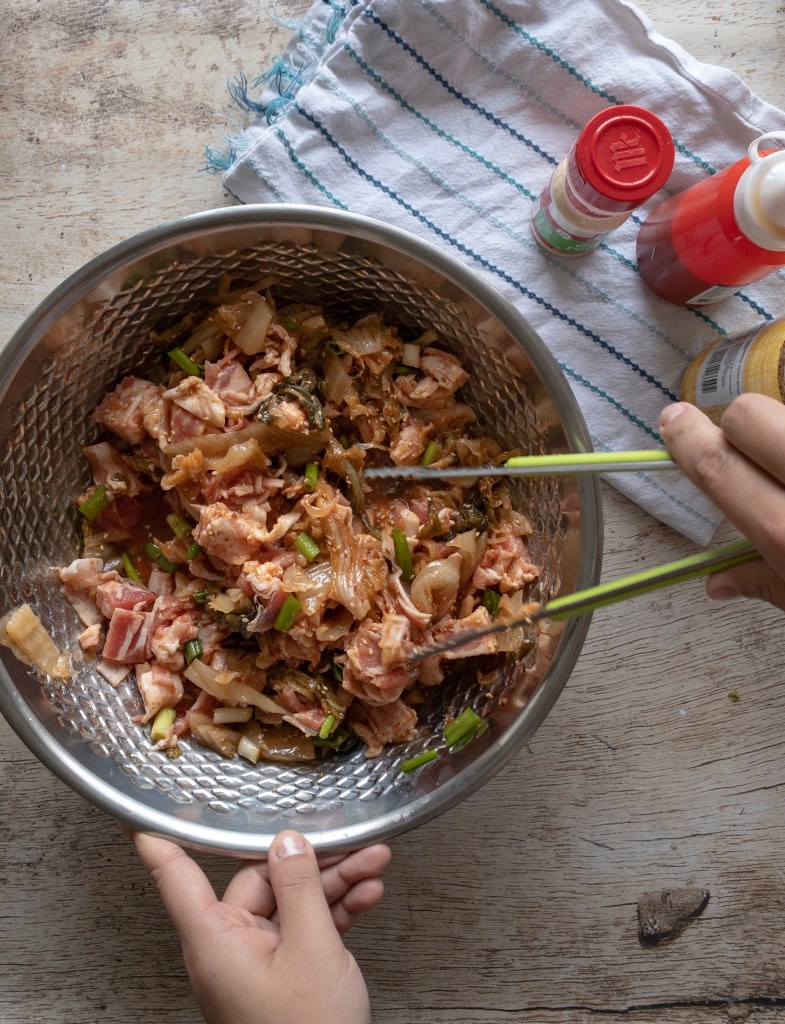
- Add garlic powder, sesame seeds, and sesame oil.
- Give it a good stir and let sit. If you’re going to cook the dish within 2 hours, it’s okay to leave the bowl out. Any longer, place the bowl in the fridge.





- Rinse your rice. We used about 5 cups of uncooked rice. Rinse the rice until water runs clear.
- Let the rice sit in the water for about 2 hours so that when it cooks, it turns out soft and plump. When you let the rice sit in the water, make sure the water is at least a 1/2-inch above the rice.


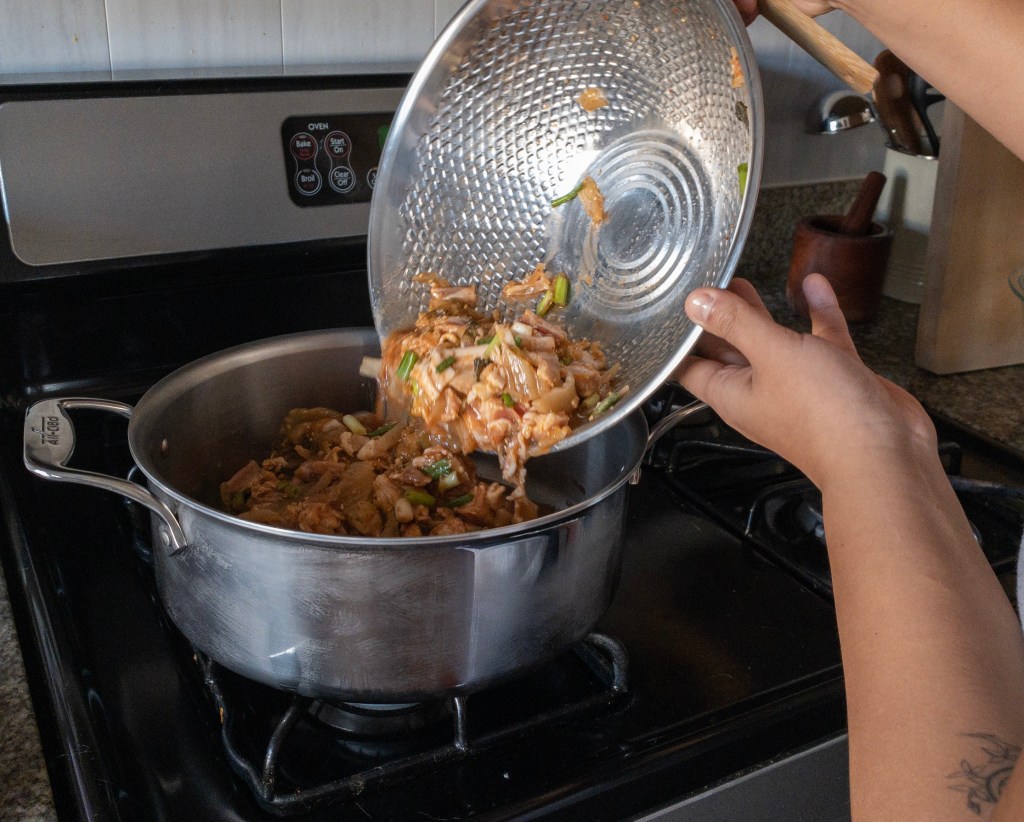
- After 2 hours, transfer the mixed pork to a large pot and place on medium heat. Eventually, you’re going to place rice and bean sprouts on top of the pork, so make sure it’s a big bowl. Cook until pork is done.
- Turn off heat and place uncooked rice on top. As for the water that the rice has been sitting in, transfer about 1/4 cup into the new pot.
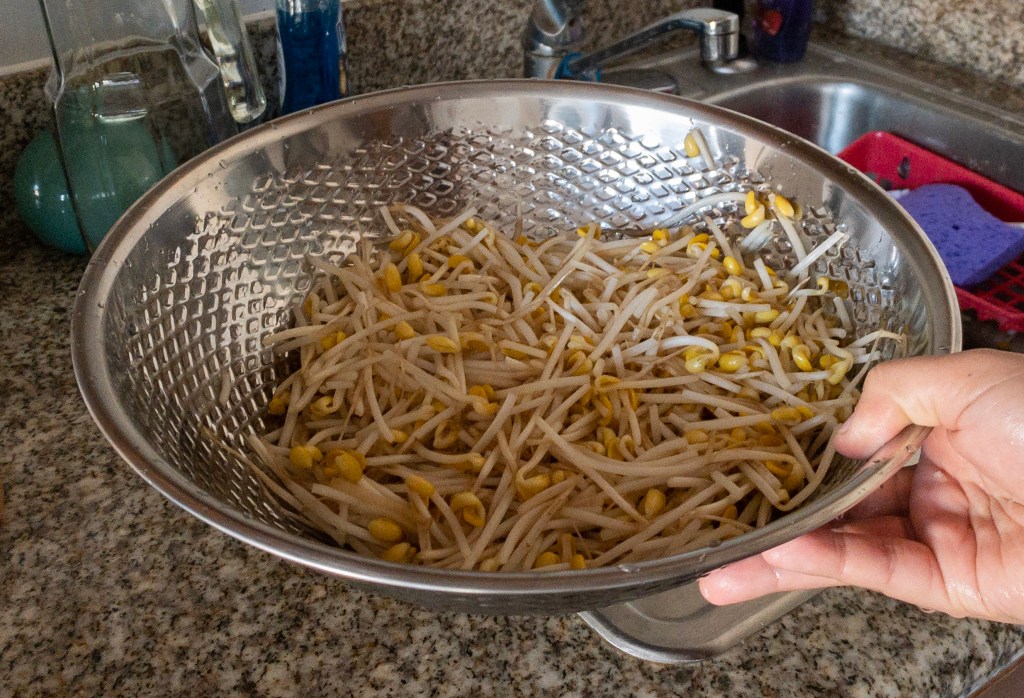
- Add the washed bean sprouts on top of the uncooked rice. Add about 1/2 cup of water on top.
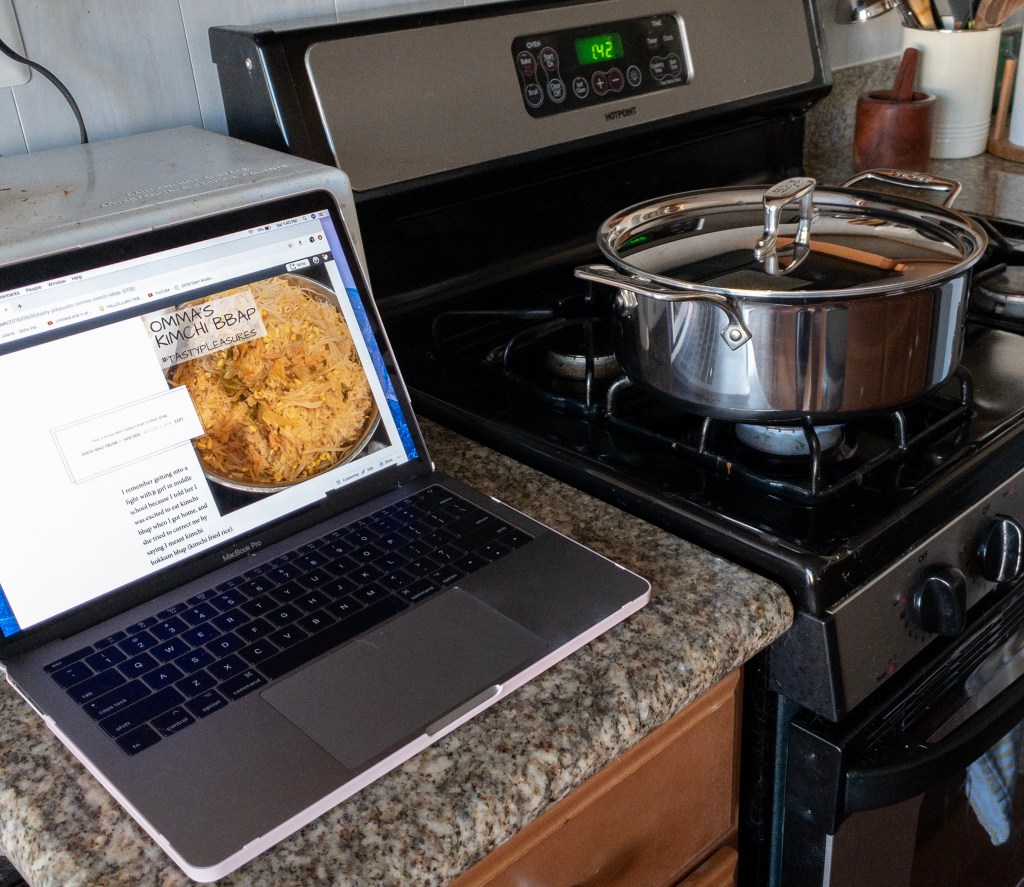
- Place stove on medium heat and cover pot completely.
- Everything should be done in about 30-40 minutes, but keep close to the stove. You can make the seasoned soy sauce and clean up the dishes during this time.
- If it starts burning while on the stove, it might mean your pot is thin. No worries — lower the heat and stir the ingredients around. Your rice might have a bit of smoky flavor at first, but that will go away. Just save the dish before it becomes really burnt at the bottom!






Directions for the seasoned soy sauce:
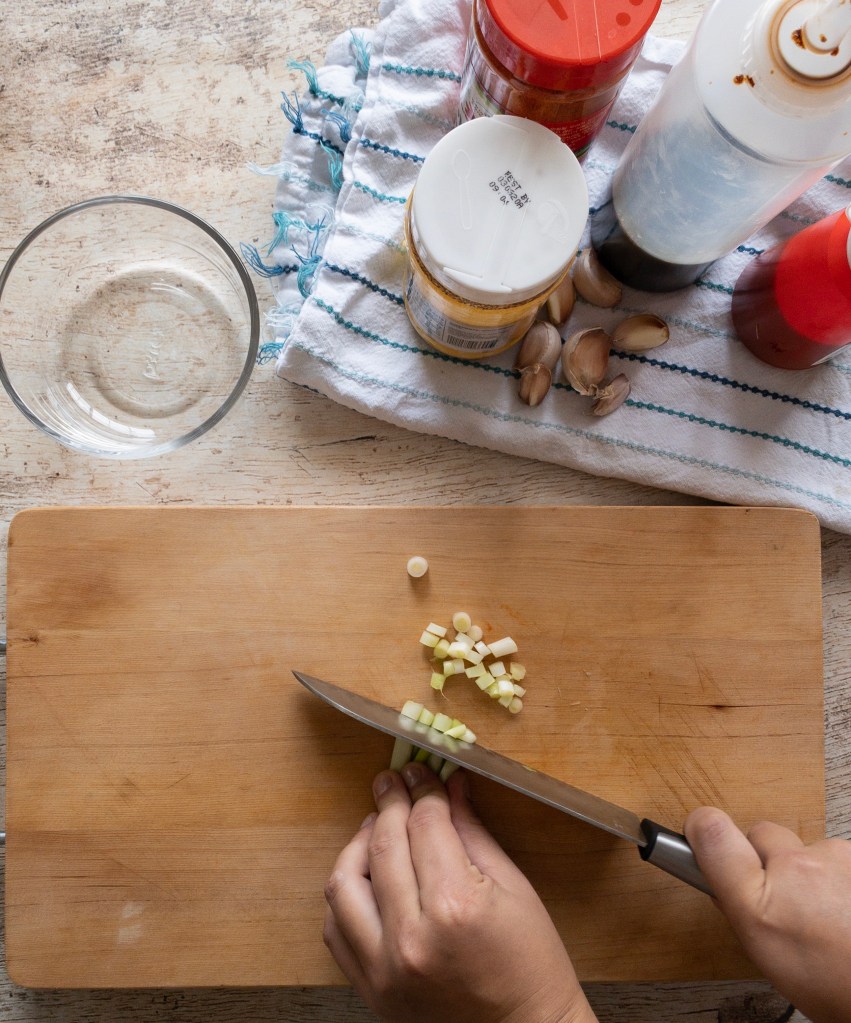
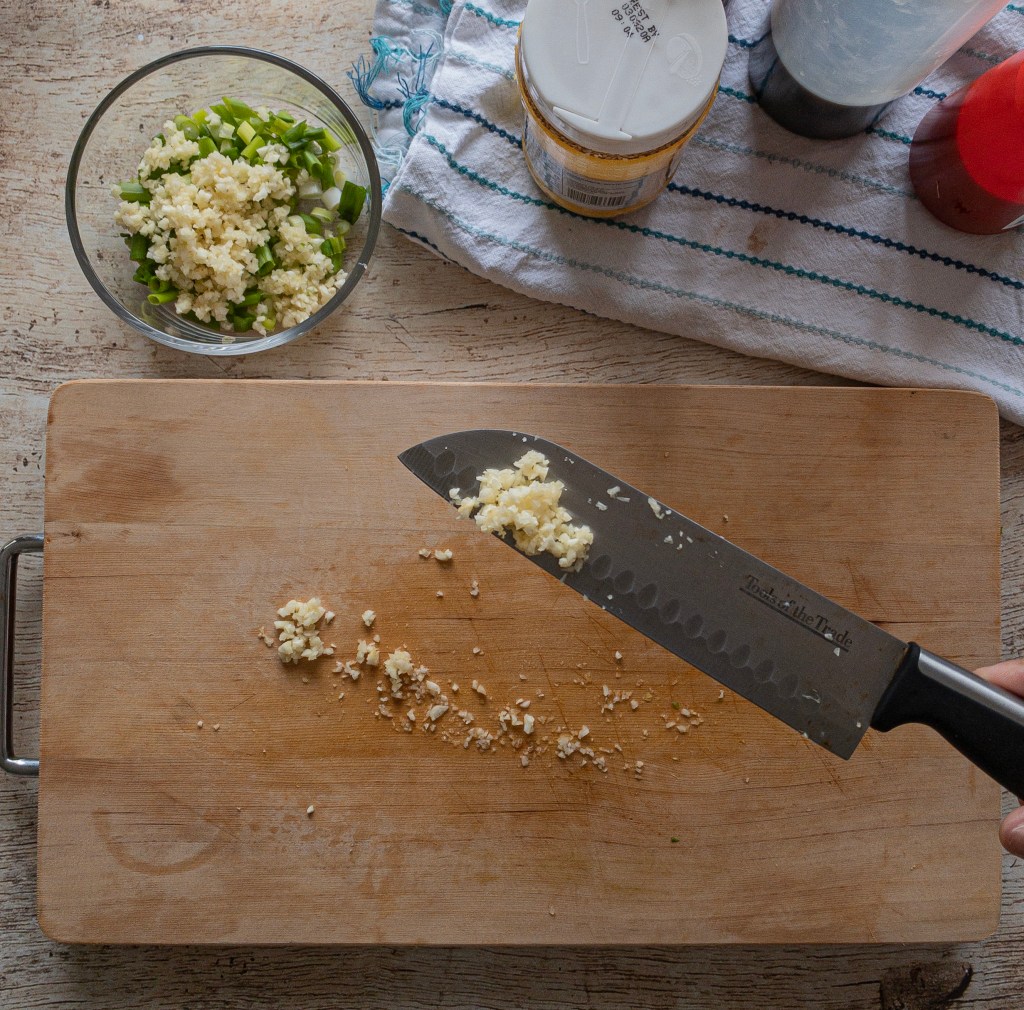
- Chop scallions. Add to small container. We divided the ingredients between two containers so I could take one back to my apartment.
- Chop 1-2 spicy green chili peppers. Add to container.
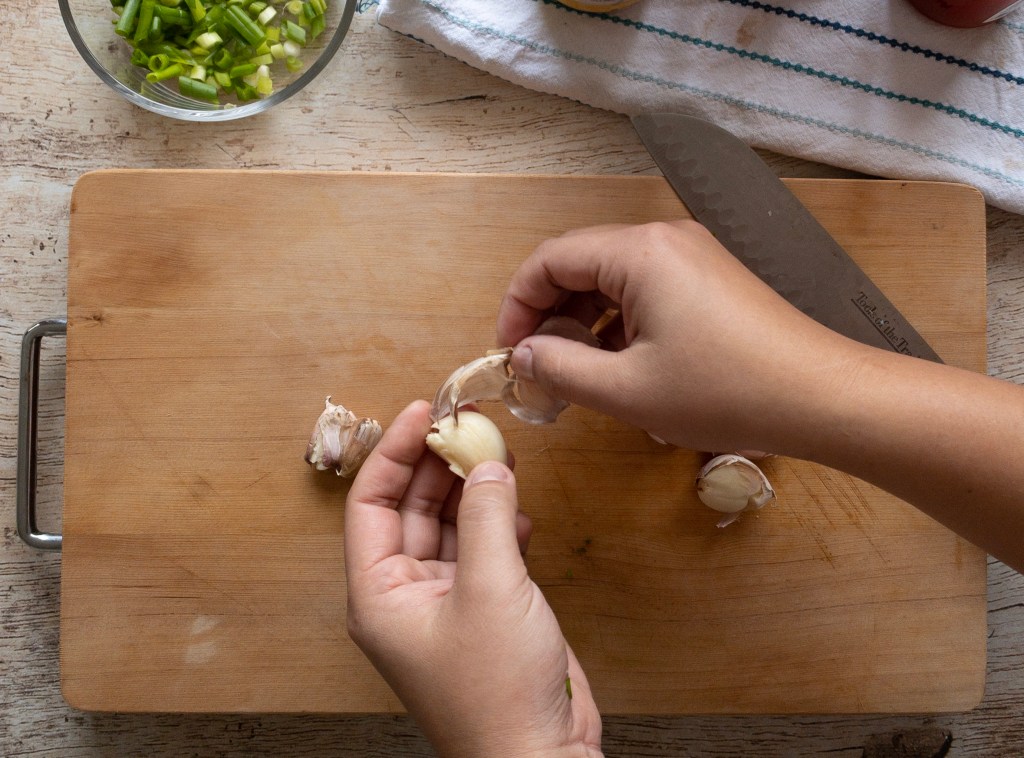
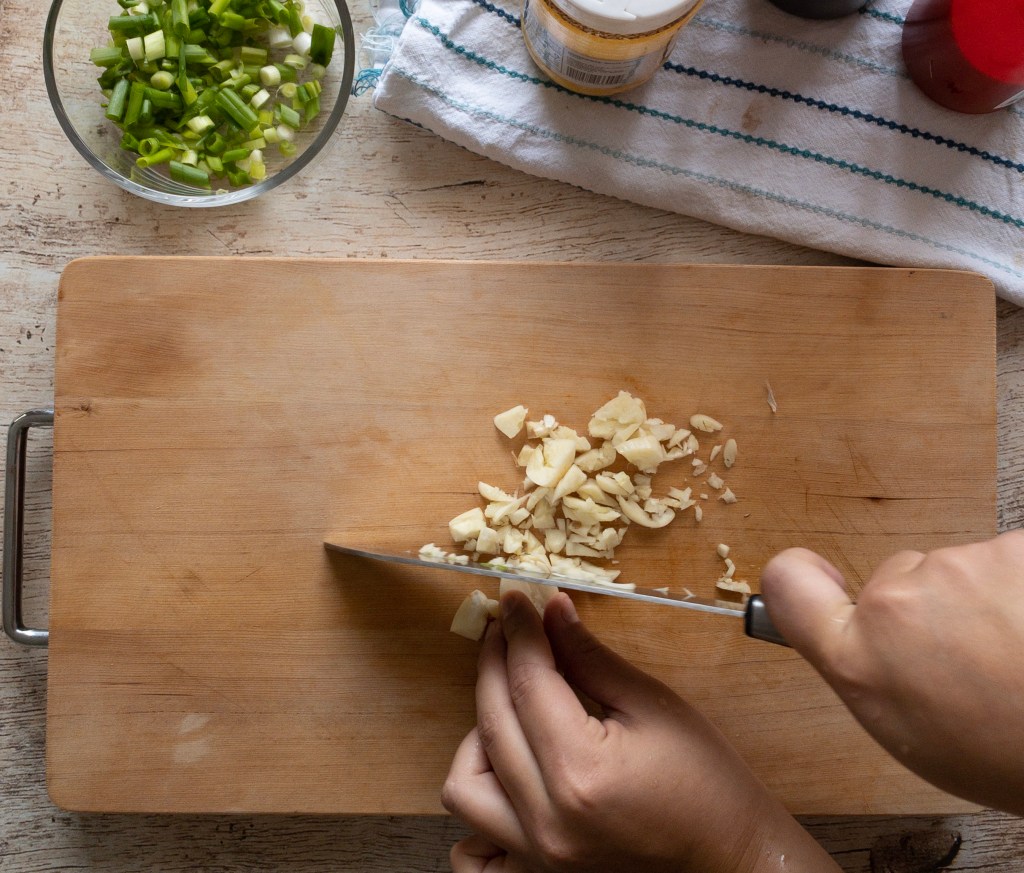
- Finely chop 6 cloves of garlic. Add to container.
- Add 1 tablespoon of sesame seeds and 1.5 tablespoons of sesame oil
- Add the 8 or 9 tablespoons of soy sauce. Though the range in amount might seems large, keep in mind you’re just seasoning the soy sauce with the scallions, peppers, garlic, and everything else. So if you think you could use more soy sauce and less of everything else, or less soy sauce and more of everything else, there’s a lot of flexibility to adjust the amounts.
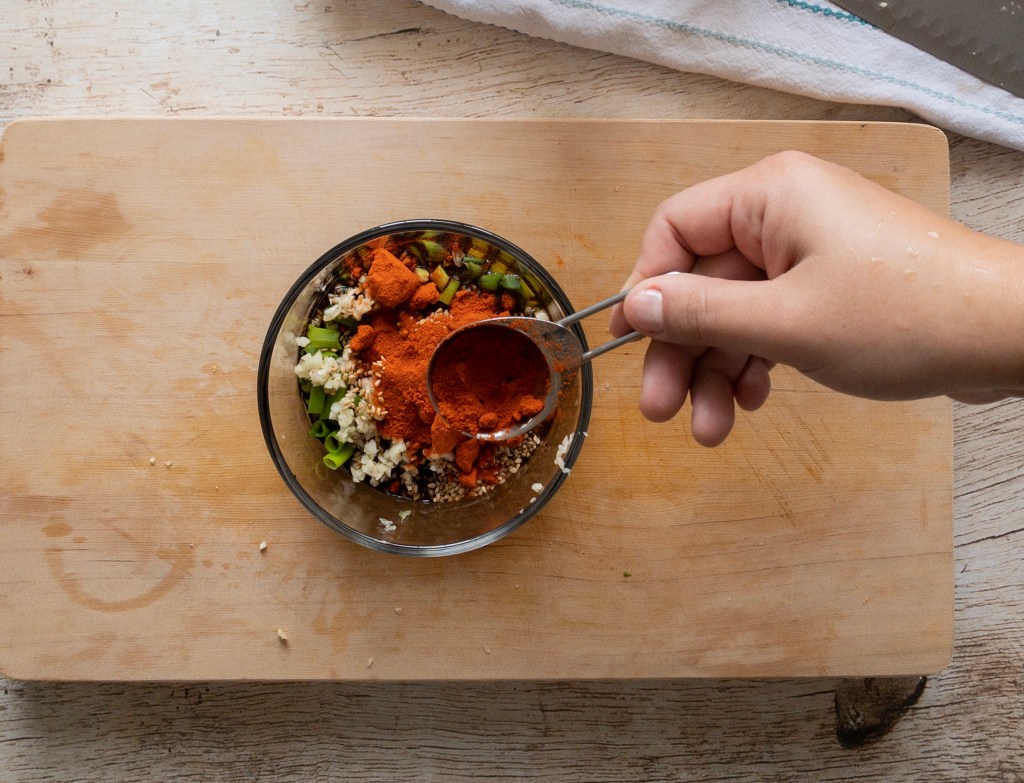
- Add the 2.5-3 tablespoons of red pepper powder
- Give it a good stir and set aside! You’ll use a small spoon to pour some of this seasoned soy sauce over your rice.




Directions for putting the dish together:
- After about 30 minutes, check to see if the rice is done. Again, keep close to the stove in case it starts burning a bit.
- If finished, turn off the heat and fold the ingredients a bit so everything is more mixed together.
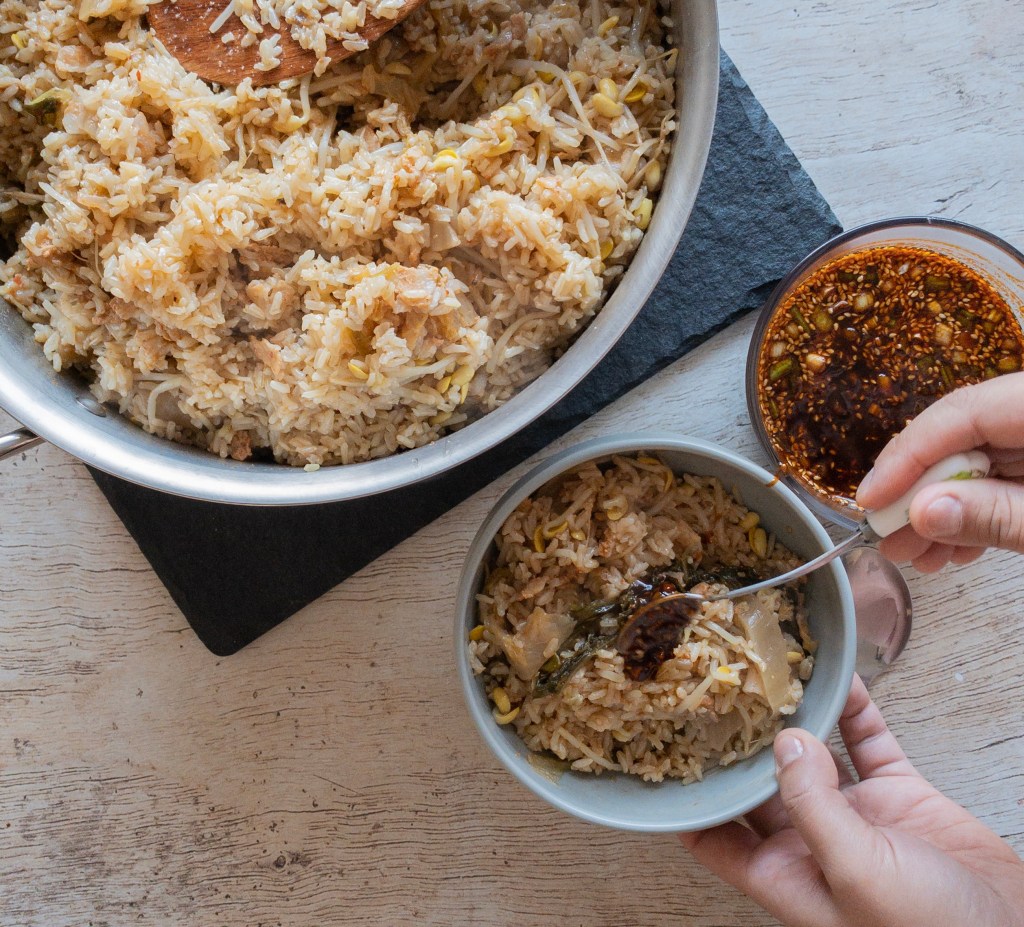
- Serve in a bowl. When you serve it, make sure you serve the rice, bean sprouts, kimchi, and pork. Don’t just give someone a bunch of bean sprouts!
- Drizzle seasoned soy sauce on top, mix it in with the rice, and enjoy!!


If you decide to make this, let me know in the comments below, or on Instagram @thelittlestoneblog!
Thanks for reading! 🙂


 the little stone
Leave a reply to Amy Carpenter Cancel reply